Tag: Monthly Update

  • August and September 2022 – Birds galore.

    August and September 2022 – Birds galore.

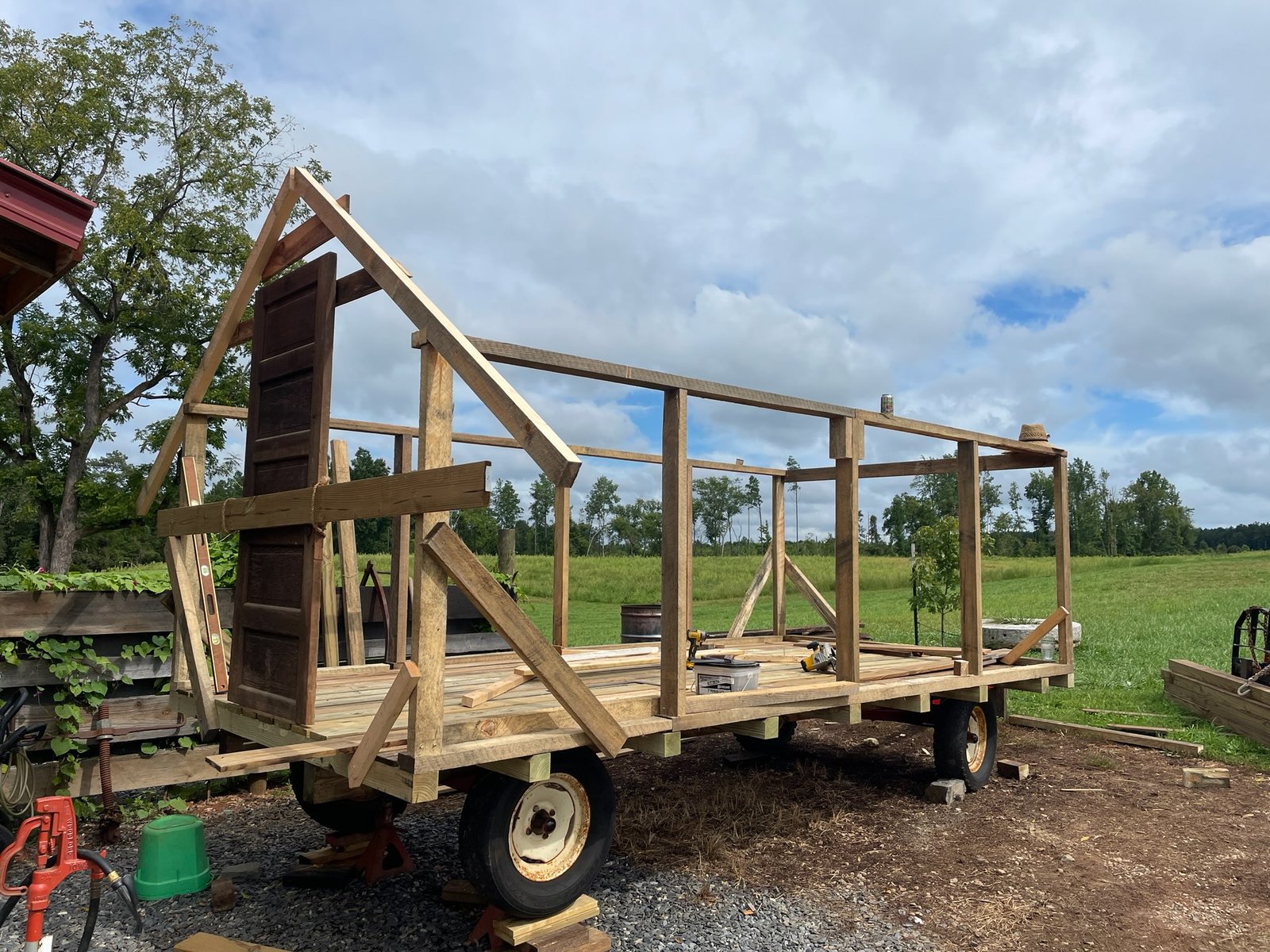
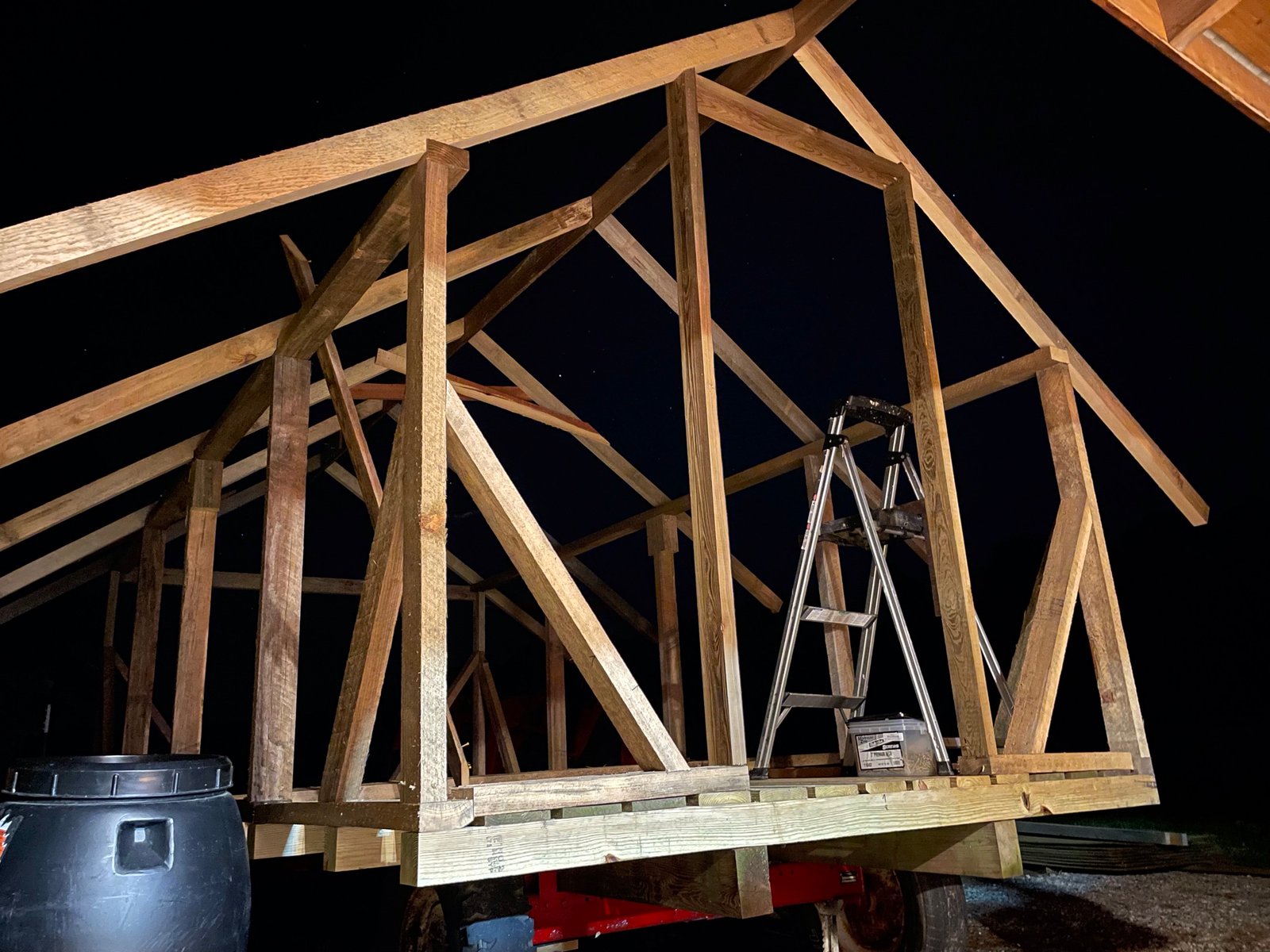
    Our Cornish cross meat bird experience, the dining room floor gets replaced, and we work on our next piece of chicken infrastructure – the egg-mobile.
    In the house, we replaced the joists and floor in the dining room – all the way down to the 1870s timbers. Brendan and the experts jacked up the house (!) and replaced the timbers, buttoned up the floor, and laid the new (old) floor- all in time for the great Chicken massacre of 2022.

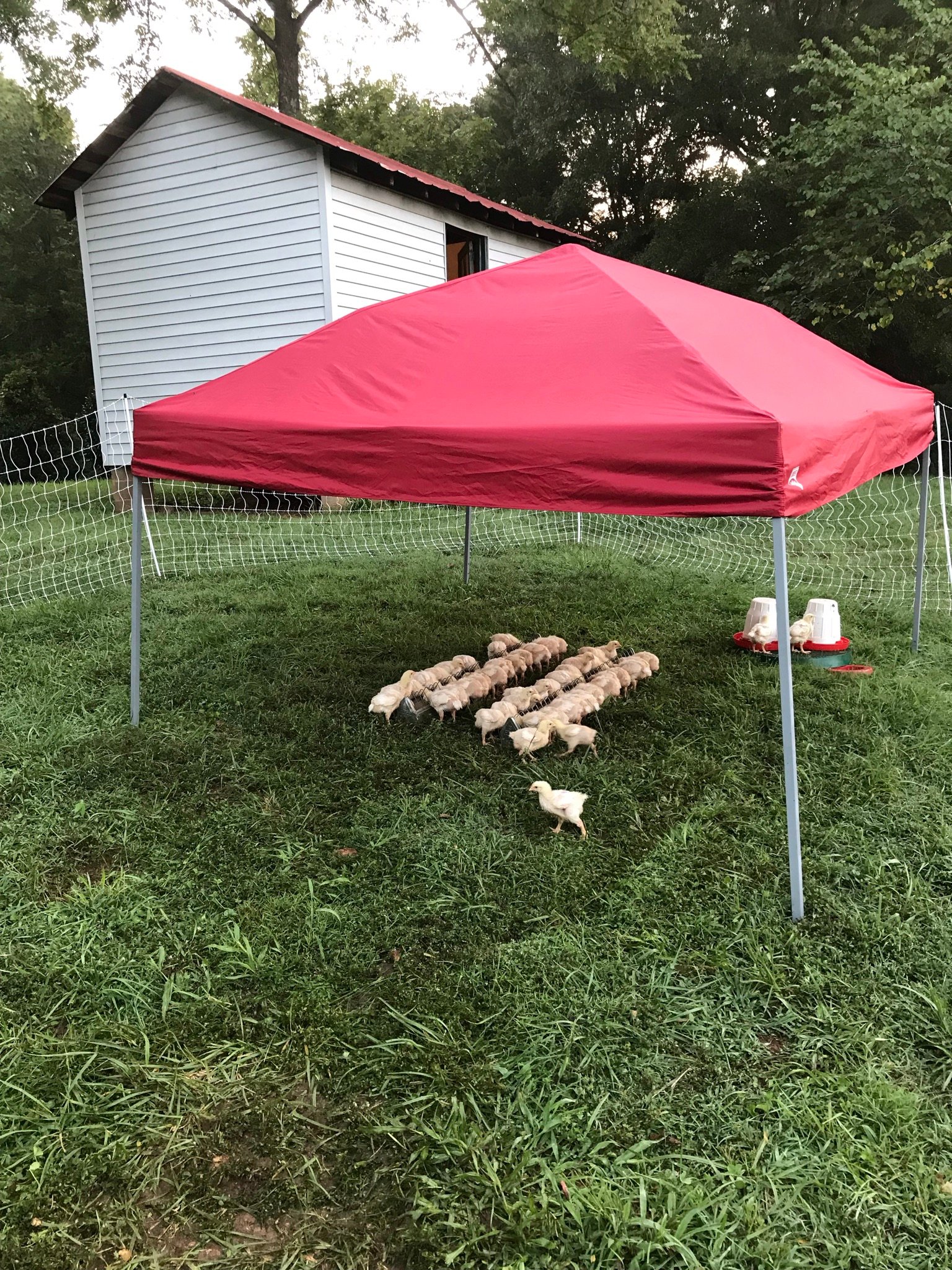
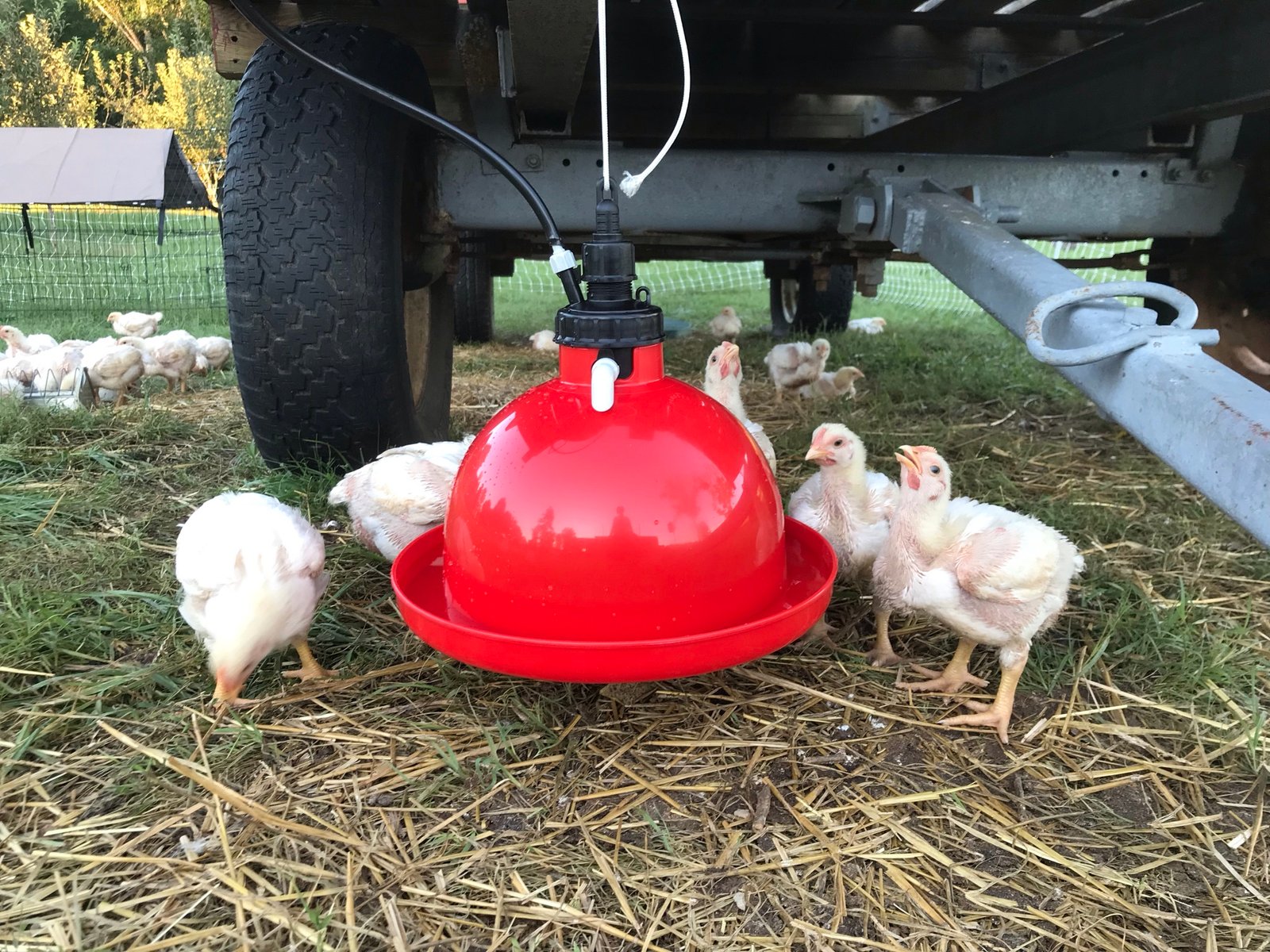
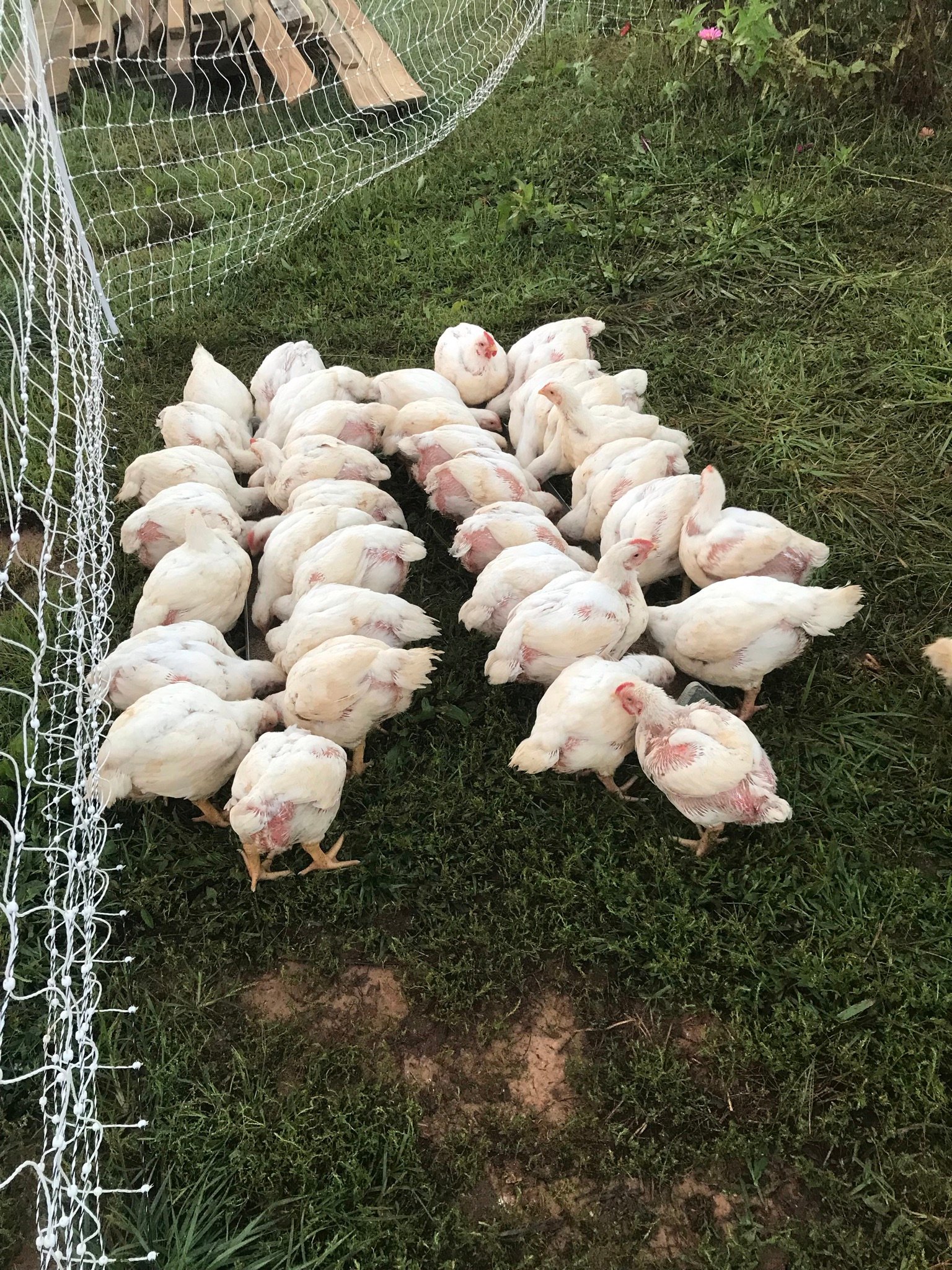
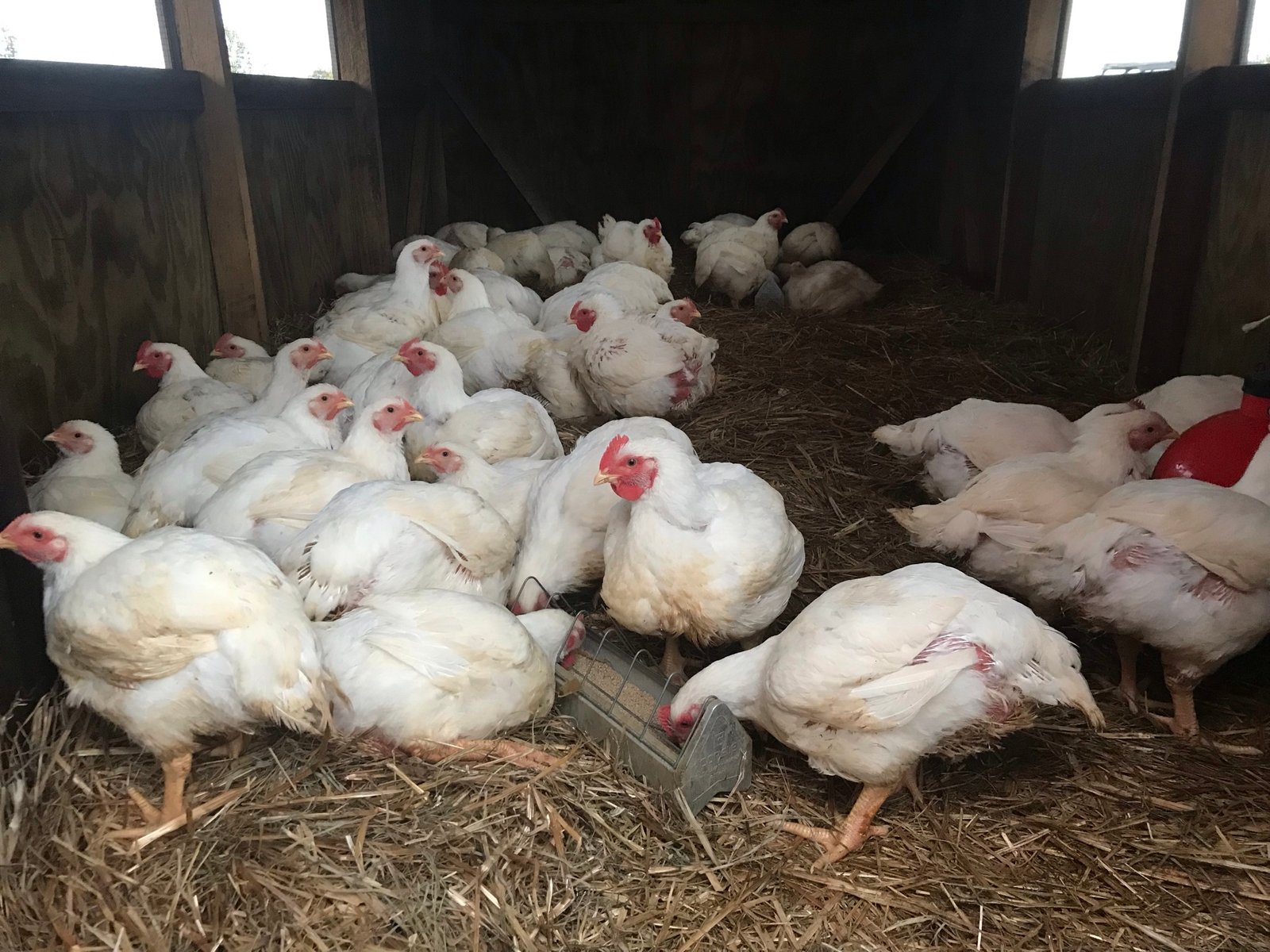
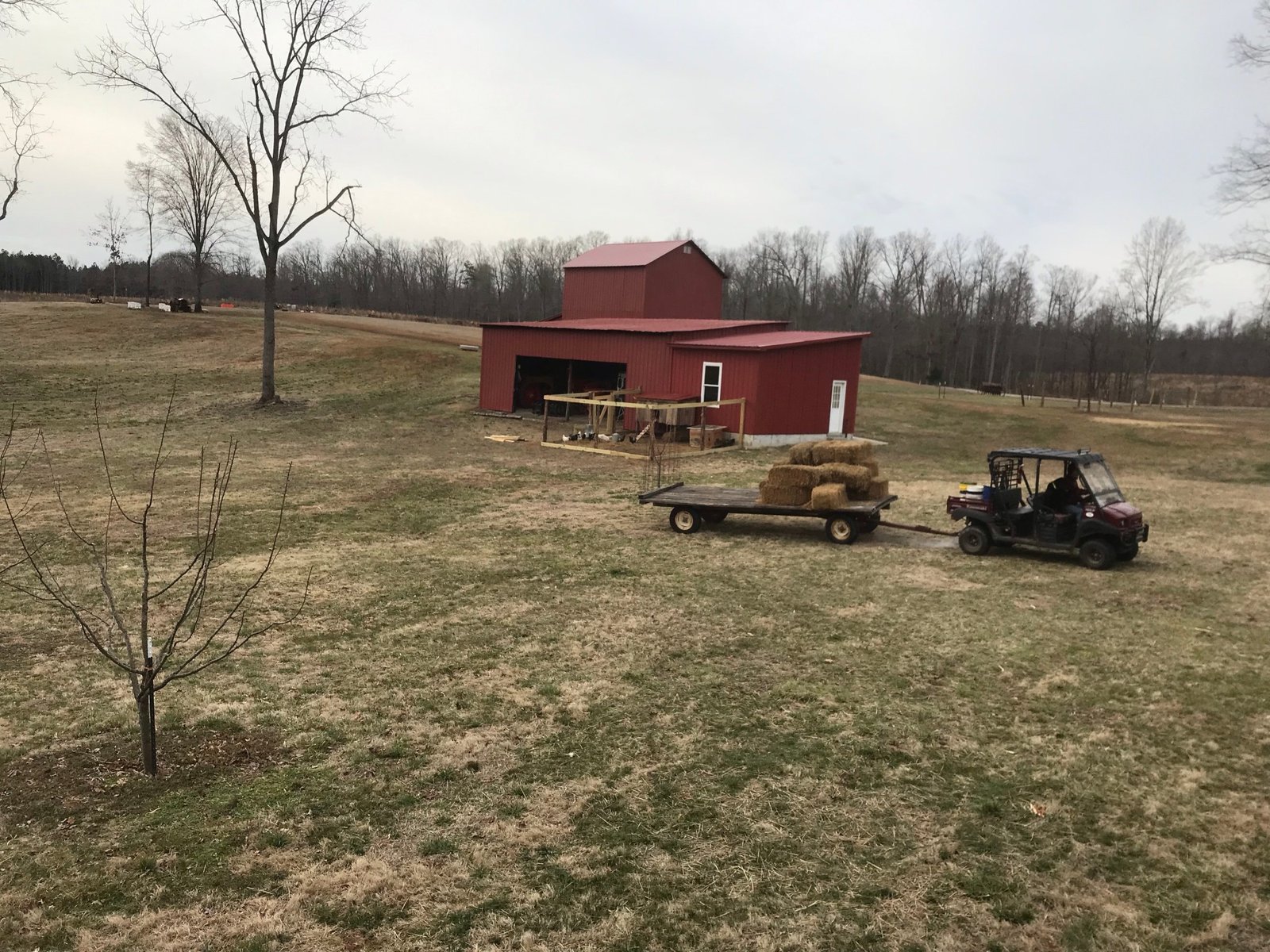
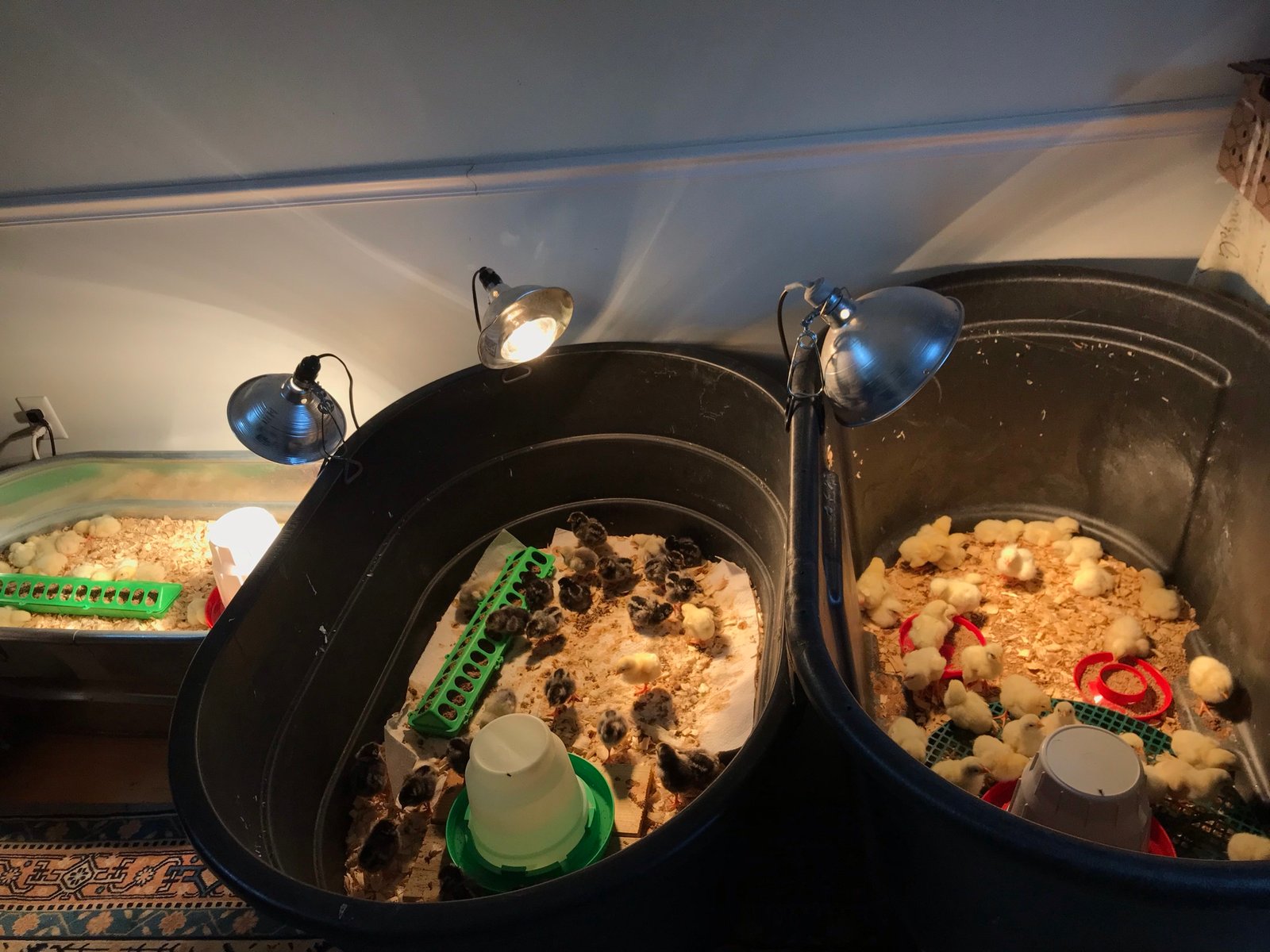
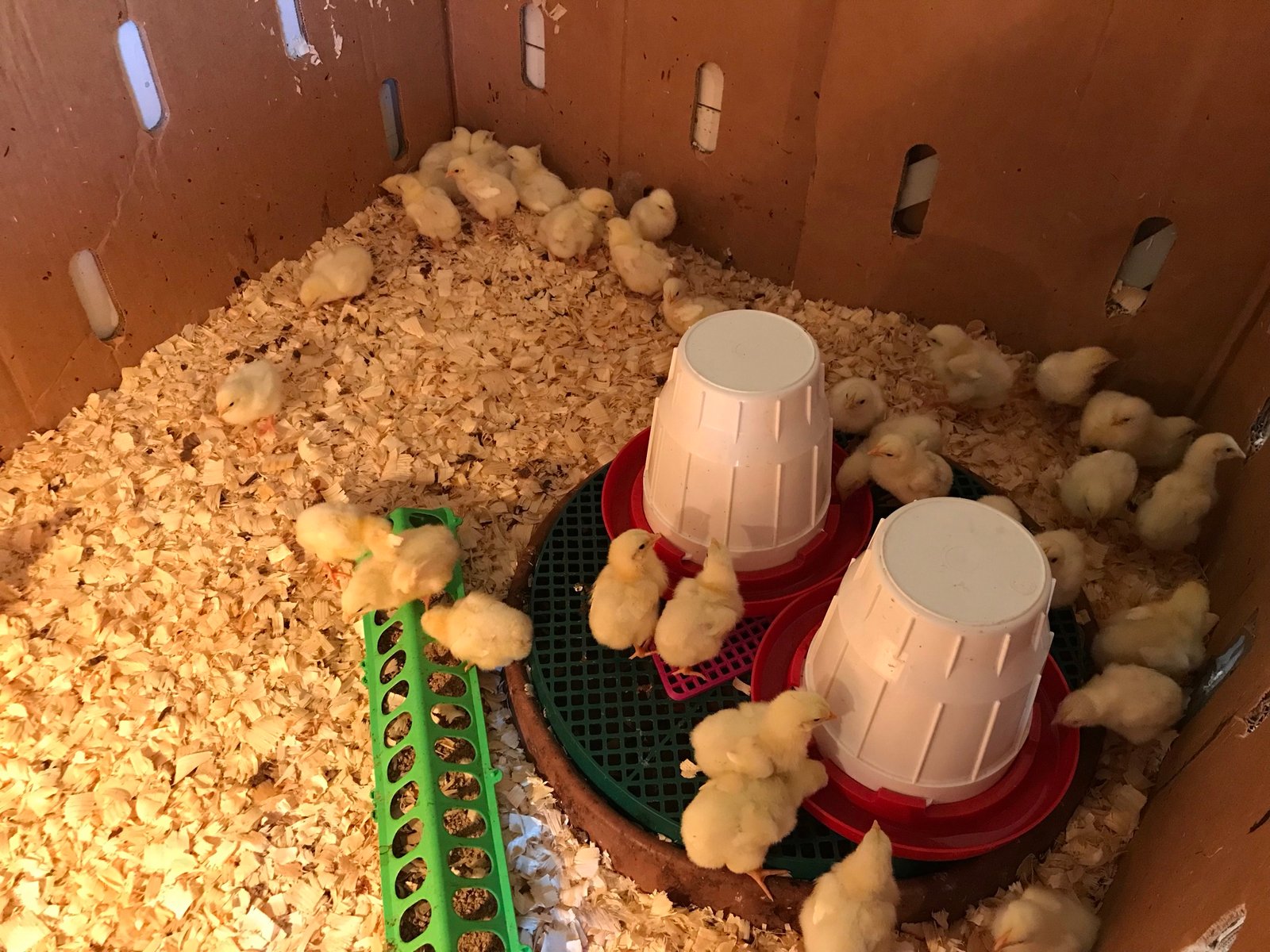
    In August and September, we raised 50 Jumbo Cornish Cross meat birds (purchased from Cackle Hatchery as part of their “Hungry Man Special”). We raised them in the brooder, transferred them outside at two weeks, and let them clean out our garden in September. We lost two adult birds – one of unknown causes and the second that was injured by a non-meat bird (we dispatched it a week early and grilled it on the BBQ). Getting into meat birds for the first time, we didn’t have a Salatin-style tractor. In lieu of the 12-x-12-foot movable box enclosure, we surrounded them with electric netting. When they were young, a pop-up tent worked for shelter during the day. As they grew older, we parked a hay wagon over them for shelter. We moved the fence as needed- every week or so. The last two days, we moved them to the new (almost finished) egg-mobile and bedded them in deep straw. They were comfy, dry, and safe while we received over 2 inches of rain. It also made catching them on the big day a whole lot easier!

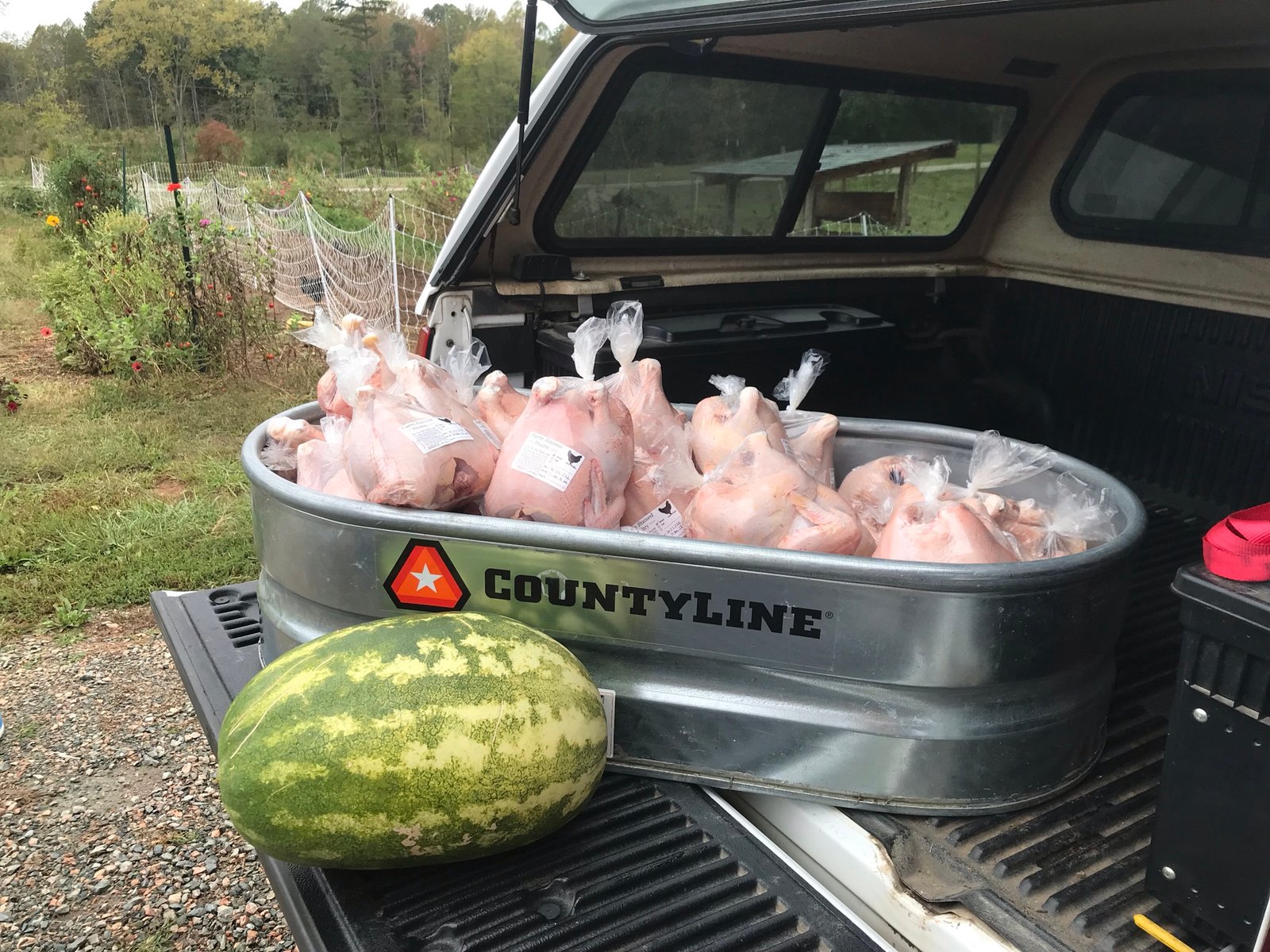
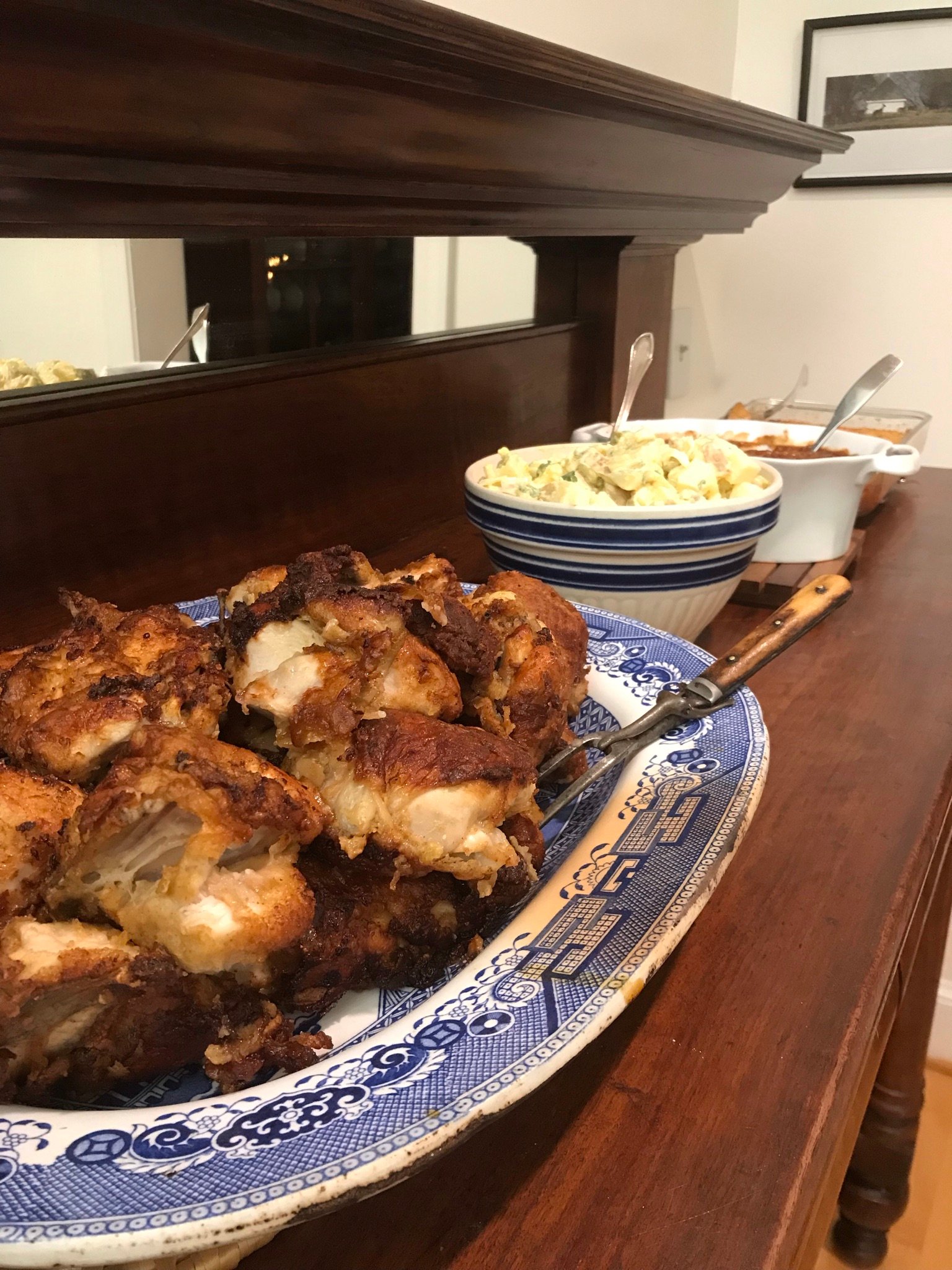
    All told, they ate a whopping 850# of feed and grew into beautiful birds over 53 days. With sincere and humble thanks we processed them with friends and family on October 1, 2022. The average live weight was just over 7 lbs and the carcass (freezer) weight was 5.3 lbs. I’m pretty impressed at the overall growth and stamina of these guys and girls (28 male and 22 female). At the end of an honest day’s work, we pulled out the harvest table in our recently refloored dining room and celebrated with fried chicken and homemade sides and pies.
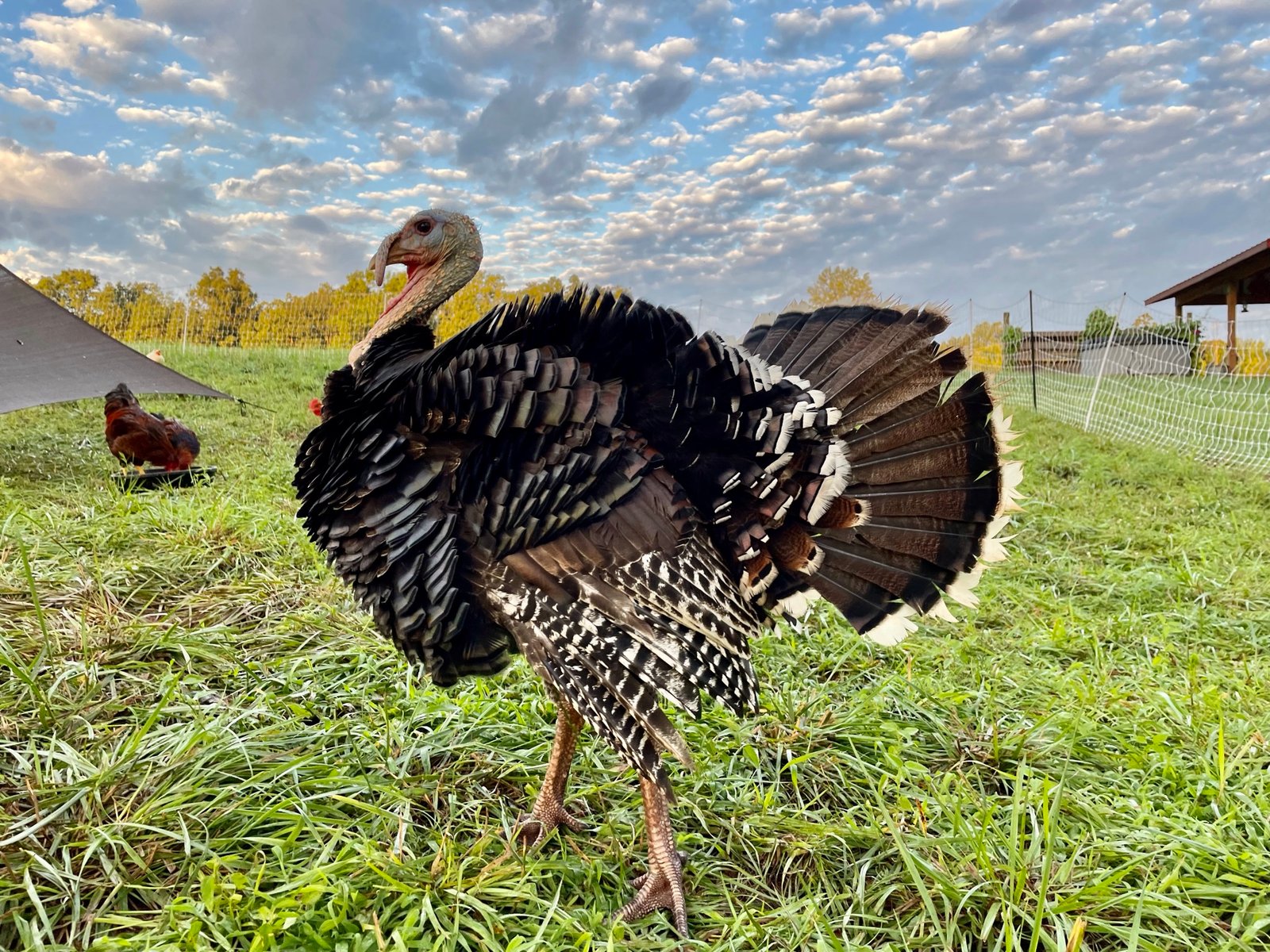
    Our four broad breasted Turkeys have embraced life on the farm. They are now mature and will steadily put on mass before their dinner date for Thanksgiving and Christmas. They’re currently enjoying a mix of scratch and 21% feed.

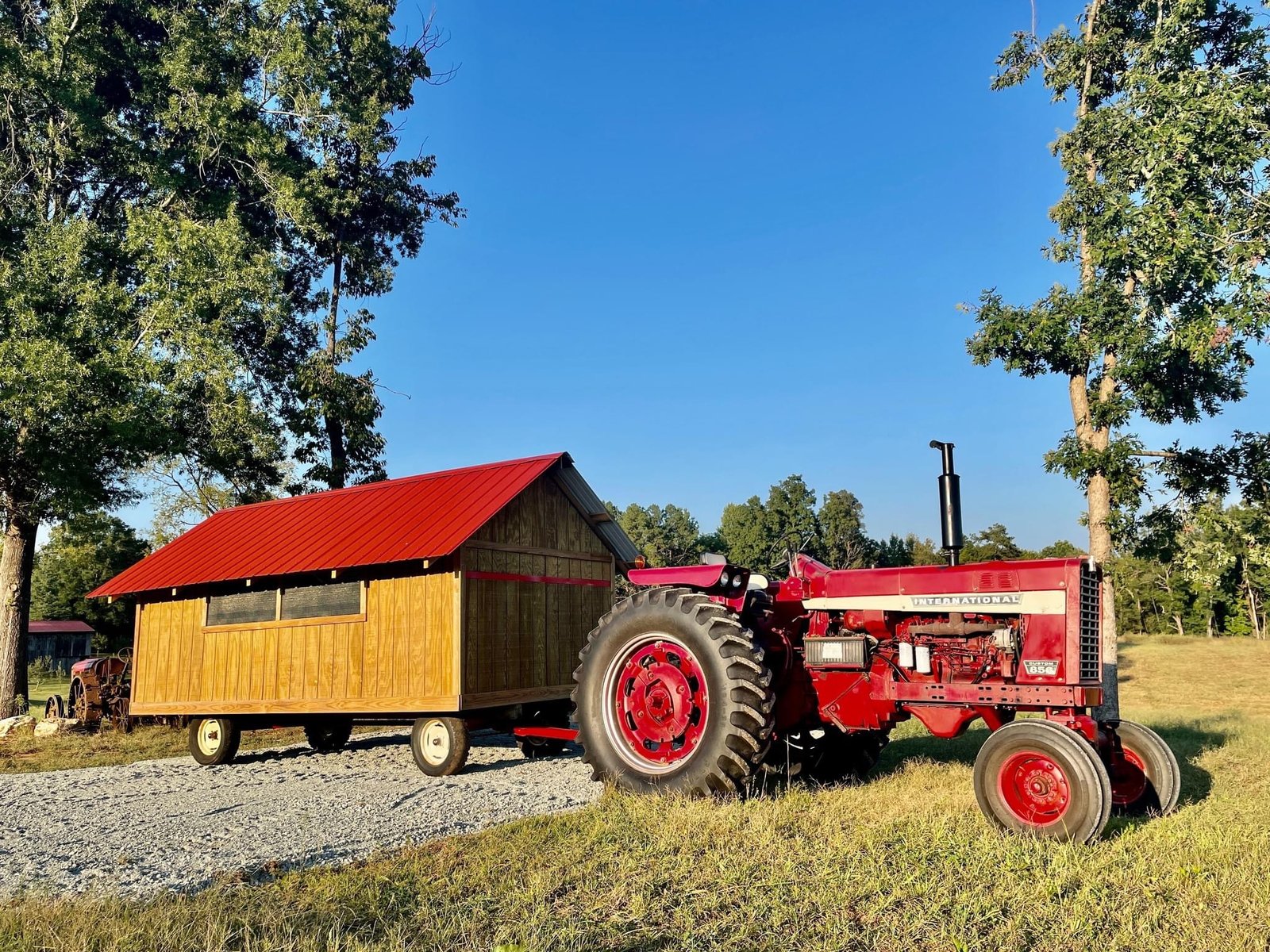
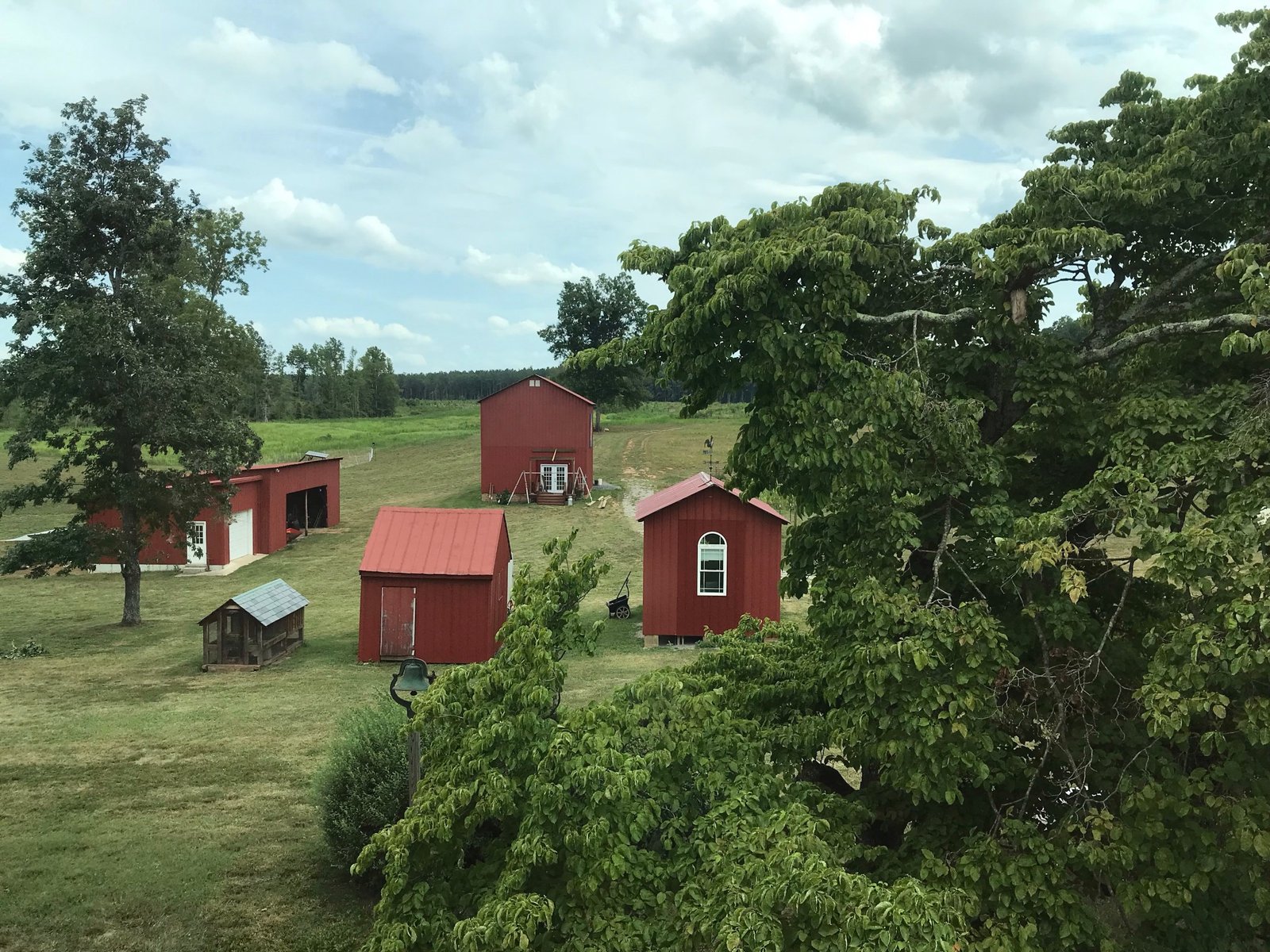
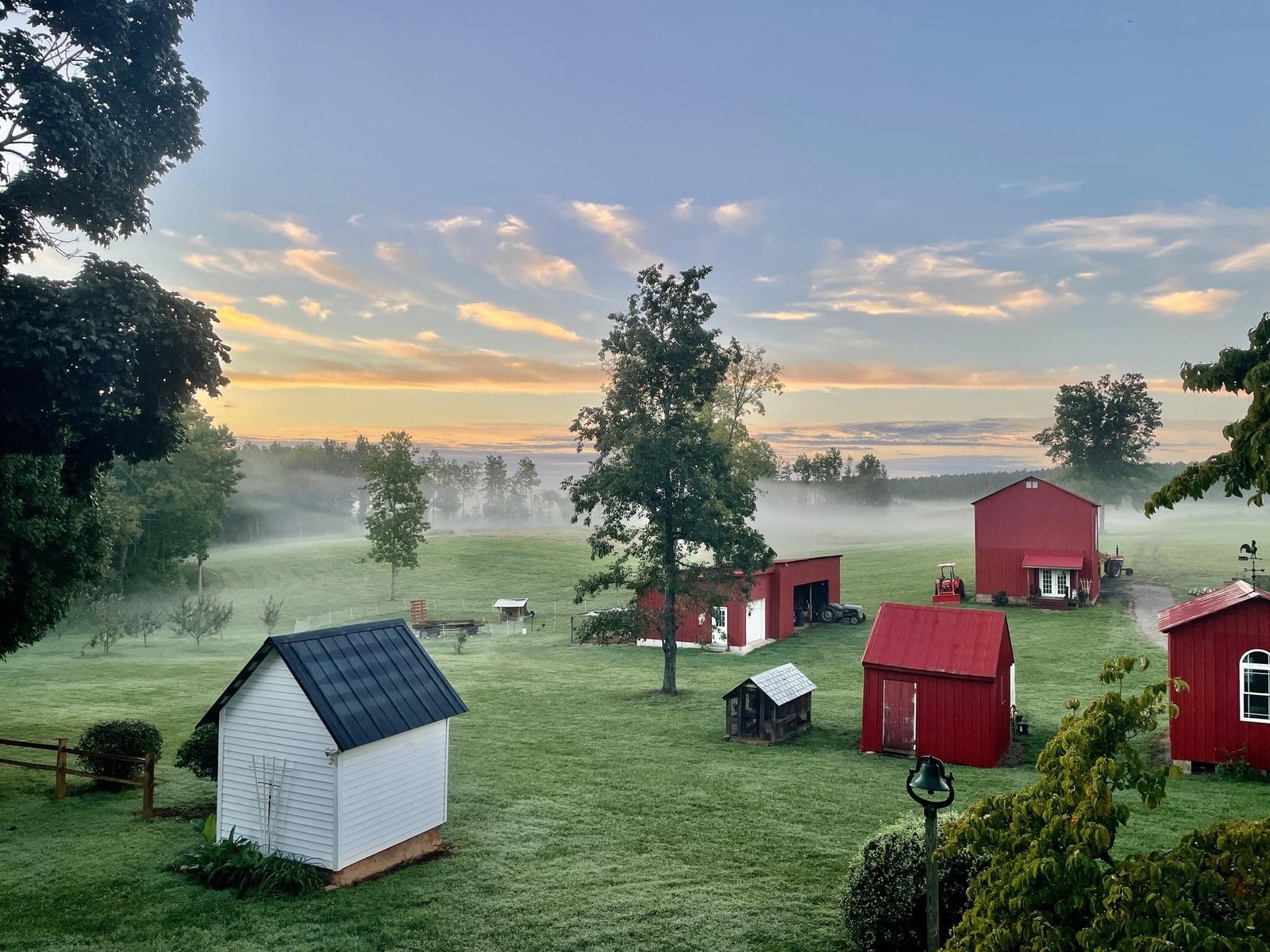
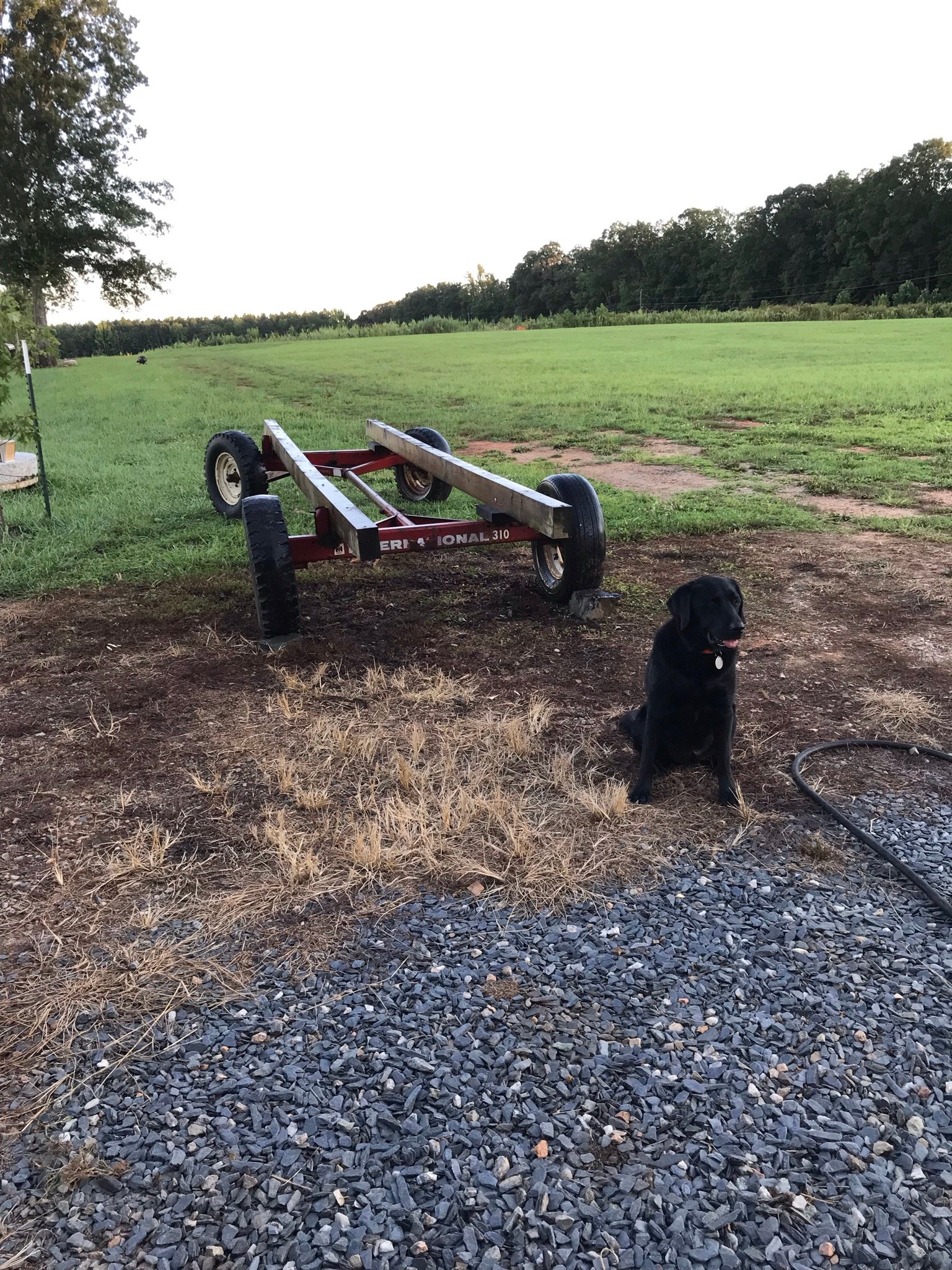
    In early August, Brendan purchased a 1969 International Harvester and Big Red is now the largest tractor on the farm. Looks great next to the new Egg-mobile!
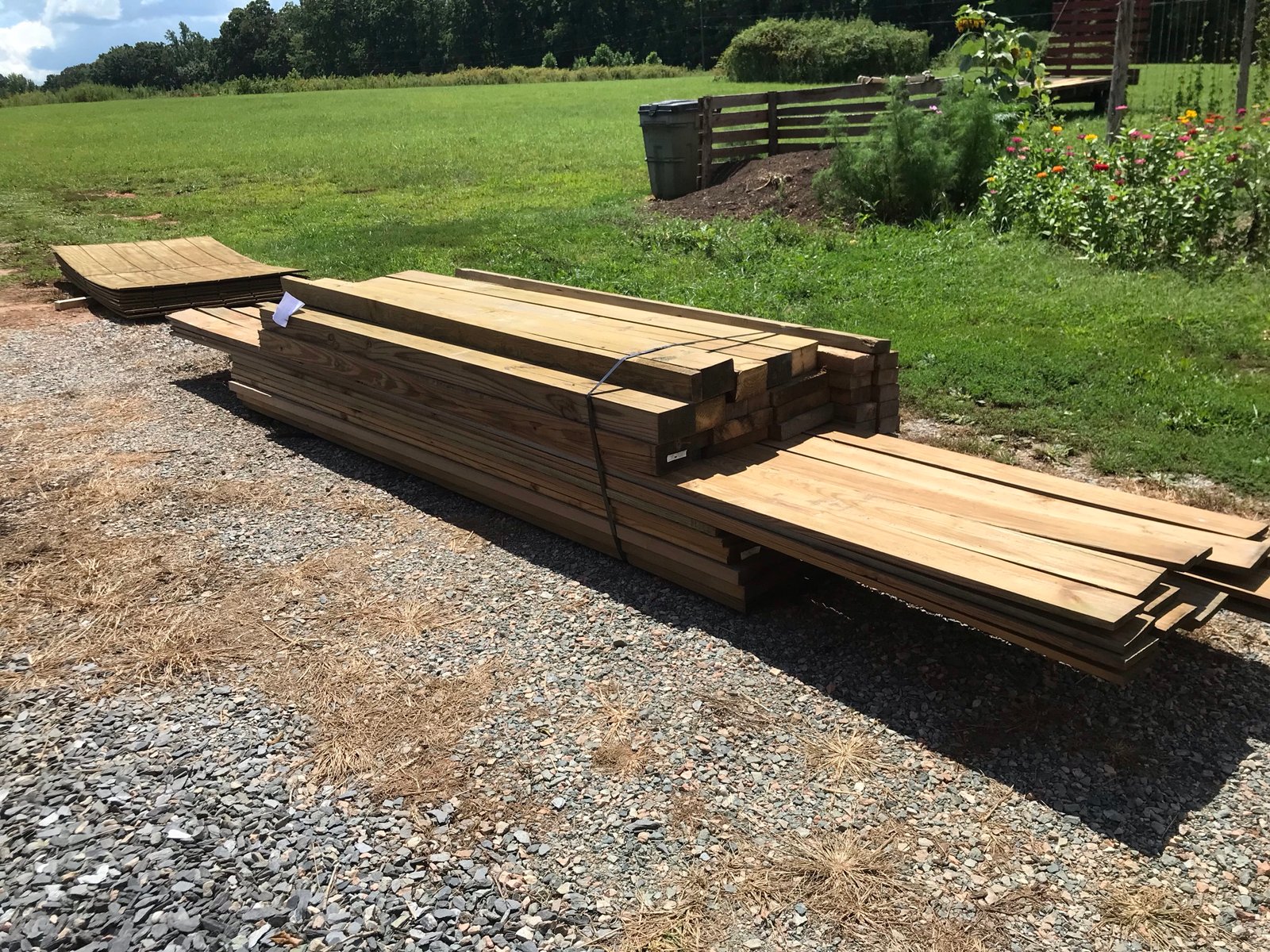
    With trial and error, I’ve learned that all bulk feed is not created equally. This summer, we experimented with buying feed by the barrel from a distributer near Petersburg. After about a month we noticed a marked slowdown in egg production and stalled growth in the pullets. Lesson learned!

    We’ve invested in an antique feed mill made by John Deer (belt-driven), a 1000# of corn, a barrel of wheat middlings, soybean meal, poultry vitamin premix, and diatomaceous earth to try our own recipe. No worries, our ladies will have plenty of free-choice commercial feed while we figure it out. Once we do, we’ll be ready to start selling our surplus eggs – $5 per dozen in Richmond (there’s a discount if you’re local!).

    At the beginning of October, we had the pleasure of watching the farm on TV. Last year, the Food Network filmed Season 3 of Outrageous Pumpkins at Glendale (just good ‘ol fun). It was pretty neat to see the farm gussied up and swarming with people.
  • July 2022

    July 2022

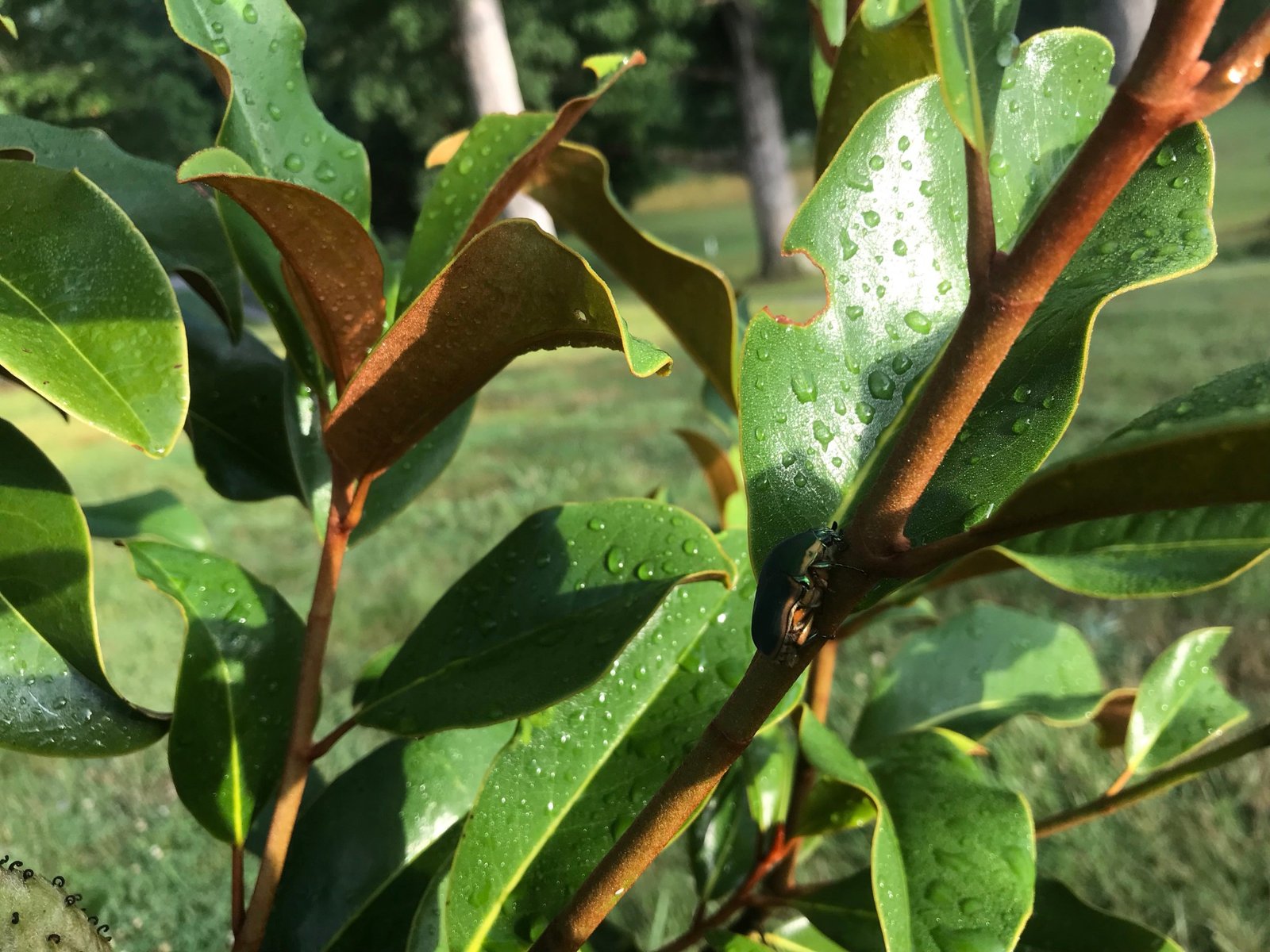
    We’re nearing the dog days of summer with lows above 70 and highs in the 90s. Japanese beetles have given way to June bugs and fireflies. Sunflower and crepe myrtles are in full bloom and the corn is beginning to tassel. It feels too hot to work – almost. The bees are going through a 25-bag of sugar and the poultry are gobbling 100 lbs of feed a week. Our four broad breasted turkeys are now 16 weeks old and starting to grow out instead of up.

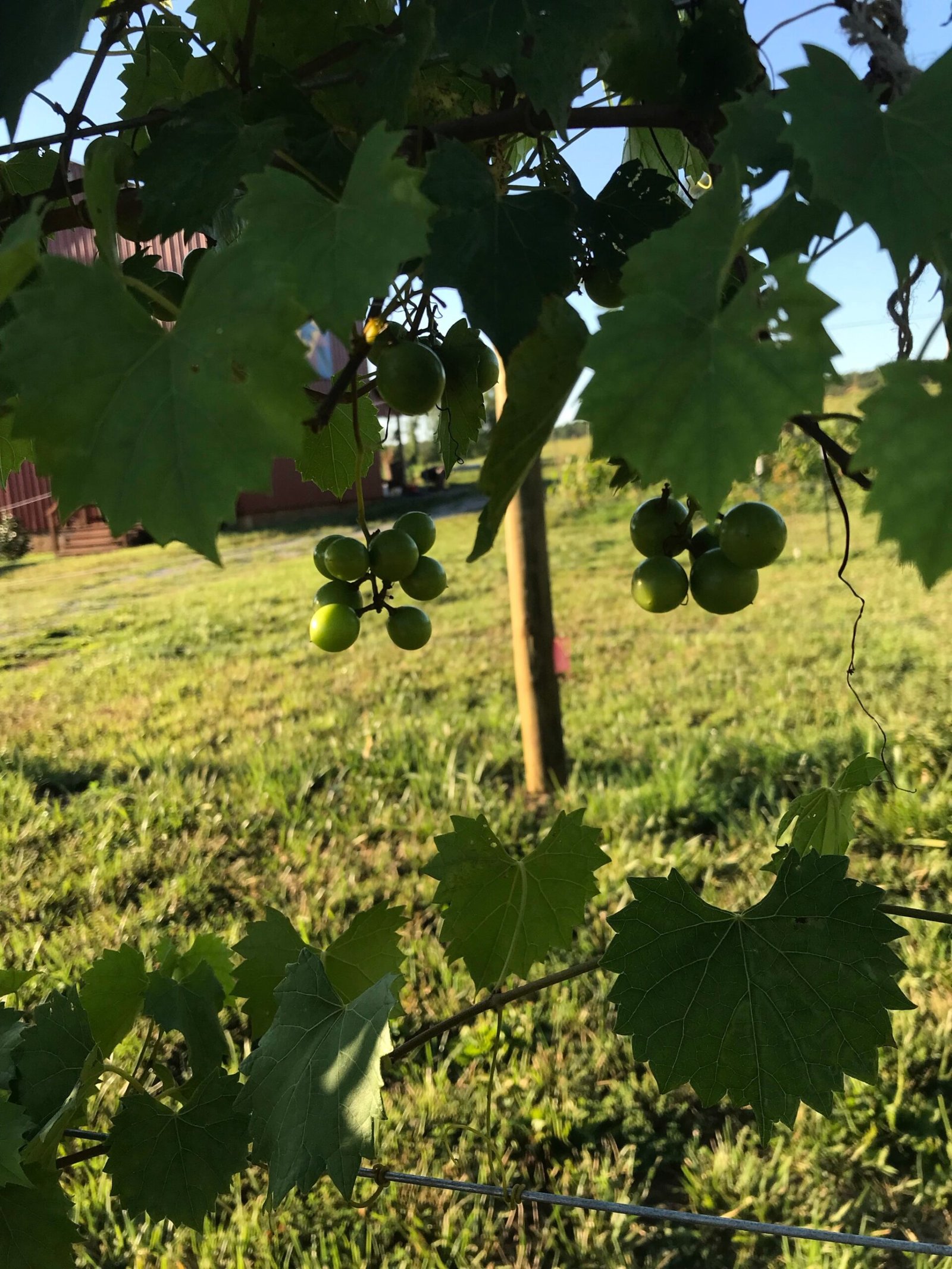
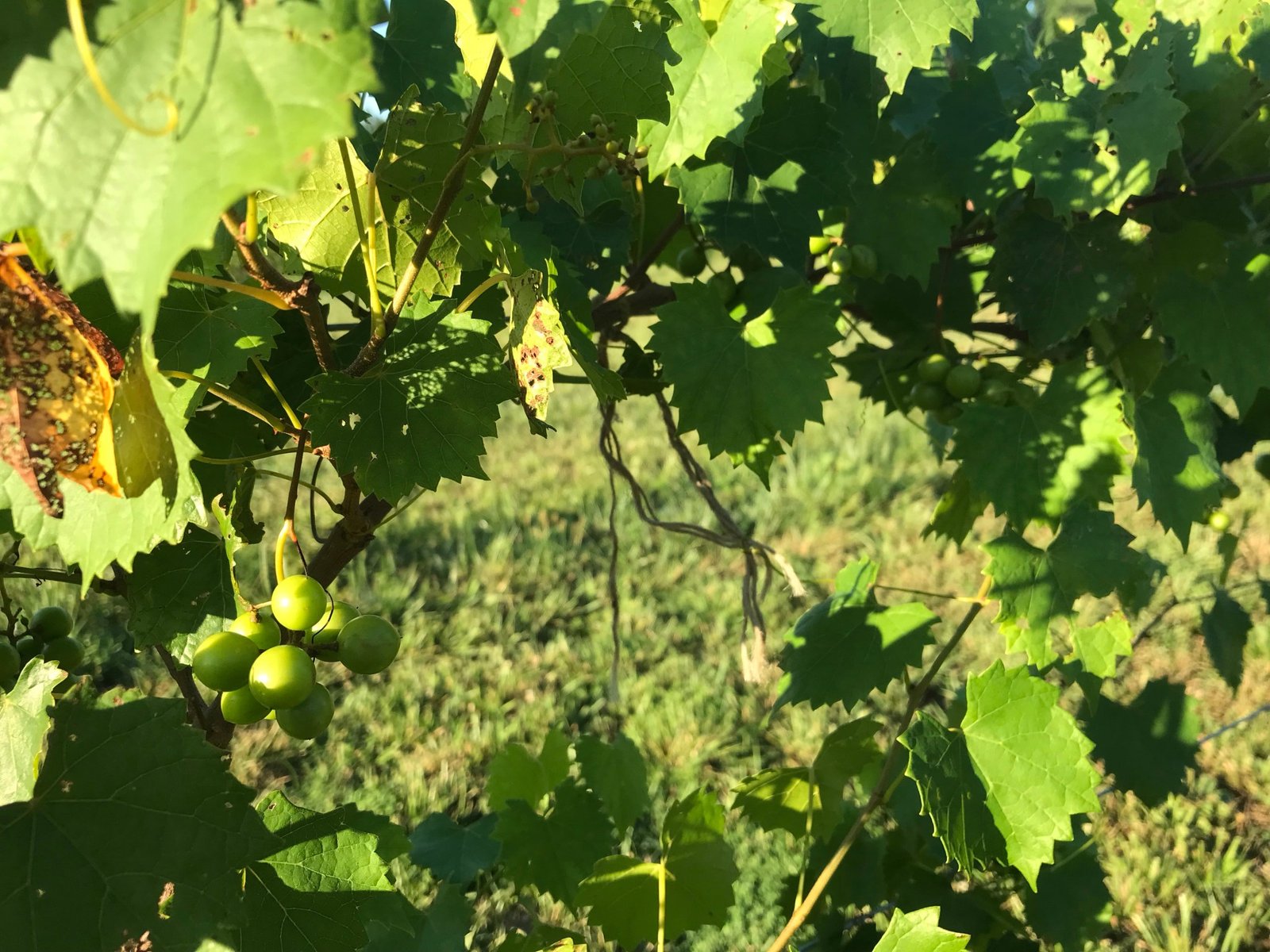
    Muscadine Grapes July 14, 2022.

    Last years landscaping scars have healed and the yard has never looked so green. This month marks the 1 year anniversary for the grape arbor. Two of the three vines have survived and the first muscadine bunches are swelling in the summer heat.

    For the first year, our pecan trees grew up. Planted in 2017 they have seemed to sit and wait, silently stretching roots into the hard red clay. At long last they have begun to reach up, from not quite 5 feet to 8 feet tall this year.

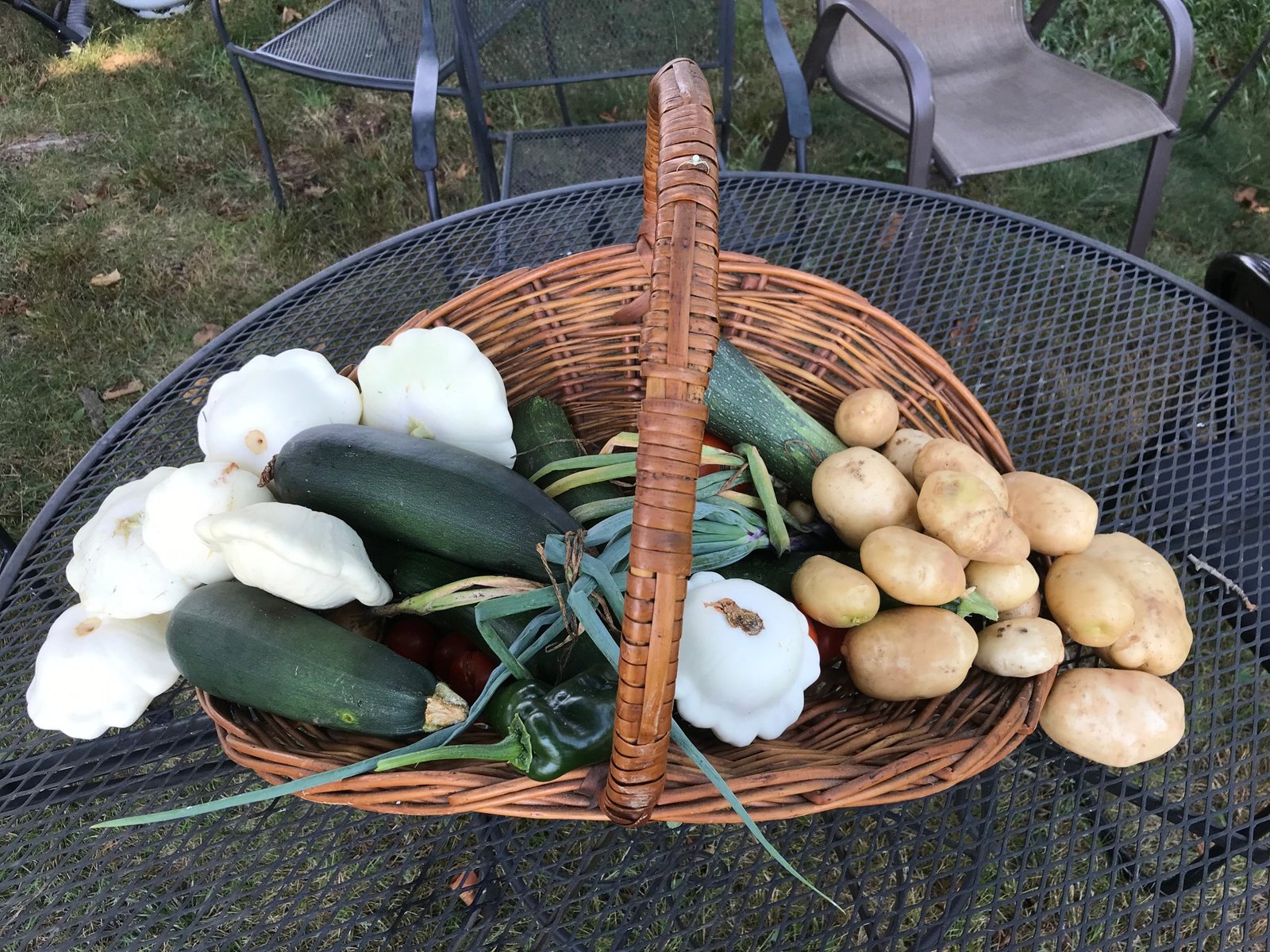
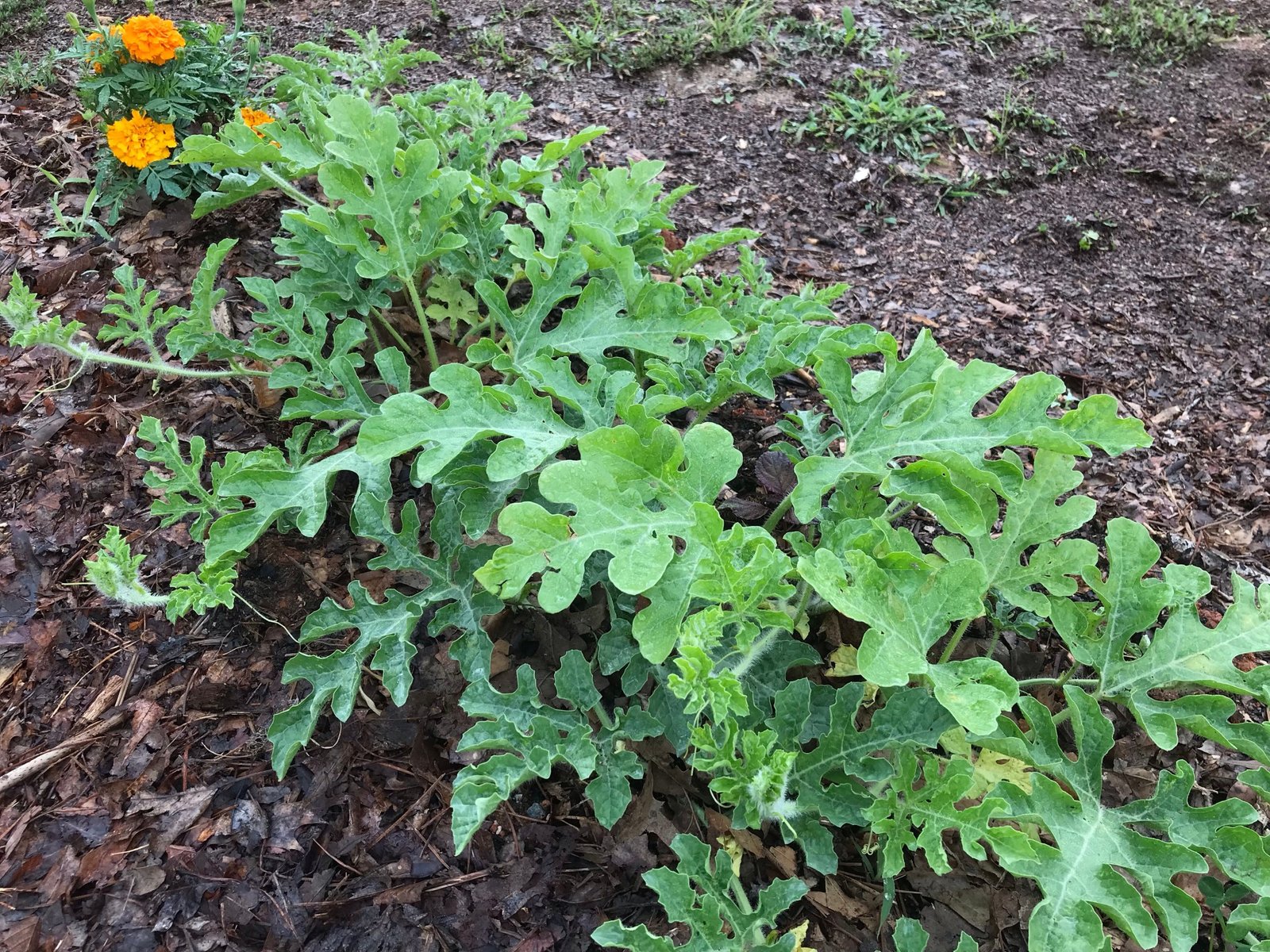
    The garden has yielded buckets of cymling squash and red ripe tomatoes. The potatoes, planted in early April during the Grout’s Easter visit, have yielded 2 1/2 bushels of delicious new potatoes (Kennebec and red)! Other crops include cucumbers (a very short season due to the heat), corn, bell peppers, a small harvest of beets and some onions. We have peanuts going well and on the 31st put in a row of fall beets, collards, and carrots.

    2022 makes the first year we’ve produced our own compost. Brooder house droppings and straw bedding, vegetables from last fall’s pumpkin carving competition, stall cleanings from work at the Wigwam, and the hen house droppings have composted to create so much richness. To top it off, our neighbors provided a wagon load of compost from their sweet potato plantings. Nutrients and deep plowing has improved the soil and drainage.

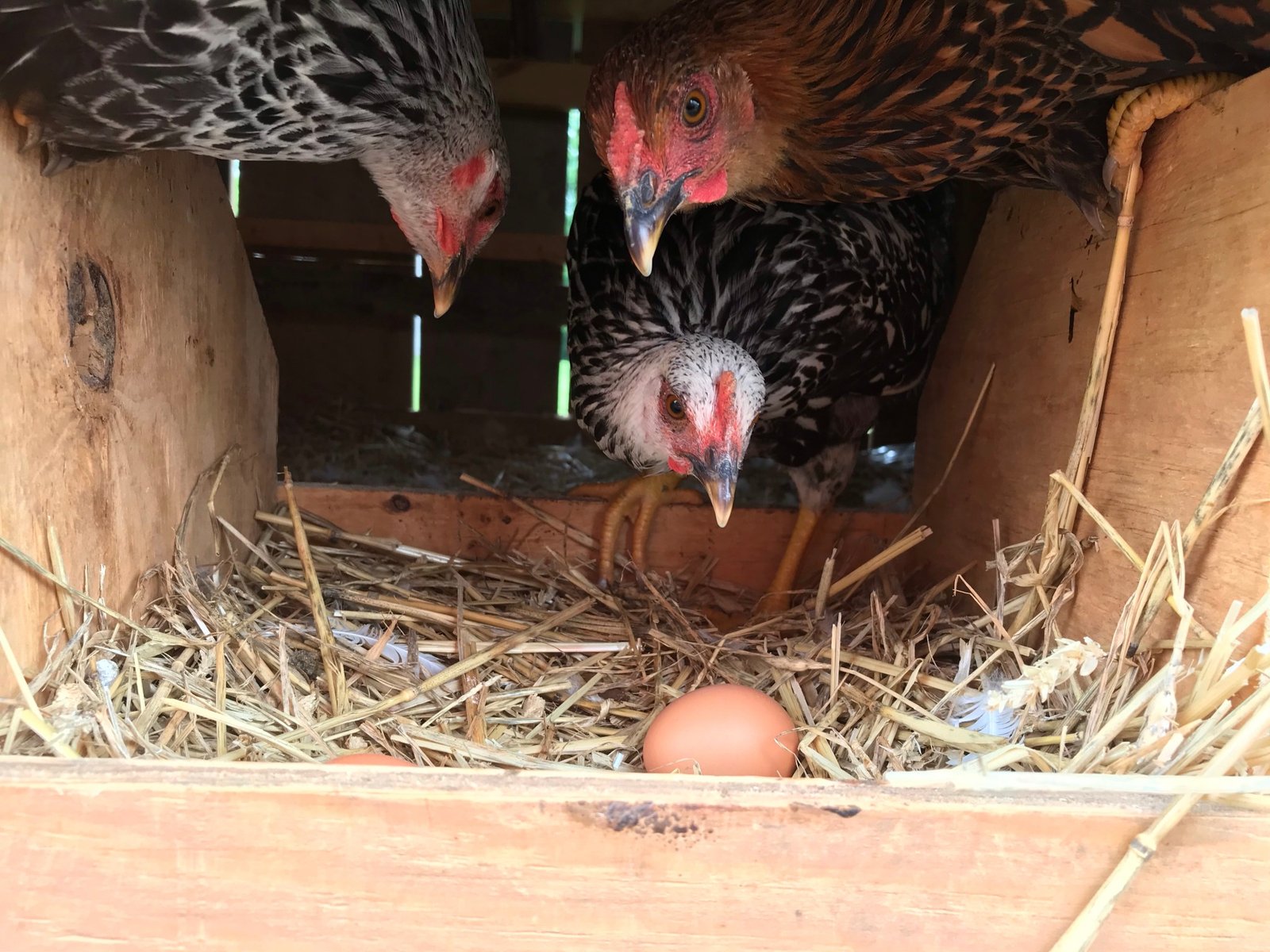
    We rehomed our golden comets and leghorn chickens on July 17. Our laying flock is now reduced to 5 comprised of 3 six-month old silver laced wyandottes (hatched this Spring at Glendale) and two 18-month old hens (“Spazz” and “Goldie”). We are inundated with young pullets, cockerels, and grow-outs. A year into chickens and we have 99 chickens, 6 turkey, and three ducklings. The egg count is 2,700. At some point, we’ll open a small farm stall or egg swap but for now we are sharing with friends and neighbors.

    Update: The last week of August found a pair of rats (!) terrorizing the chickens; each morning I dread finding which of the young grow outs has had its head ripped off and its organs devoured. As of July 31st, we’re still working to find a solution- baiting traps with tasty treats, hardening the pen, and setting up game cameras. This month we lost three (now four- five, six!). It been our worst month for losses to date – with three little chicks also failing to thrive in a hatchery box at the beginning of the month. It is not unexpected with the heat but it is something we will overcome and learn from.

    In other big news, Brendan celebrated one year with the Division of Historical Resources (DHR) as State Underwater Archaeologist. Hurrah!

  • March and April (Spring) 2022

    March and April (Spring) 2022

    “It is (still) wonderful how much may be done if we are always doing.”

    Thomas Jefferson

    March marked the one year anniversary of these monthly blogs. I thought it would be nice to do a little progress check and see how far we’ve come in a year including land-clearing (establishing pasture), chickens (and chicken math), bees, apple trees, and the garden – among other things.

    Land-clearing continues with the excavator and Buttercup, our D-6. At last count we had stumped about nine acres. Three have been drilled with a pasture mix (20 lbs/acre), limed (6 tons per acre applied over two years), tested, and fertilized (a mix of 40-130-40). It’s been a process but we have goals to build a shelter and fences this fall and bring Gus home sometime next Spring (maybe for our mutual birthday, lol).

    After two years of trying, we had our first show of tulips. They benefited from about 100 lbs of horse manure applied last fall and some gypsum to amend the soil. Progress!

    Drilled lines of new pasture!

    In the garden we learned from last year that planting potatoes can wait until the ground warm up and sure enough, we had success!

    This year brewing has taken a back seat to the birds and the bees. One year in, we have 84 chickens and 4 broad breasted bronze turkey poults. The chicken infrastructure includes an ad-hoc brooder house with pumpkin boxes and chicken wire (formerly the grannery), the hen house constructed last year for our laying ladies (currently there are 8), and a 200 square foot grow-out pen attached to the back of the machinery barn.

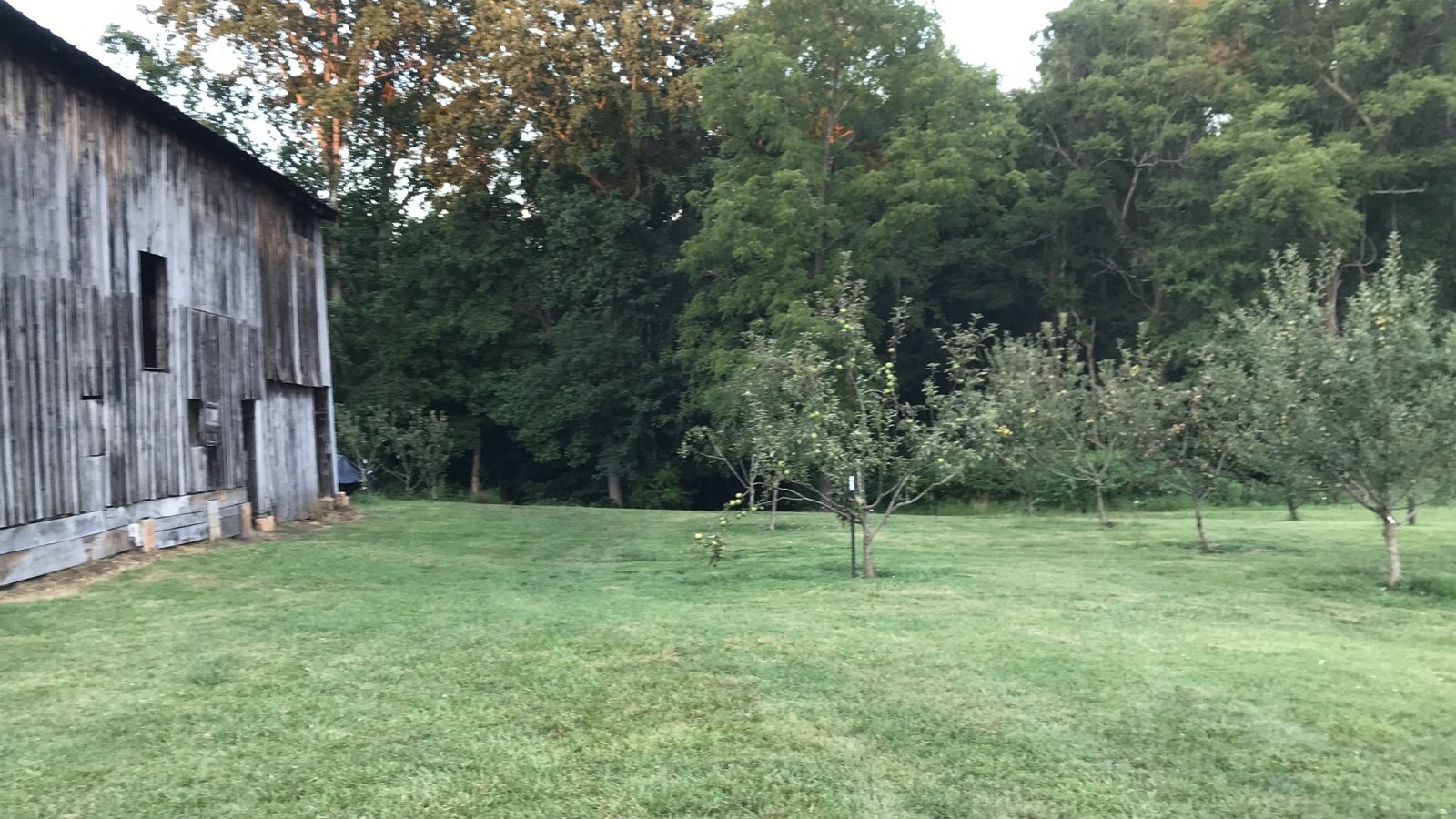
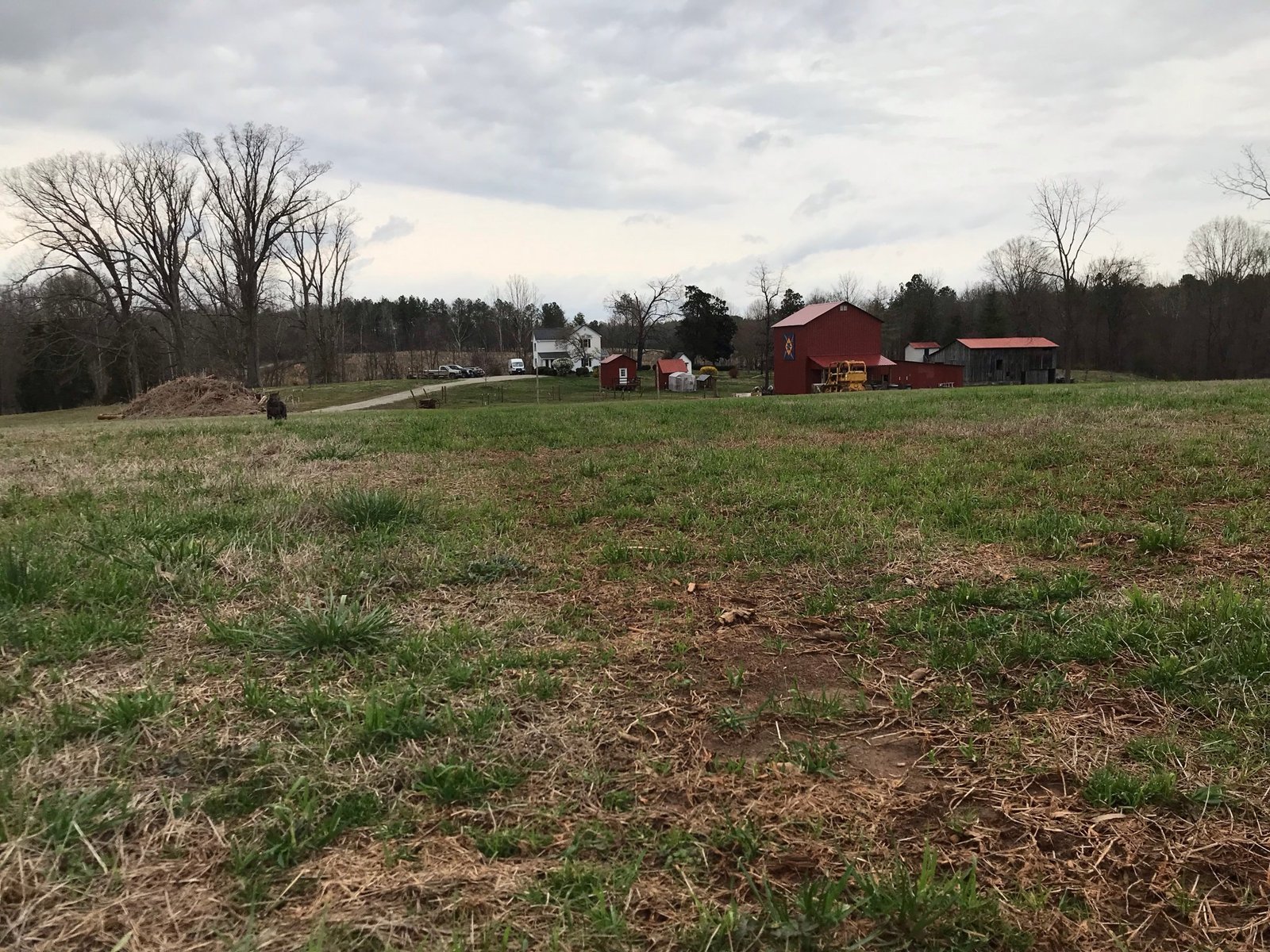
    March 2022, view from the apple orchard towards the new grow-out pen.

    Out of the eight hives we inherited last fall, two overwintered and both swarmed in early April. Thanks to good advice, we managed to catch the first swarm on the chimney ruins and set up a cedar tree as bait. From April 4 through the 20th, we caught another four hives. We have A LOT to learn about bees!

    Early Spring and one of the overwintered hives.

    The current state (at the beginning of May 2022) is seven hives, many of which are in need of repair or replacement. Five are small or weak and we’re working to keep them growing and healthy. Brendan ordered mite treatment and in April we took a trip to Scottsville Supply to buy new boxes (12).

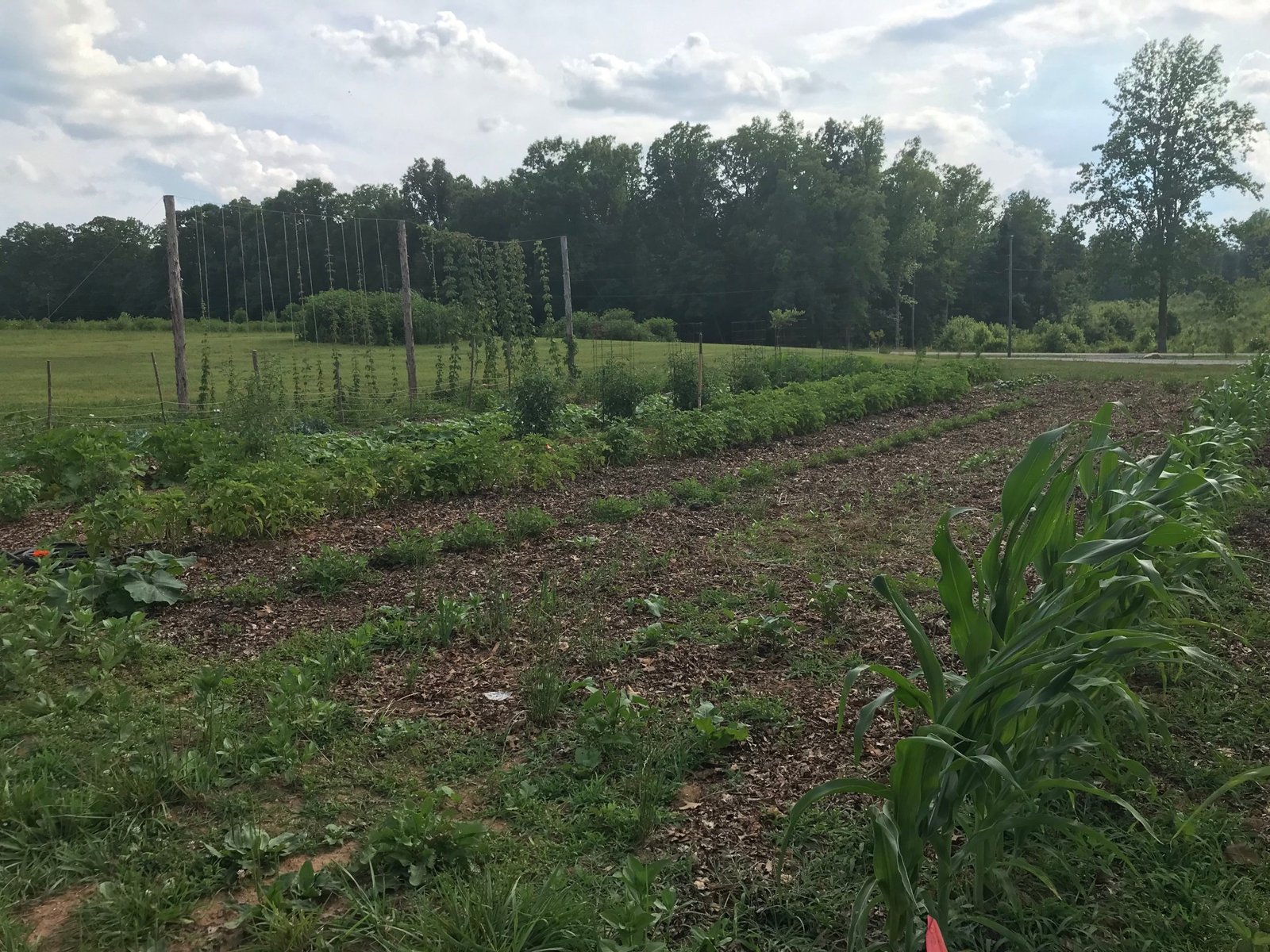
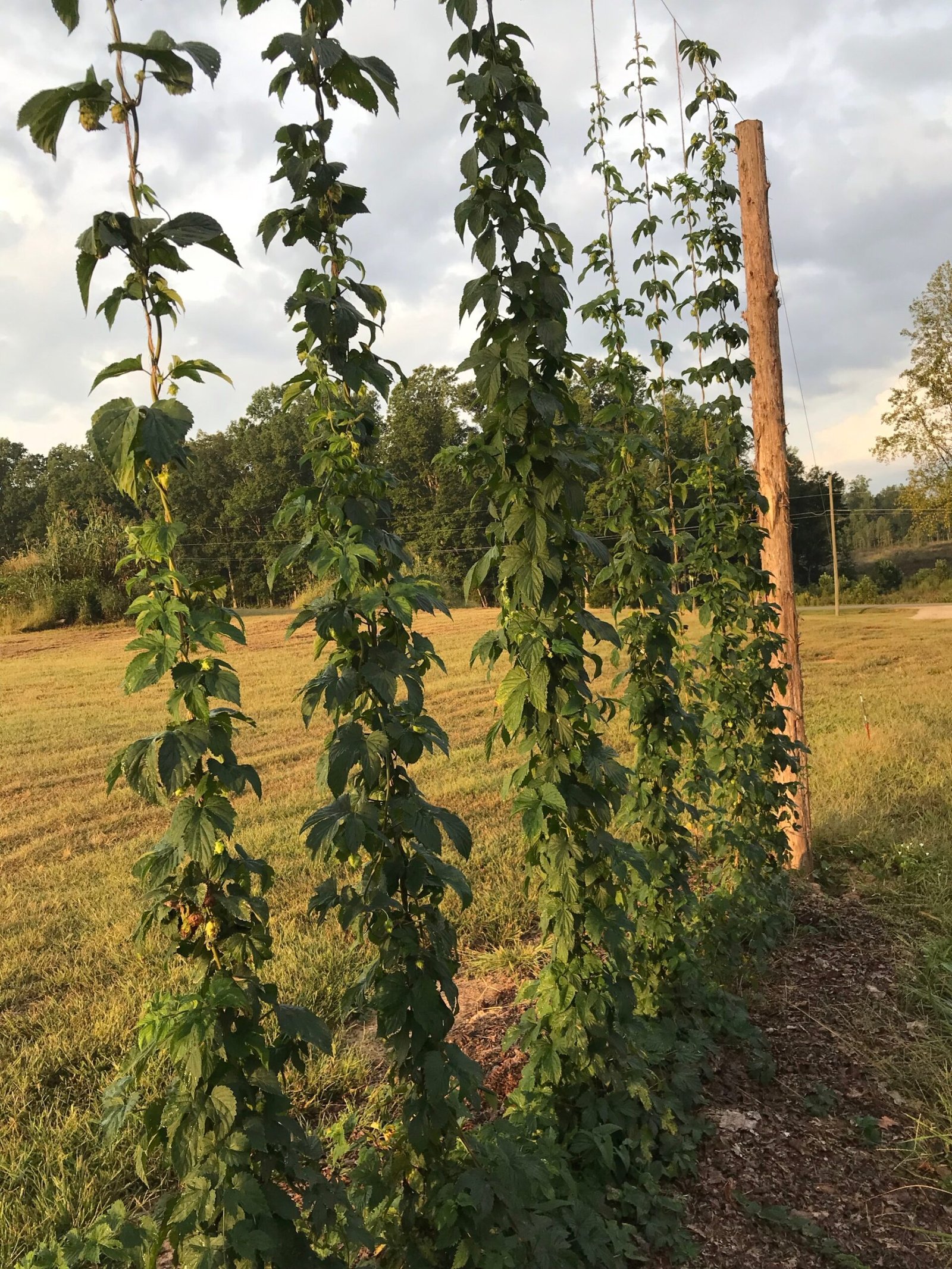
    In the garden, the permaculture area is now a year old. We have erected high tensile trellises for blackberries and grapes and last year’s grapes are beginning to grow. The centennial hops are growing vigorously and the Goldings are well, if a little behind.

    For Easter, Coral and the Grouts came to visit. We planted potatoes and hatched a new set of 16 baby chicks.

  • February 2022

    February 2022

    In memory of T. Patrick Burke, 6/6/1926 – 2/3/2022. We not be here if it weren’t for Brendan’s dad. In 1994, he encouraged Brendan’s mom Helen to move back to her family home, sell their house in Richmond, and invest in a future at Glendale in the country. The farm was not in bad shape but was in sore need of time and money. Over the next 25 years, Pat planted trees and drifts of daffodils, peonies and iris. He made the old yard a gardener’s delight. The work we do now is in his memory and spirit, a constant effort to steward what is old for what is new.

    BURKE, Thomas Patrick, Jr., was born June 6, 1926, in the Oregon Hill neighborhood of Richmond, Virginia to Thomas P. Burke Sr. and Virgie Vernell Burke. His early memories of the neighborhood and a Richmond from long ago included attending Grace Arents School, riding the streetcar through the city and ice deliveries by horse and wagon. After graduating from John Marshall High School in 1943, he attended William & Mary and was drafted into the U.S. Navy in 1944.

    Pat’s memories of WWII service were well-documented and spanned nearly the entire Pacific basin. As quartermaster, he steered his ship, the U.S.S. Ascella, before learning to drive a Jeep in Shangai during the winter of 1944 to 1945. His experiences abroad, from New Caledonia to the Ulithi Atoll, and from Mog Mog to Okinawa formed him into a world traveler. After the war, Pat returned to William & Mary, where he finished his undergraduate degree; William and Mary was dear to his heart throughout life. His next degree was a master’s from the University of Virginia.

    In the 1950s, Pat started his career teaching at Dinwiddie High School, where he made lifelong friends. Subsequently, he was recruited to work for the Virginia Department Education as Supervisor of History, Government and Geography. Wedded to the classroom, however, he returned to teaching at Longwood College as a professor in the history department. After 11 years at Longwood, Pat joined the faculty of the newly founded Richmond Community High School in Richmond to help it develop into one of the best alternative high schools in the country, a job of which he was most proud. Pat’s time in the classroom was more than a job or career. It was a devotion to students and a fervent love for teaching. This was evident in many ways but especially through the words of his former students. Many of them continued their association throughout his retirement, even as recently as this past month.

    Pat’s love of education made him the eternal learner/student, and as a scholar on sabbatical to Trinity College Dublin during the mid-1970s, his interests focused on the Irish rebellion. During his stay in Ireland, he travelled the country and ended by building a house in County Kerry, where his family would spend many happy summers. He was a founding member of the Irish-American Society of Greater Richmond and a participant in many other civic organizations. He was never satisfied to simply have enough; he wanted everyone to have enough and fought for that cause in the classroom, boardroom and living room.

    In 1979, Pat married Helen Warriner, the love of his life. She was a fellow educator and the two knew no bounds to celebrating life. They traveled a good portion of the world together. In 1994, the Burkes moved to Amelia County, his wife’s ancestral home, where he expanded his already sizeable passion for growing daffodils into a pursuit in landscape architecture. His daffodils not only bedecked the spring yard, but won awards in regional flower shows. Today, the garden, trees and plantings at Glendale reflect the love his hands put into the soil and a gift bestowed to future generations.

    Pat Burke loved life and anything that challenged the mind and helped people. He was never satisfied to simply have enough, he wanted everyone to have enough and he fought for that cause in the classroom, boardroom and living room.

    Thomas Patrick Burke Jr. loved life and his family. He is survived by his wife, Helen Warriner-Burke; his son, Patrick Brendan Burke and wife, Lillian Azevedo; and his nephews, Tommy and Clifton Hairfield. He was preceded in death by his sister, Edelle Mallory; and his brother, Joe Burke. Pat’s old dog, Abner lives on to beg others for treats.

    Brendan Burke

    There is a hole in the farm, a part of life as natural as birth itself is missing. Even so life goes on. In February, we spread 900 lbs of fertilizer and 17 tons of lime on the new pasture, pruned the apple trees, and worked to overhaul Buttercup, the bulldozer.

    We hatched our second set of Glendale Wyandottes, 9 silver laced chicks out of our rooster and three pullets (two silver laced and one gold laced from a farm swap last year). Brendan finished the chicken yard as our new flock of juveniles has swelled to 25, 17 of which are roosters. As dual purpose birds, we’ll move most of them on in late April. In the meantime, we’ll enjoy their antics and play.

  • September 2021

    September 2021

    Get ready for changing seasons, land-clearing, egg-onomics, dove hunting, and Gus’ new shoes.

    Make hay while the sun shines, or in our case clear land while the weather’s fair. September brought a breath of cool (less humid) air, a delivery of four new hives, more stump excavating, doves, and an abundance of eggs. Gus got a new pair of pour-in shoes while my own paddock boots cracked and split.

    Dove season was an exciting time. A cover of millet, sunflowers, and volunteer clover was too tasty for the doves to ignore. Lilli had the chance to put last year’s Christmas present (20 ga) to work and a happy Chet tracked the fallen birds through grass, brambles, and brush.

    A friend brought four more hives to weather the winter at Glendale. They are not the strongest but hopefully will be able to take advantage of blooming golden rod over the next few weeks. Our good neighbor Paul Jones will bring feed to give them a better chance of survival. If any fail, the empty hive will be available for spring swarms to colonize. Life finds a way!

    Paul Jones brought over four new hives to spend the winter.

    Land clearing continued as the cooler weather has made the work less sweaty. Over the past 12 months, Brendan has cleared about 5 1/2 acres and we have plans to open another 4 1/2. We’ll divide the 10 acres into several paddocks with the intent to not only bring Gus home but also purchase a few cattle. Brendan is considering Angus but we’ll see what happens. We still have stumping, grading, planting, and fencing before we introduce more feet! Next month, Barry plans to bring over a small bulldozer (Cat 450) which will help the process along. With both Brendan and I fully employed, it’s going to take some night farming to make it happen.

    The 9 chickens laid a record 229 eggs this month. We’ve been fortunate to gift eggs to neighbors and friends, and have even color-coded them: the Wyandott lay a beige egg, the Golden Comets produce a large brown egg, and the Leghorns gift us giant white dobbers. Like most hobby chicken tenders, we’ve run out of egg cartons and have taken to lending small baskets or wrapping them in paper.

    Chickens visiting the home SEARCH office.

    We picked 6.5 oz of hops from the Centennial hops mid-month. The Golding didn’t produce but that’s not uncommon for the first year. We’ll leave the hop bines standing until the first frost to encourage as much growth and energy storage as possible. The wet hops went into a 10-gallon batch of Farmhouse Ale for the second fermentation. We’ll keg it in early October and enjoy it for OctoberFest.

    Hop cones ready for harvesting

    The first apples are ripe and ugly. Thanks to the deer and wasps, there are too few to bother with cider but we did find a pulley and belt at the Somerset Steam and Gas show. We’ll attach it to the hit and miss engine next fall to run the cider mill. This year we’ll satisfy our curiosity by picking the best apples and deciding which varieties we like best.

    Last but not least, Gus got some fancy kicks. Being a first time horse owner, it’s been quite the learning process. He pulled a shoe and had underrun his heels a couple of weeks ago. We tried going barefoot but I finally caved in. The new shoes will support his frog and give his heels a chance to recover.We’re lucky to be in a part of the country with good care and a great farrier.

  • June 2021

    June 2021

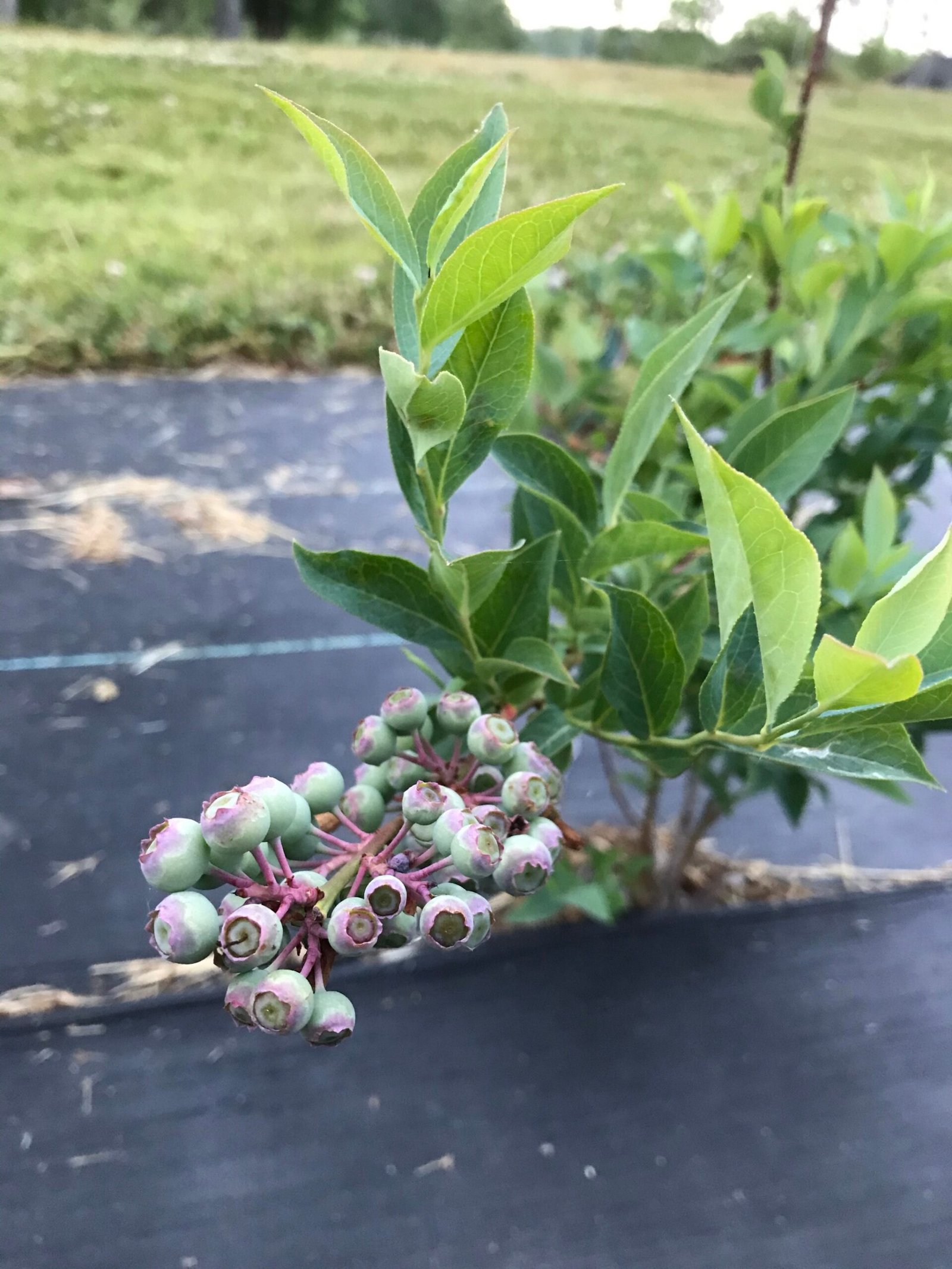
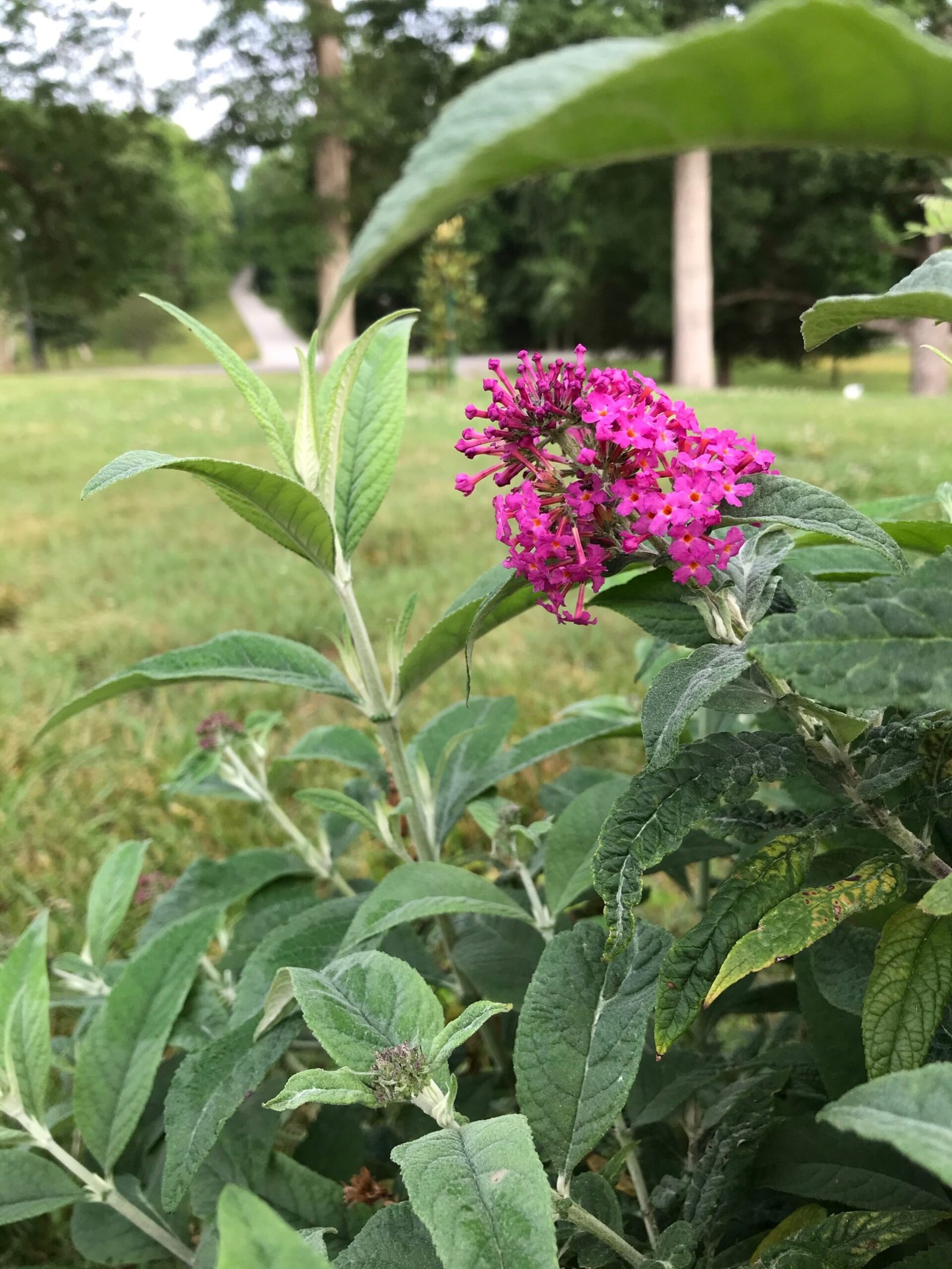
    A cool, dry Spring gave way to a hot, dry summer. Our new garden suffered but blueberries (transplanted from last year’s bare root plants) blushed purple and last year’s bee balm exploded in brilliant red and purple. We’ll take success where it comes and measure failures by lessons learned!

    June Projects included:

    800 lb of lime applied to garden (rate of 5 tons/acre) 6/16/2021
    100# German millet drilled 6/17/2021
    200# lime applied variously to yard 6/16/2021
    2 additional bee hives on loan from P. Jones 6/18/2021
    Hop poles erected 6/20/2021
    Repaired trench left from running water to tobaco barn 6/20/2021
    Hop dirt bed (5 tractor buckets of loamy sand from the creek) 6/21/2021
    German millet broadcast seeded/Sudan grass on piles 6/20/2021
    Hop bines planted  6/25/2021
    5 acres treated with 1.5 tons lime/acre (8.3 tons) 6/28/2021

    Brendan spread 1,000 lbs of lime across the garden and Southern States delivered and spread another 8.3 tons across the newly cleared pasture (approximately 5 acres). This year bulk lime is $55/ton (delivered and spread), an increase of 10% from last year, but still a lot less than buying it by the 40 lb bag.

    For small jobs of less than 1,000 lbs, a spreader and tractor do great!

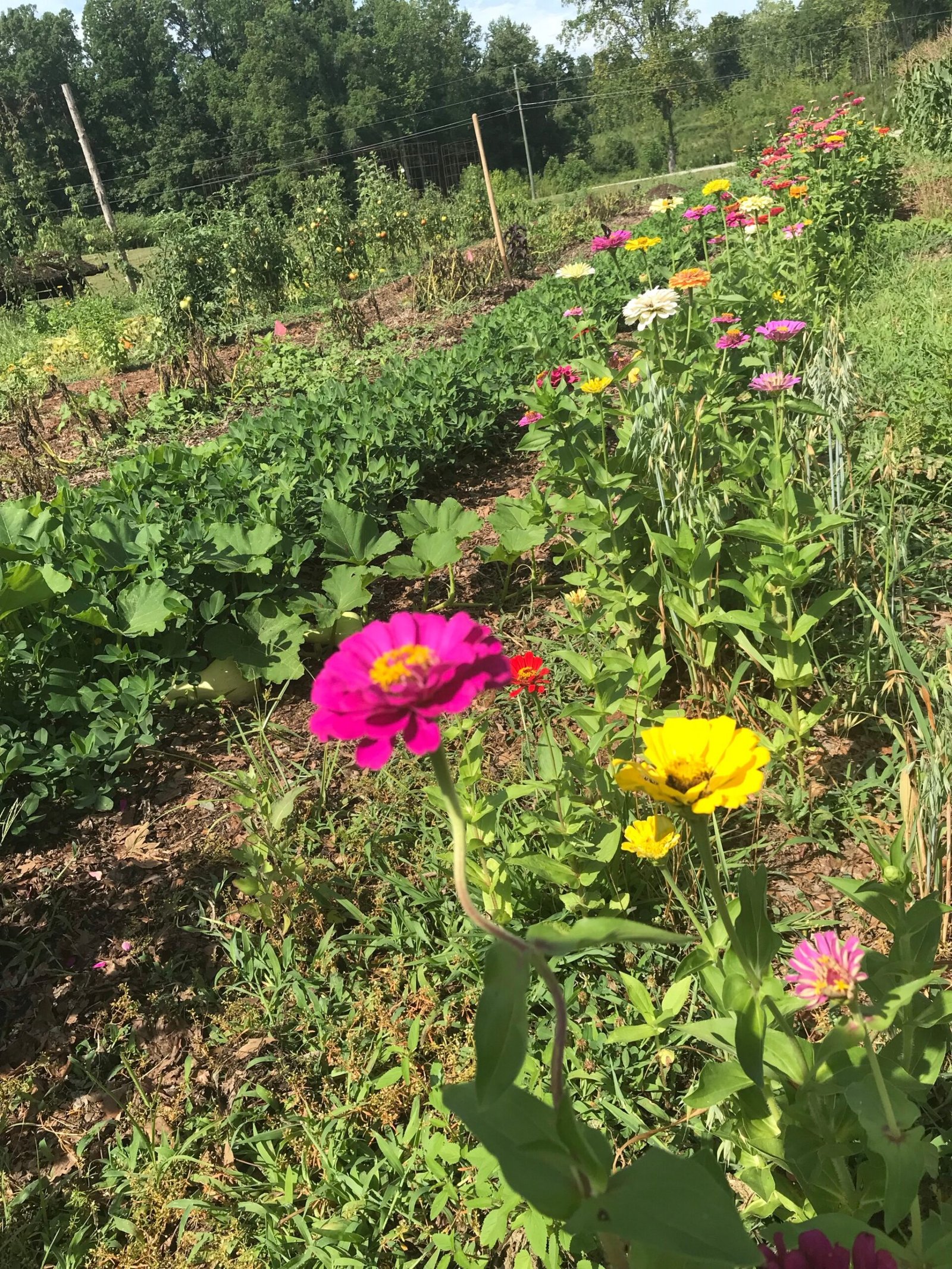
    The ‘giant’ pumpkin has gotten off to a slow start, our bell peppers have literally melted into the ground, and the garden squash have been attacked by vine borers. On the bright side, our spindly corn refuses to give up, our zinnias are blooming brightly, we have a fresh supply of sumpter cucumbers for our salads, and our onions are perfectly sized for cocktails!

    We added three Wyandott pullets to our coop at the beginning of the month to replace three White Leghorns that Emily Jane adopted in Florida. It took about two weeks of pecking and squawking but the ladies are finally figuring it out and are getting along.

    The new pullets investigate an egg laid by the Golden Comets.

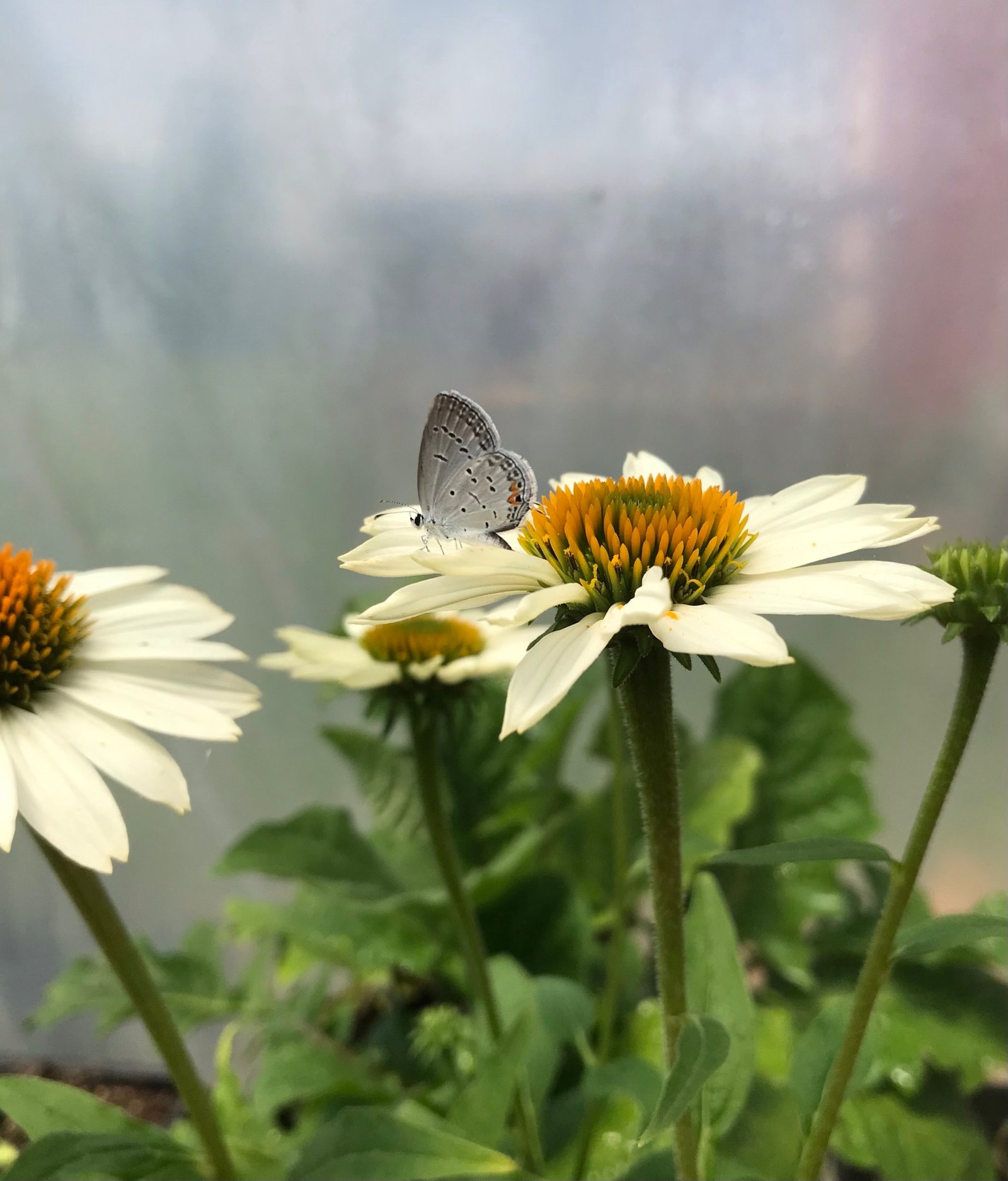
    I’ve decided to make the old greenhouse a bit of a project this year. In the past, it has served magnificently and variously to start daffodils grown by Brendan’s dad. It even has an old (and inefficient) propane heater. We’re now using it to start seeds and plants for setting out. My plans include setting up an automatic timer, fan, and mister. For now it’s a bit of a hot mess!

    New things a-growing in the greenhouse

    Outside of garden projects, we celebrated as members of the family announced their move back home to Virginia. How wonderful is is to reclaim the precious process of gathering!

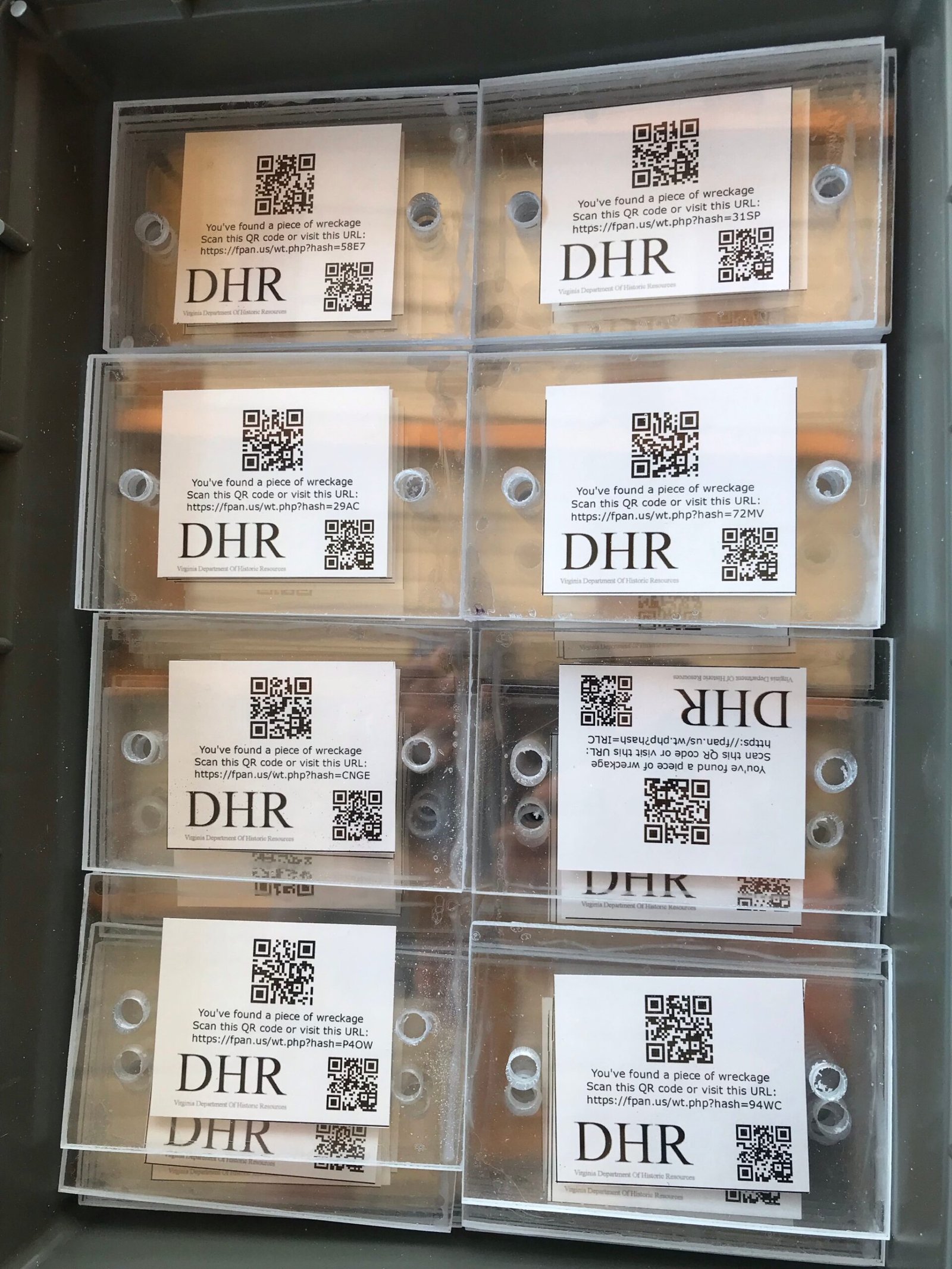
    In other events, Brendan and I hosted the Maritime Heritage Chapter (MHC) of the Archaeological Society of Virginia (ASV) for a Shipwreck Tagging Workshop. Started in Florida by the Florida Public Archaeology Network (FPAN), the program works with the public to tag shipwreck timbers and create a record of each artifact that can be used for future research. Each tag contains a unique ID that is part of a large and growing database. For the workshop, we cut, sanded, and glued more than 80 tags, which are now ready to deploy!

  • March 2021

    March 2021

    “In the spring, at the end of the day, you should smell like dirt”

    Margaret Atwood, Bluebeard’s Egg

    The daffodils are pushing up across the front yard and down the back hill. Small delicate blooms and large yellow heads herald new growth and new beginnings. Pat used to show daffodils and the naturized varieties are truly a treat for the eyes.
    The forsythia and camellias have also arrived, combined, and even entwined, a splash of color!

    Camellias blooming March 28, 2021

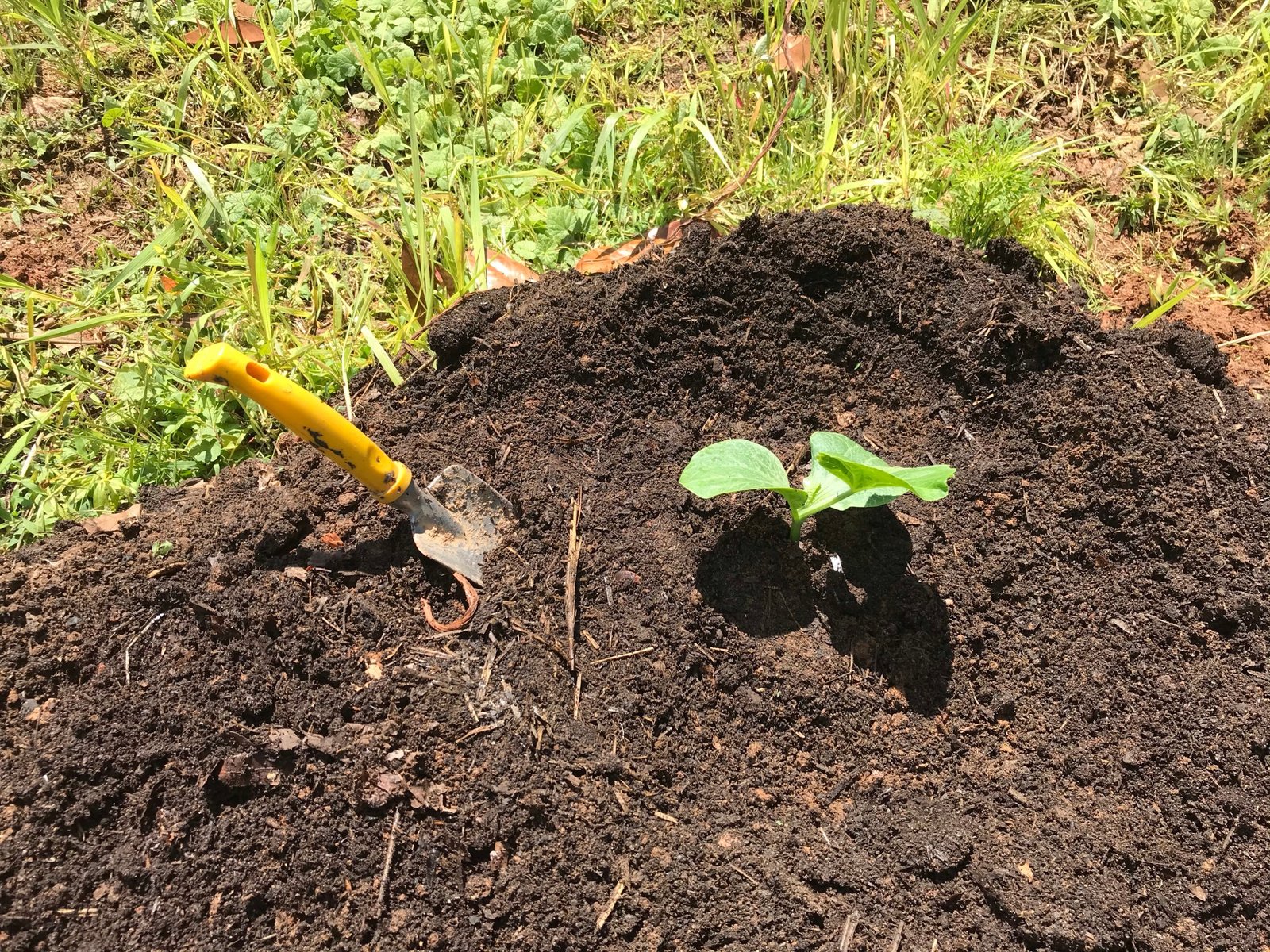
    On a dirtier note, we decided 2021 is the year for a garden. Lilli hired Watkins Nursery to deliver 15 cubic yards of compost to kick off the endeavor. With a little effort and a Kubota, $500 disappeared into the ground. The result is a new garden 50 feet north-south by 75 feet east-west (notice the lack of metric, archaeology friends).

    In the spirit of Jefferson, we’ve planted a little of everything with the hope that some of it will grow. We have purple, red, yellow, white and sweet onion, kennebec and yukon gold potatoes, two varieties of garden peas, horseradish, kale, collards, spinach, chard, and cool weather lettuce. Newly vaccinated friends Emily Jane Murray and Emma Dietrich arrived just in time to help with the planting!

    At the beginning of the month we also welcomed six 3-day old leghorn chicks to a new brooder. They’re the first chicks on the farm for about 20 years. Just down the road not five miles, Tyson has a large hatchery. Too bad these chicks don’t know how lucky they are!

    To round out the month, Brendan moved the last pile of sticks and pine stumps between the house and road and used the land plane to level the area for drilling next month. We are definitely looking forward to a time when the dominant color is green and not brown, bare earth!