Tag: Glendale

  • April 2021

    April 2021

    Easter came early in 2021. Brendan exchanged some cedar posts and labor at a friend’s 18th century home in Richmond for a country ham. It’s the first time I’ve cooked the delicacy. We soaked the ham for 2 days and cooked it in a bath of Dr. Pepper. The taste was delicious and extremely salty. We’re not giving up and next year we’re going to try boiling!
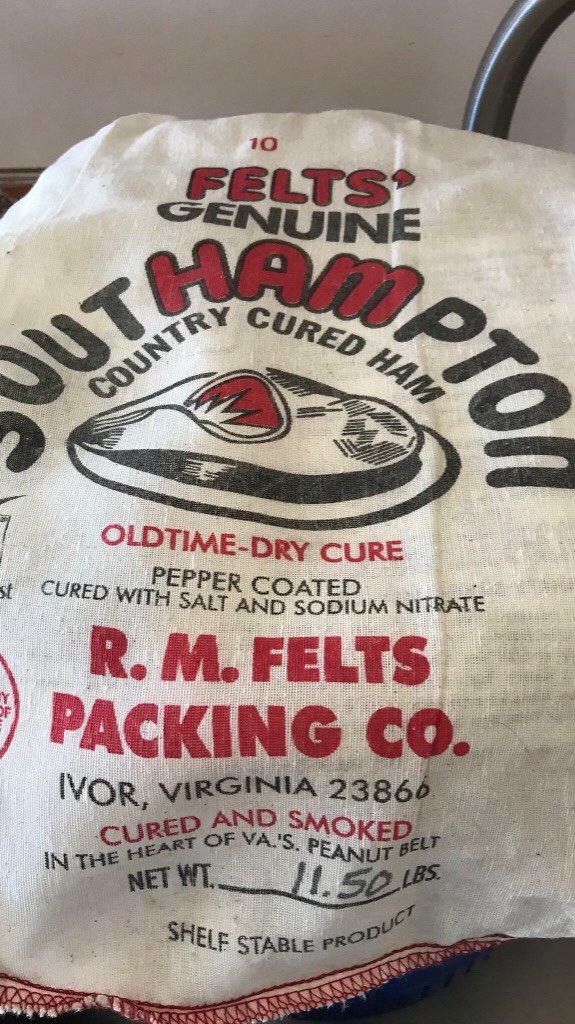
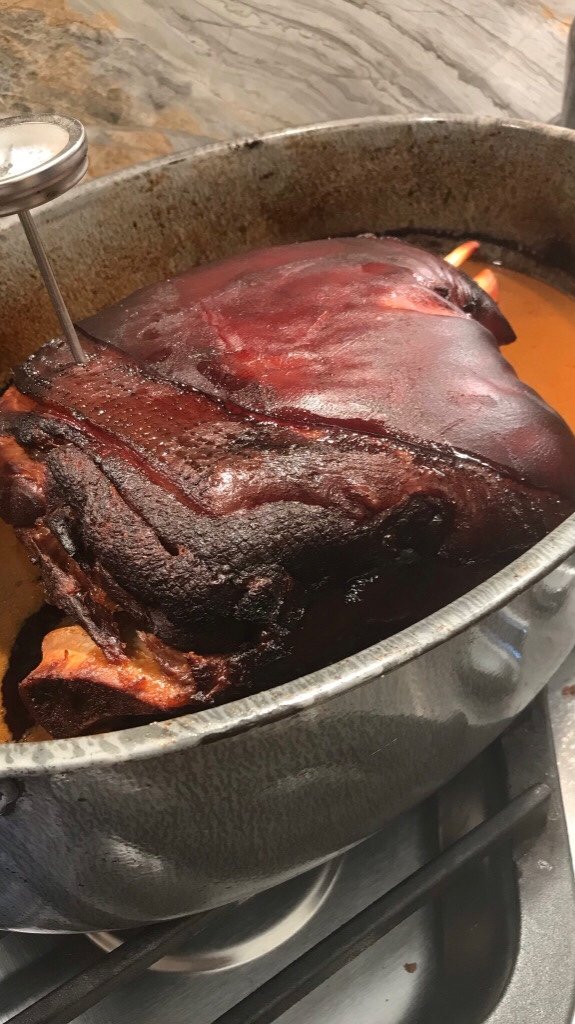
    As Easter passed, the weather stayed cool. The garden stayed in semi-stasis while the chicks grew by leaps and bounds. Turns out chicks love chick weed. Who knew?

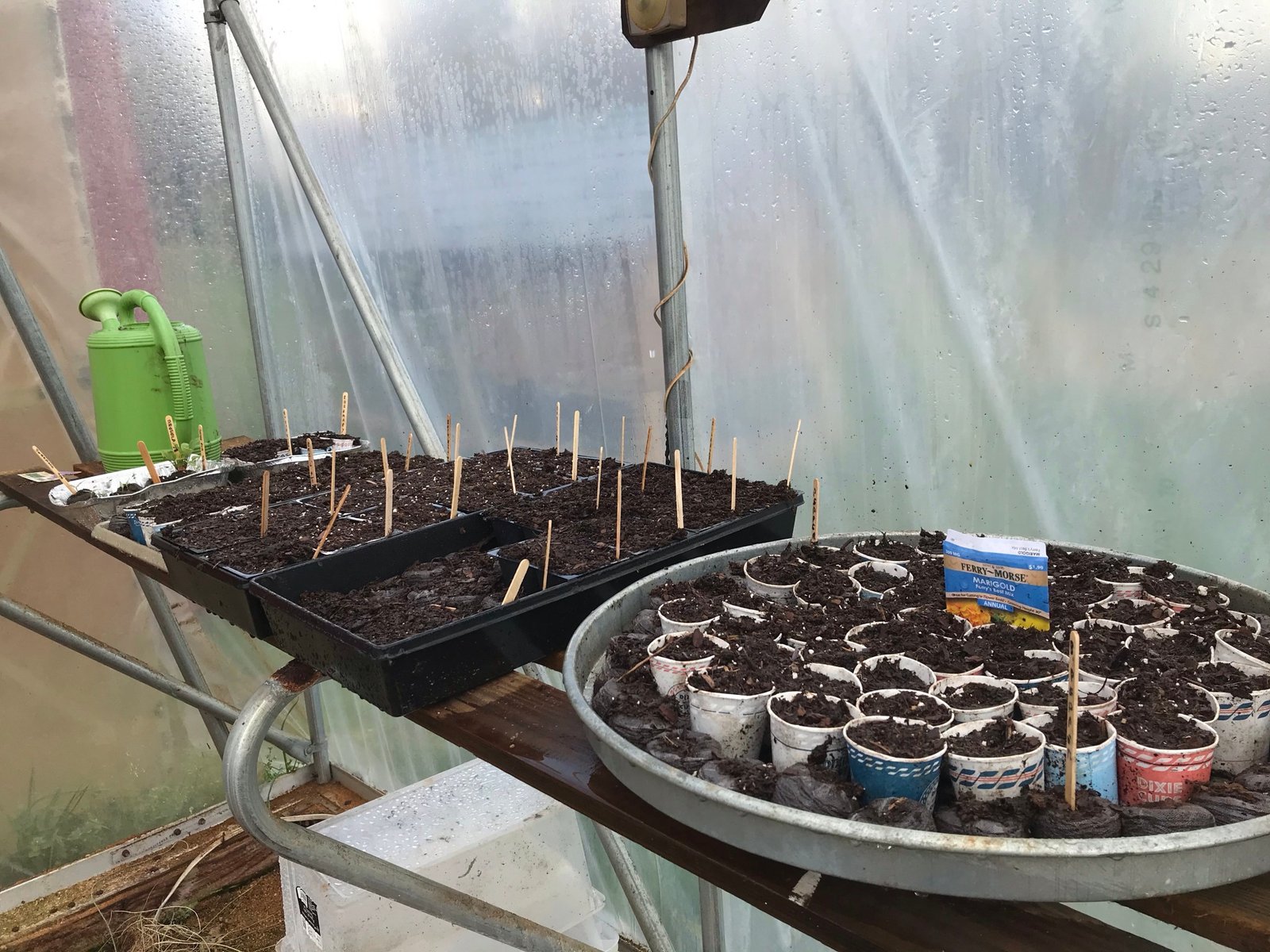
    The onions and lettuce enjoyed the frosty nights while I started a few seedlings under cover in the greenhouse. The whole greenhouse is in need of renovation and we’ve added it to our list of future to-dos.

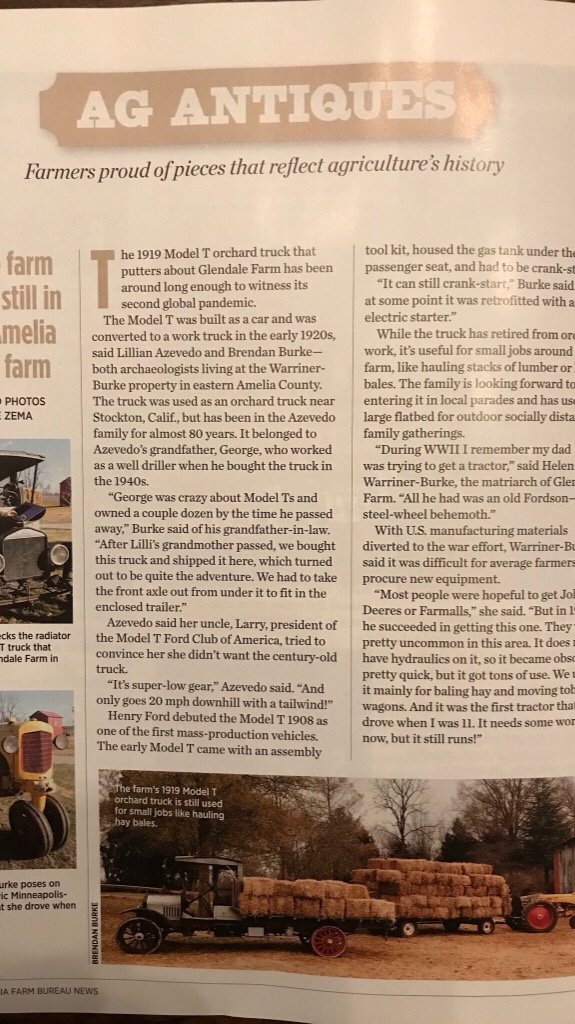
    Farm Bureau decided to feature the old family truck and tractor in a quick blurb in their magazine and came out to film a short interview. The T is my grandfather’s and an old orchard truck that is a recent addition to the farm, like me. The Ferguson, on the other hand is the real article and has been on the farm longer than Brendan and me, combined.
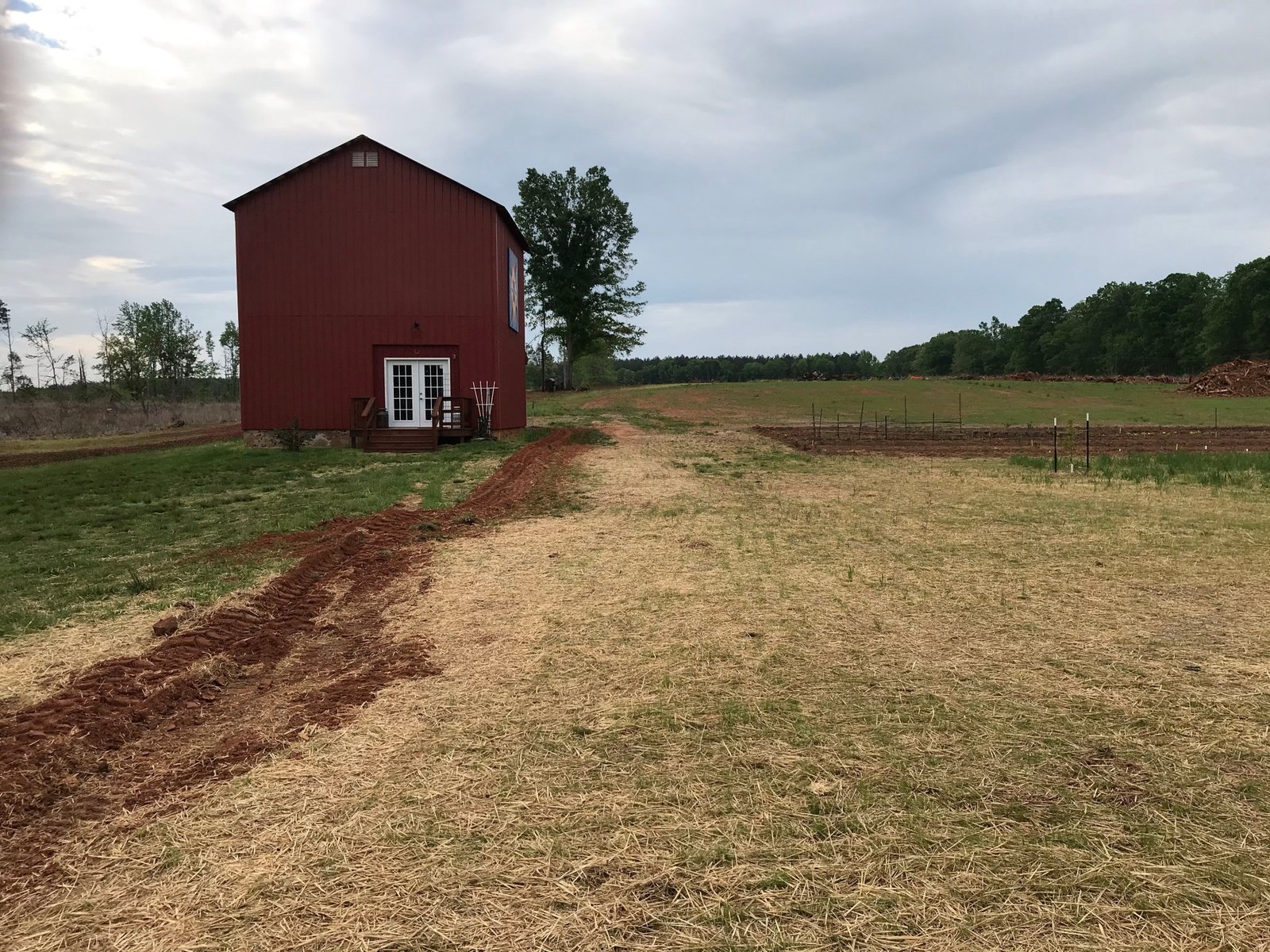
    Other projects in April included drilling fescue and oats to reclaim the stumped land and running a water line up to the workshop. It was a shame to tear up the yard, but better now than later!
  • Piedmont Soil and Water Conservation District: Seed drill rental

    Piedmont Soil and Water Conservation District: Seed drill rental

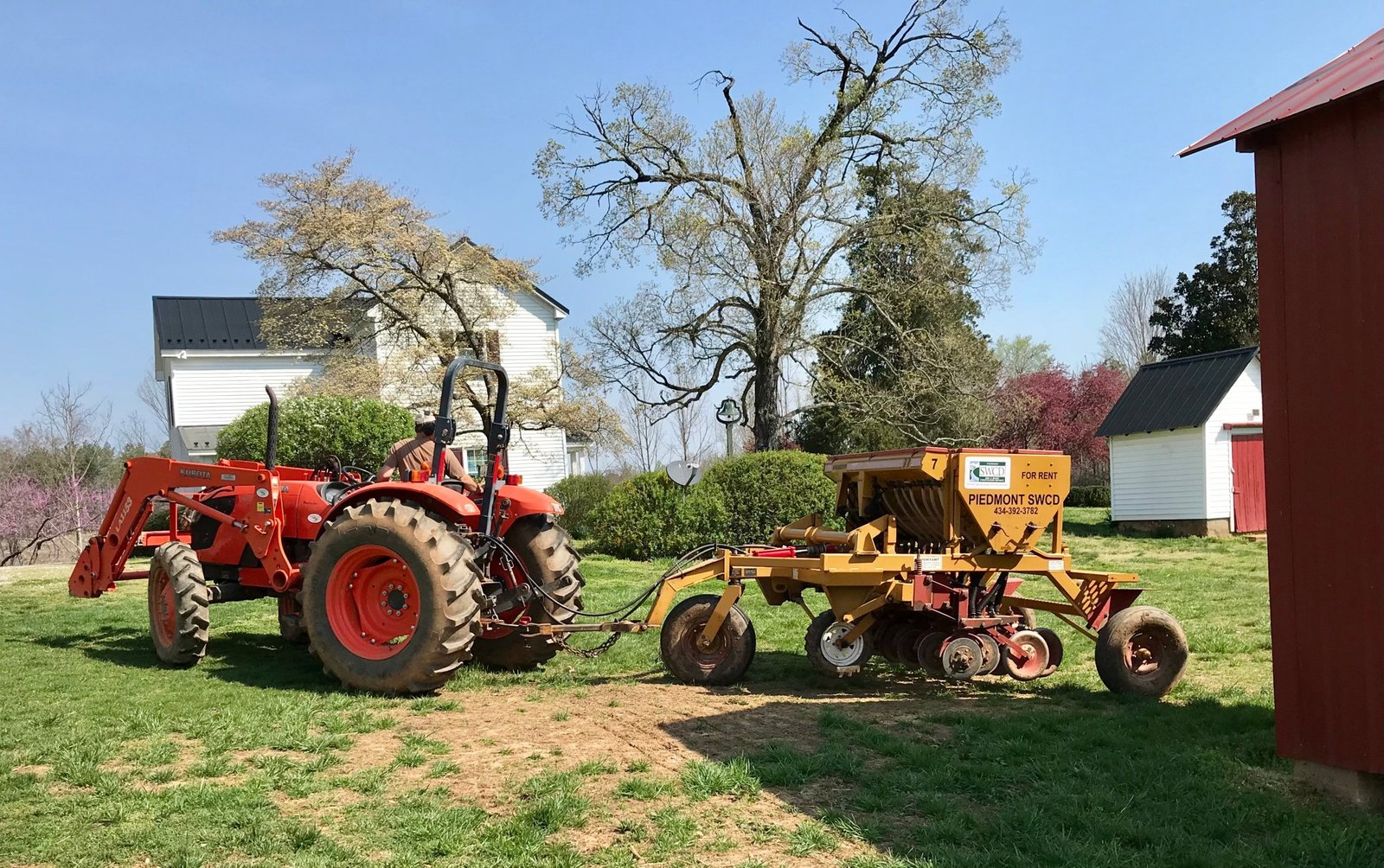
    April is drill season. Since last fall, Brendan has delivered drills across the Piedmont Soil and Water Conservation District. If you own a tractor of suitable horsepower, you can (for a nominal fee of $150 at time of writing) rent a 7 – or 10 – foot seed drill from the district to plant your legumes, grasses, or grains. The rental includes up to 10 acres and this year we slid in without about 8 acres that were cleared and ready for seed.

    Preparation – On April 8-9, 2021 we finished stick picking the area to be seeded. The days before we purchased 200 pounds of oats and 150 pounds of Kentucky fescue. We calibrated the drill and then Brendan settled into the work.

    We seeded the Kentucky 31 at a rate of 25 lbs per acre and the oats at 100 lbs per acre. We learned from trial and error that the drill wastes some of the larger grains and had to purchase an additional 150 pounds of oats from Southern States on the 9th to finish the work.

    Brendan Burke feeding the hopper.

    After a long two day’s work we crossed our fingers for rain and settled in to wait. With a little luck the seeds will grow, our soil will build, and the land will be ready for the big pasture planting next year. Stay tuned for a summer update on germination rates and establishment!

  • Stand back! Cedar Trees Coming Through!

    Stand back! Cedar Trees Coming Through!

    Early spring is a great time to move trees. The ground is soft and the trees ready to grow! At Glendale, we scouted the back field (planted in 2015 with pine) for Eastern Redcedar (Juniperus virginiana), between 4 and 7 feet tall, with the aim to create a natural, native border between Cheatham’s Road and the farm.

    Juniperus virginiana (Eastern Redcedar) is a versatile, native tree grown in gardens and across landscapes for centuries, by George Washington (1732-1799) at Mount Vernon, Thomas Jefferson (1743-1826) at Monticello and Andrew Jackson (1767-1845) at the Hermitage. It’s fast growing, disease resistant, provides natural habitat, and smells great!

    Loaded with the afternoon’s forest finds!

    We planted our trees about 6 meters apart (that’s about 20 feet for you non-archaeologists). Each tree has a tap root and root mass about 2 feet across and about a foot deep (not an extensive root system!). We gave each tree a couple of gallons of water, a T-post and a friendly, encouraging word.

    Grow little cedars!

    Settled in, we also found a lovely redbud and a holly in the woods across the road that Brendan’s aunt owns. It feels good to bring shaded trees out from the woods and into the foreground. Hurrah for the natives!

  • March 2021

    March 2021

    “In the spring, at the end of the day, you should smell like dirt”

    Margaret Atwood, Bluebeard’s Egg

    The daffodils are pushing up across the front yard and down the back hill. Small delicate blooms and large yellow heads herald new growth and new beginnings. Pat used to show daffodils and the naturized varieties are truly a treat for the eyes.

    The forsythia and camellias have also arrived, combined, and even entwined, a splash of color!

    Camellias blooming March 28, 2021

    On a dirtier note, we decided 2021 is the year for a garden. Lilli hired Watkins Nursery to deliver 15 cubic yards of compost to kick off the endeavor. With a little effort and a Kubota, $500 disappeared into the ground. The result is a new garden 50 feet north-south by 75 feet east-west (notice the lack of metric, archaeology friends).

    In the spirit of Jefferson, we’ve planted a little of everything with the hope that some of it will grow. We have purple, red, yellow, white and sweet onion, kennebec and yukon gold potatoes, two varieties of garden peas, horseradish, kale, collards, spinach, chard, and cool weather lettuce. Newly vaccinated friends Emily Jane Murray and Emma Dietrich arrived just in time to help with the planting!

    At the beginning of the month we also welcomed six 3-day old leghorn chicks to a new brooder. They’re the first chicks on the farm for about 20 years. Just down the road not five miles, Tyson has a large hatchery. Too bad these chicks don’t know how lucky they are!

    To round out the month, Brendan moved the last pile of sticks and pine stumps between the house and road and used the land plane to level the area for drilling next month. We are definitely looking forward to a time when the dominant color is green and not brown, bare earth!