Tag: farmlife

  • July 2022

    July 2022

    We’re nearing the dog days of summer with lows above 70 and highs in the 90s. Japanese beetles have given way to June bugs and fireflies. Sunflower and crepe myrtles are in full bloom and the corn is beginning to tassel. It feels too hot to work – almost. The bees are going through a 25-bag of sugar and the poultry are gobbling 100 lbs of feed a week. Our four broad breasted turkeys are now 16 weeks old and starting to grow out instead of up.
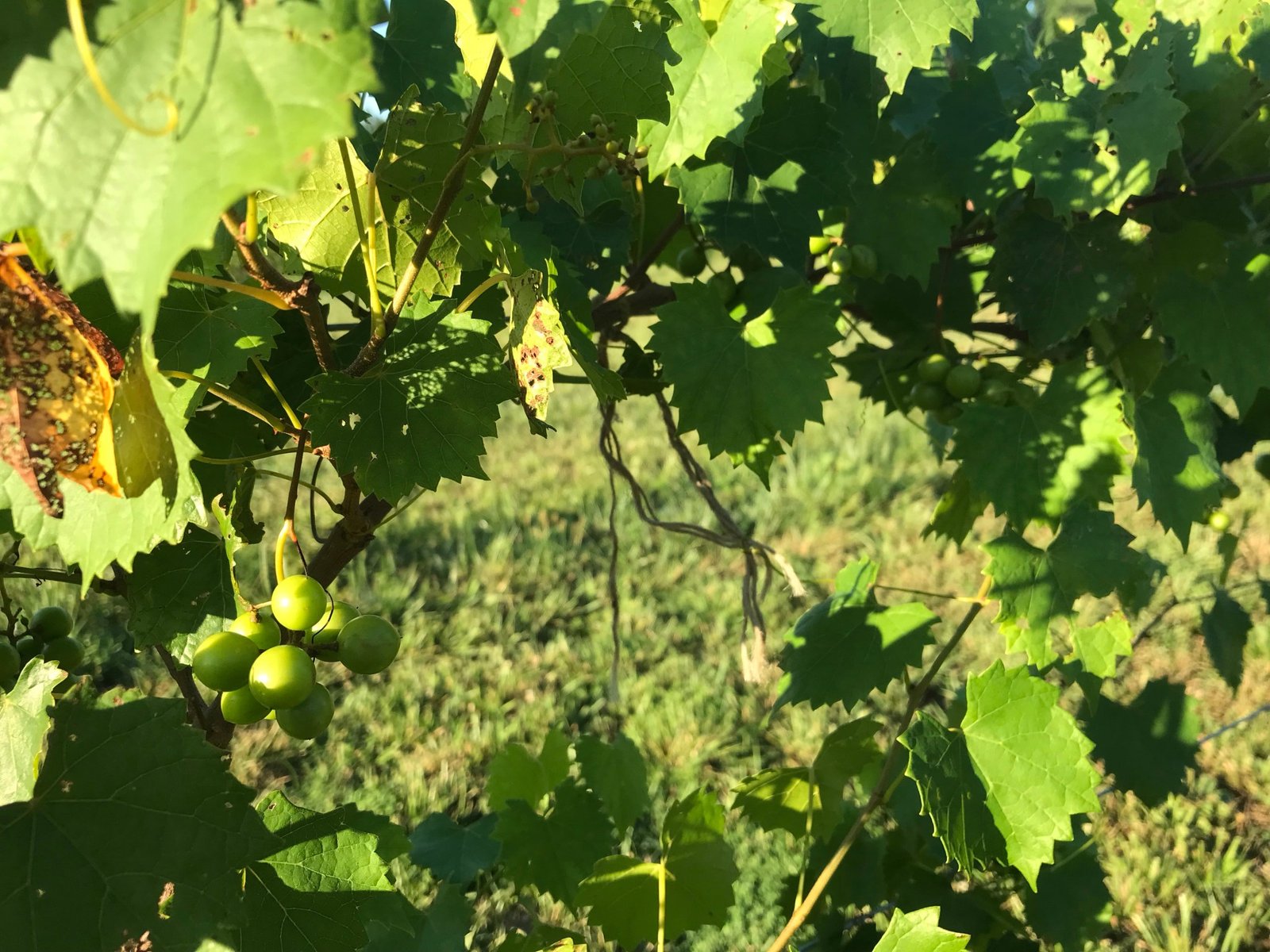
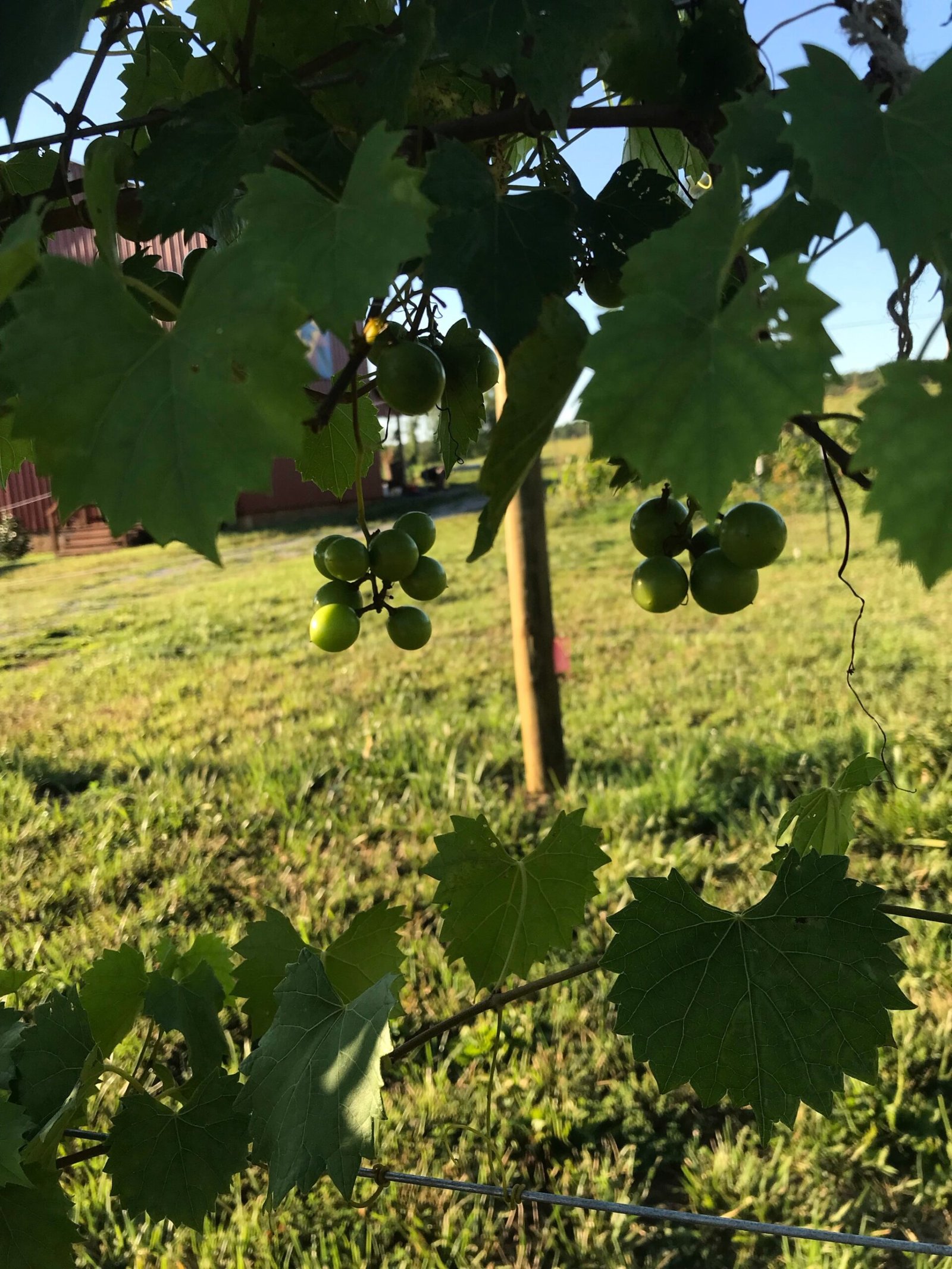
    Muscadine Grapes July 14, 2022.

    Last years landscaping scars have healed and the yard has never looked so green. This month marks the 1 year anniversary for the grape arbor. Two of the three vines have survived and the first muscadine bunches are swelling in the summer heat.

    For the first year, our pecan trees grew up. Planted in 2017 they have seemed to sit and wait, silently stretching roots into the hard red clay. At long last they have begun to reach up, from not quite 5 feet to 8 feet tall this year.

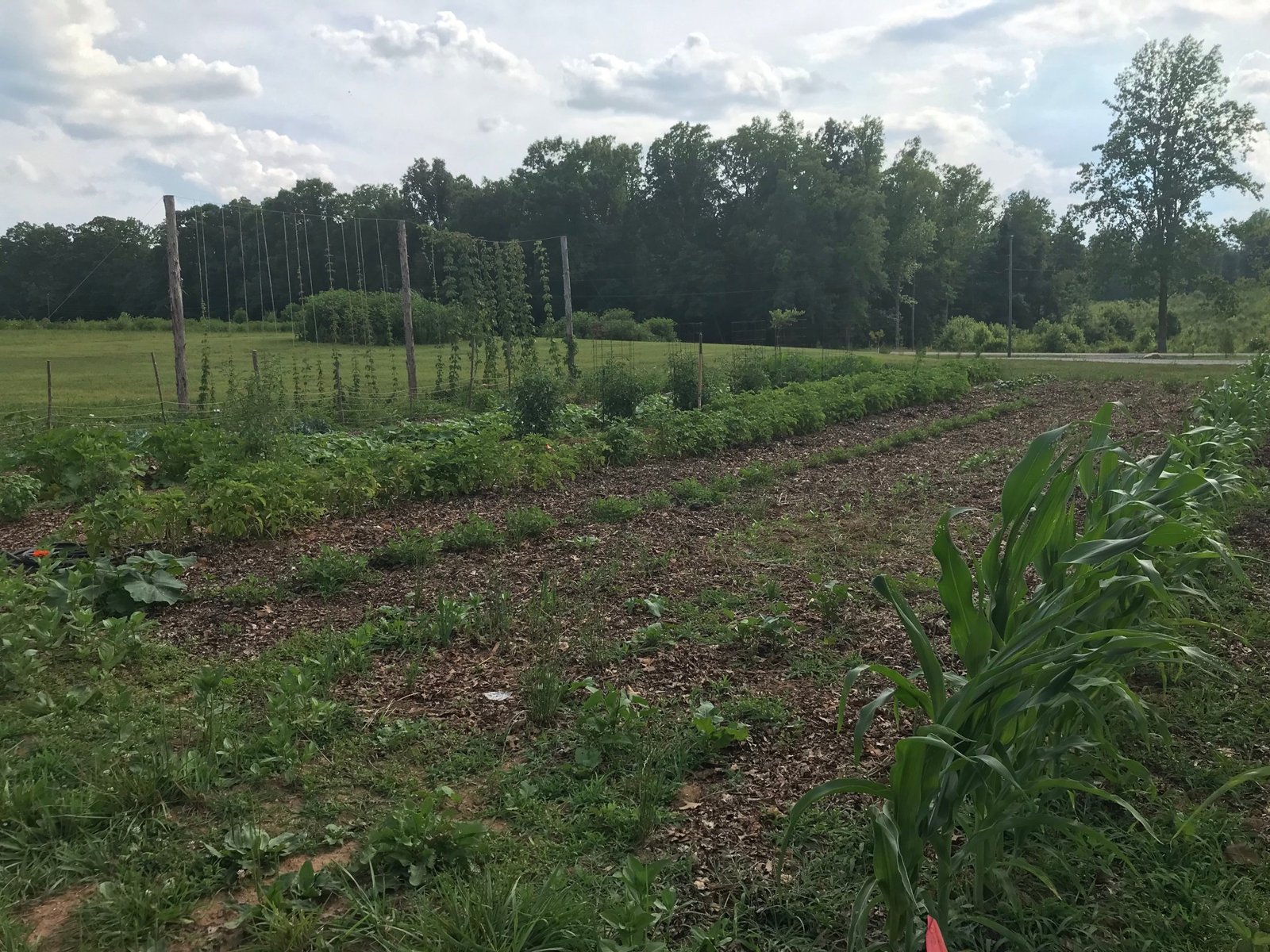
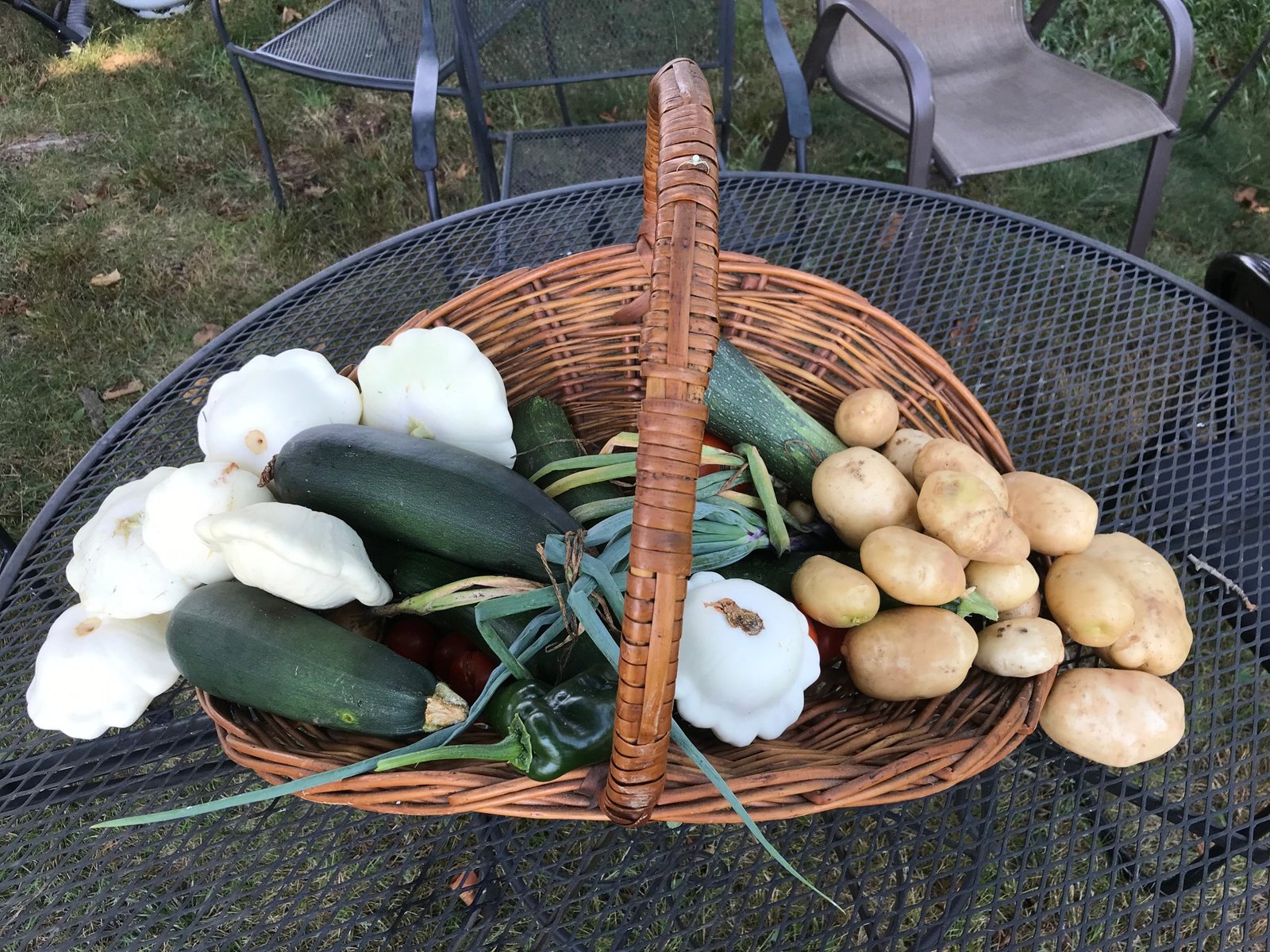
    The garden has yielded buckets of cymling squash and red ripe tomatoes. The potatoes, planted in early April during the Grout’s Easter visit, have yielded 2 1/2 bushels of delicious new potatoes (Kennebec and red)! Other crops include cucumbers (a very short season due to the heat), corn, bell peppers, a small harvest of beets and some onions. We have peanuts going well and on the 31st put in a row of fall beets, collards, and carrots.

    2022 makes the first year we’ve produced our own compost. Brooder house droppings and straw bedding, vegetables from last fall’s pumpkin carving competition, stall cleanings from work at the Wigwam, and the hen house droppings have composted to create so much richness. To top it off, our neighbors provided a wagon load of compost from their sweet potato plantings. Nutrients and deep plowing has improved the soil and drainage.
    We rehomed our golden comets and leghorn chickens on July 17. Our laying flock is now reduced to 5 comprised of 3 six-month old silver laced wyandottes (hatched this Spring at Glendale) and two 18-month old hens (“Spazz” and “Goldie”). We are inundated with young pullets, cockerels, and grow-outs. A year into chickens and we have 99 chickens, 6 turkey, and three ducklings. The egg count is 2,700. At some point, we’ll open a small farm stall or egg swap but for now we are sharing with friends and neighbors.

    Update: The last week of August found a pair of rats (!) terrorizing the chickens; each morning I dread finding which of the young grow outs has had its head ripped off and its organs devoured. As of July 31st, we’re still working to find a solution- baiting traps with tasty treats, hardening the pen, and setting up game cameras. This month we lost three (now four- five, six!). It been our worst month for losses to date – with three little chicks also failing to thrive in a hatchery box at the beginning of the month. It is not unexpected with the heat but it is something we will overcome and learn from.
    In other big news, Brendan celebrated one year with the Division of Historical Resources (DHR) as State Underwater Archaeologist. Hurrah!

  • August 2021

    August 2021

    At long last, in 2021, our first crop of apples is ripening in the orchard.

    Hot humid days and warm evenings; the delights of summer are manifest in shades of deepening green, with dewey mornings that give way to oppressive days that make us long for cool, crisp nights of fall delight. Not yet. Summer passes slowly with light changing from bright yellow to softer amber as days begin to slowly shrink and evening lengthens. Across the county, hay is being cut. Corn stalks stand tall and dry and soy beans have begun to change from green to gold.

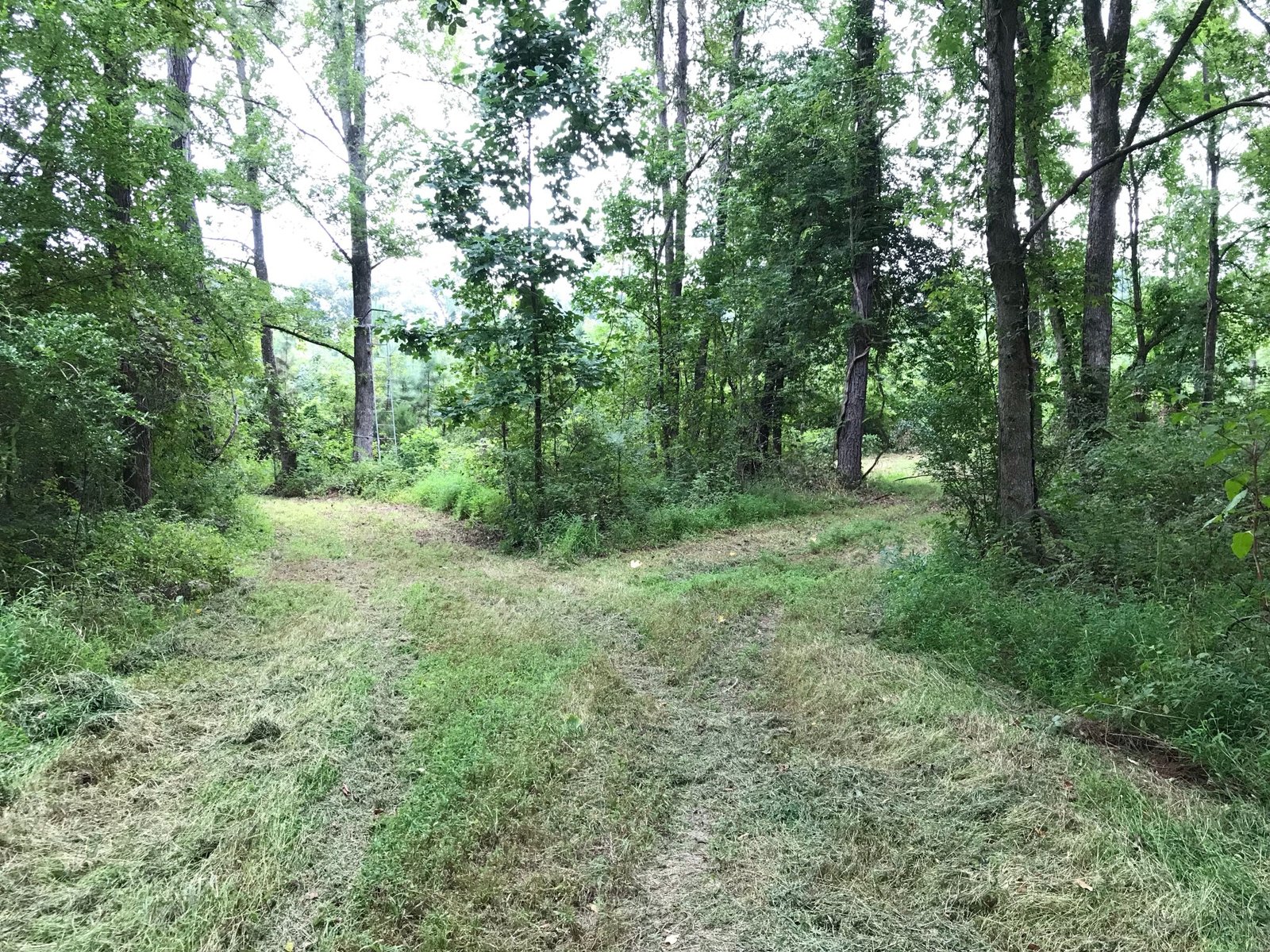
    Bush hogged trails

    This month, after the grasses went to seed, the trails through the woods and around the fields were bush hogged. Each year Brendan opens areas and lanes, giving us access through thick brambles to parts of the farm that are soon overgrown if left alone. The lanes provide a pleasant path for walking or running, and create habitat for grazing wildlife including deer and turkey (Also, when Gus comes home, we will have a couple of miles of trails to trot and explore).

    Sooty blotch!

    By August, the apples are splashed with patches of sooty blotch and have swelled with tantalizing hints of sweet inside. This year our young trees are yielding a small crop that will ripen next month. The harvest will stretch into October – one or two apples from many of the trees although a couple may give up half a bushel, with their first harvest. We’re pleased at the modest yield. Our own apples – ugly and sweet.

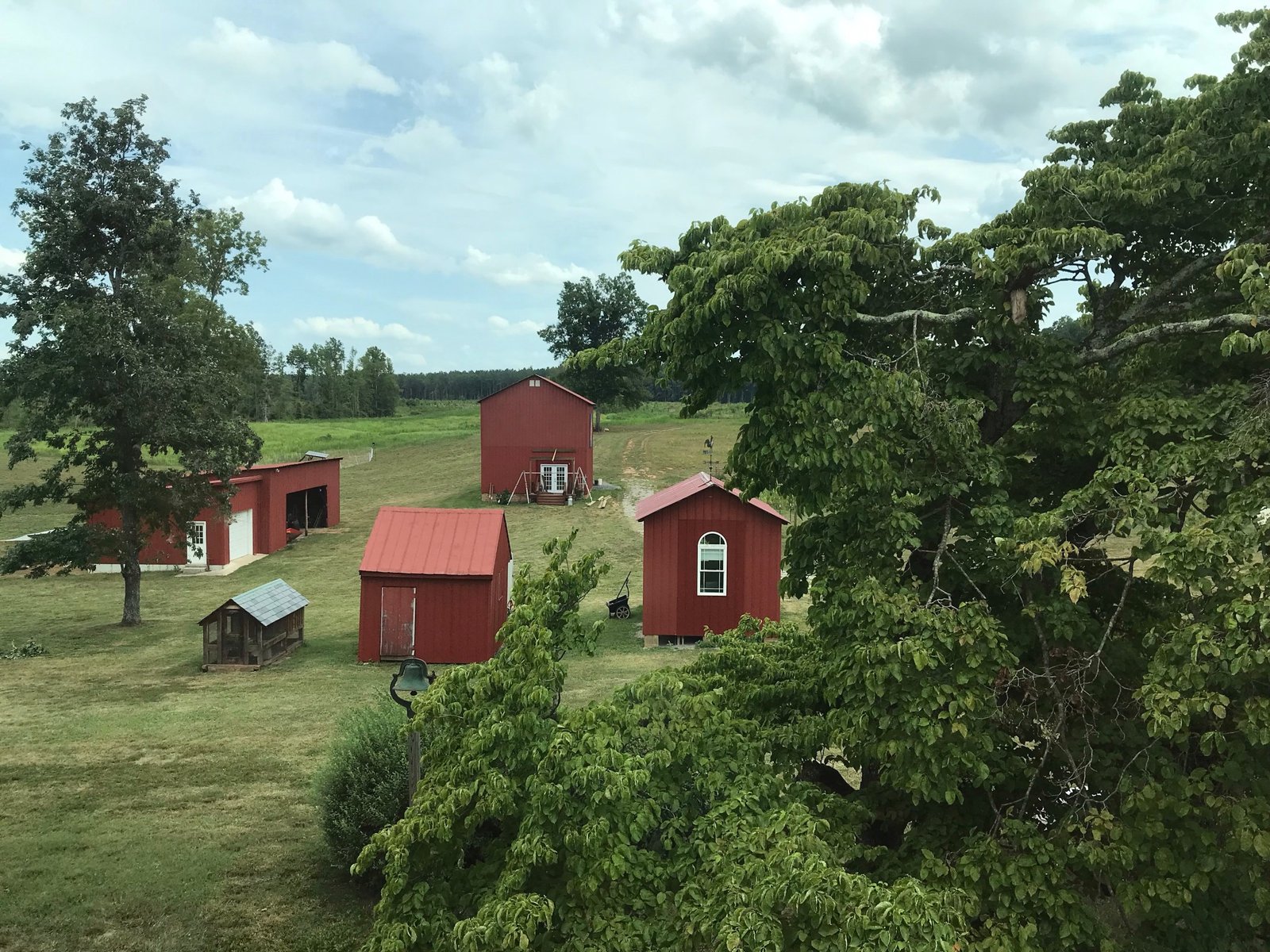
    The converted tobacco barn provides a cool retreat from summer’s heat, where Helen can build cutting boards and repair old chairs. This month the shop also serves as a new home for Ketch, where he can adjust to life on the farm, while he exchanges scritches and pets for a rent of lizards, mice, and bugs.

    The garden… Lessons learned from the Spring 2021 garden:

    Few pursuits are more frustrating than a garden that languishes or suffers from pests, especially one that spirals out of control under the misguided hand of a neophyte. Guilty on both parts, I can appreciate this year’s healthy dose of humility- a result of biting off a project too large but nevertheless enjoying the trip.

    1. Plant like with like. The haphazard planting of seeds and plants may work in a small patio and yield a charmed and quaint appearance of bounty. Spread over 3,500 square feet it creates a cacophony of sizes and maturity dates that provide an ideal habitat for every known variety of weed and annoys your husband without end.
    2. Don’t rush the weather. This year, a long cool spring put many plants into stasis where they stayed for weeks or months- not growing, not dying. We replaced some and left others. The new plants quickly outgrew the older neighbors. Plants sometimes languish and it’s hard to admit it but sometimes it’s better to start over. If you have space, keep the first ones and watch to see if they catch up. Sometimes they do (and sometimes they don’t).
    3. Keep working the dirt. Green ground is the worst but it will keep getting better with time as long as you don’t give up. This year the plants were stunted and we think it may be the hard packed underlying clay. On the list for next month are soil samples along with a plan to deeply plow and punch holes in the underlying hardpan.
    4. Enjoy the fruits of your labor. Don’t wait for someone else to eat the perfectly ripe cherry tomato. Try fresh corn straight off the stalk, pluck a baby okra, and sneak a fresh pea. Nothing tastes better. Period.
    5. Have fun. Don’t argue about the location of plants or row spaces. You have all the time in the world to try something new if this year doesn’t pan out.
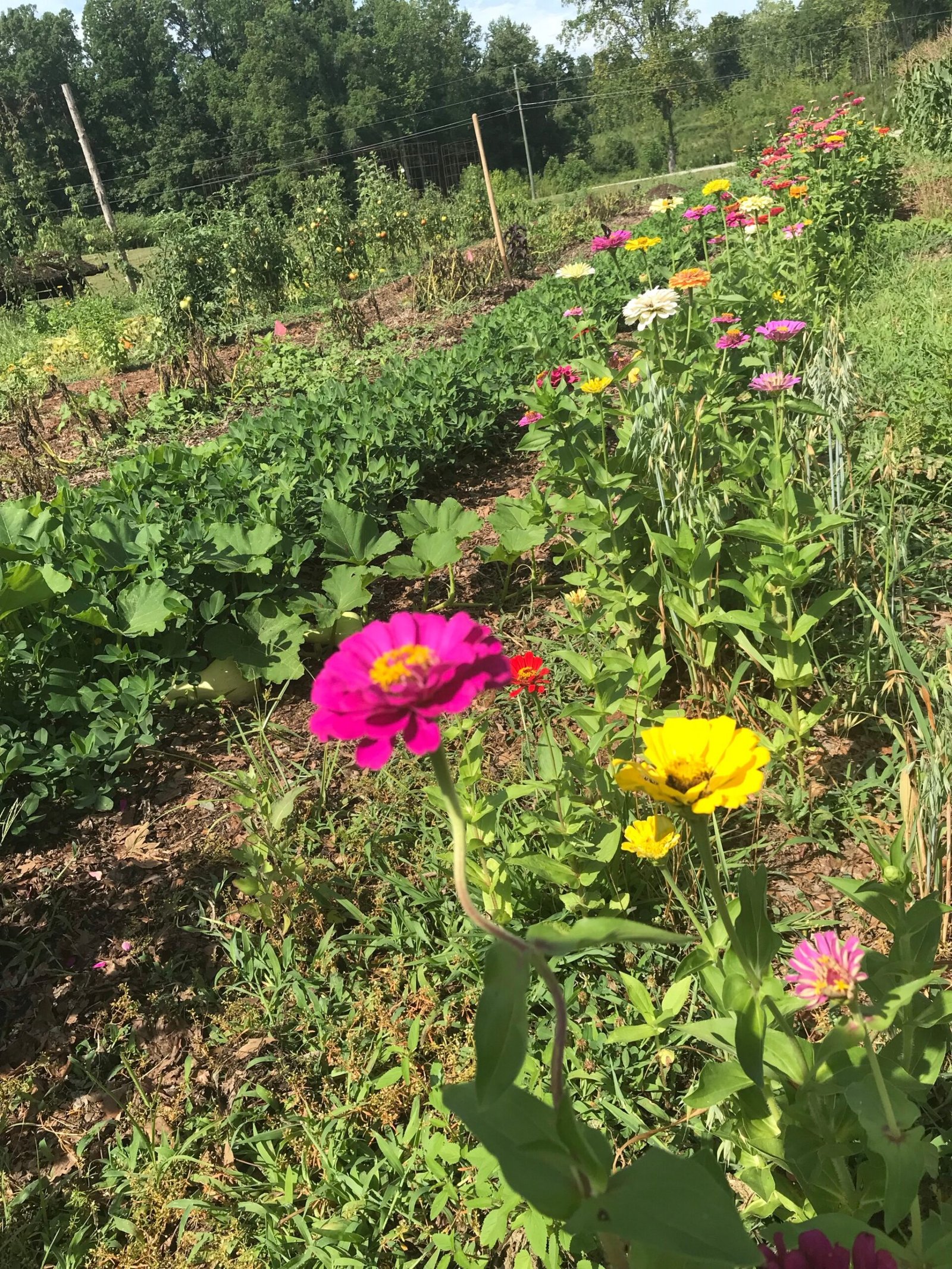
    6. Stop and smell the roses. Really, just take a deep breath and breathe out. Oh and zinnias are the best!
    Late August garden- the rows of tomatoes and eggplant are gone. Hops in the background and zinnias in front.