Category: Uncategorized

  • Winter 2024 Looking towards the New Year

    Winter 2024 Looking towards the New Year

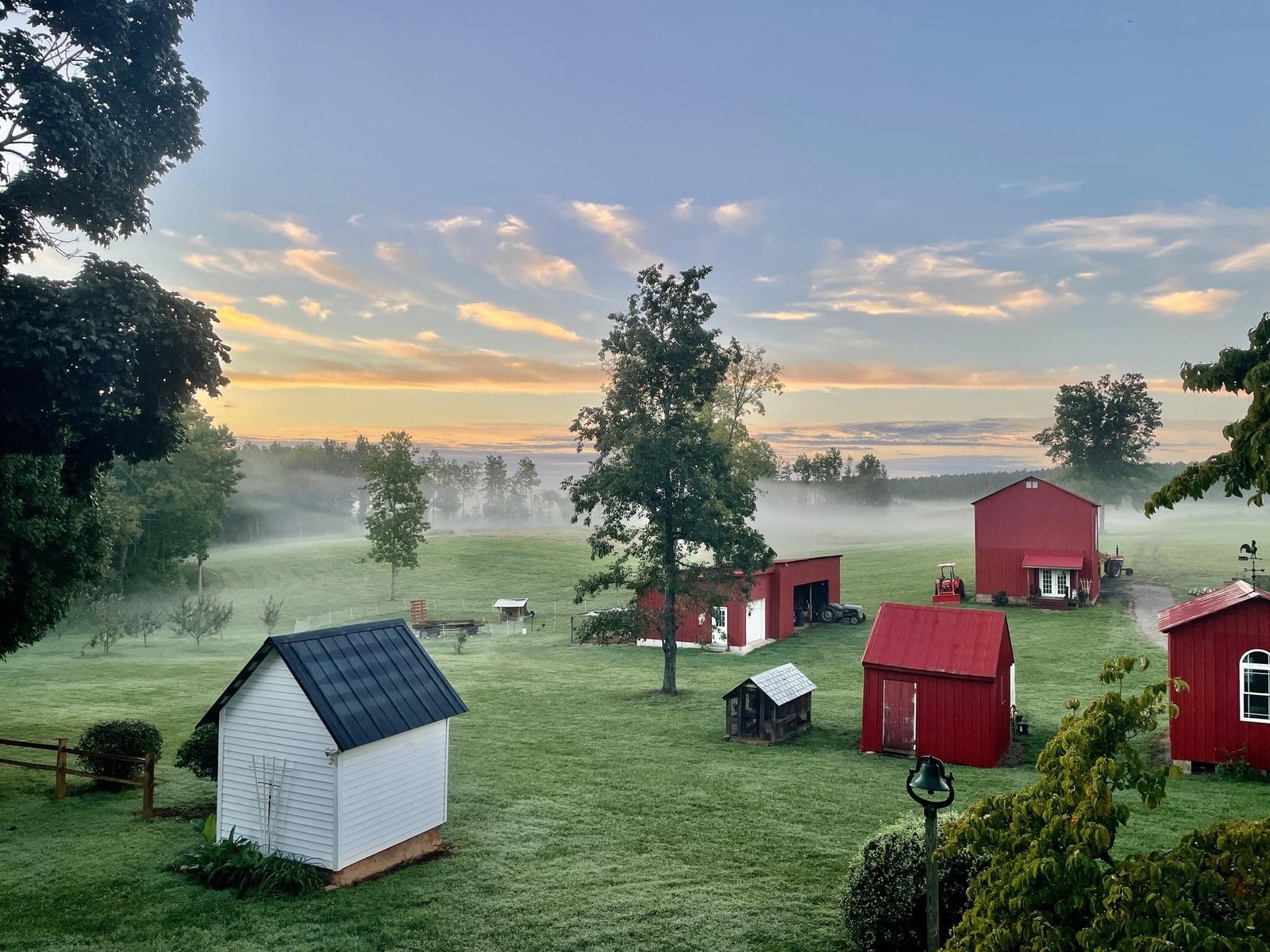
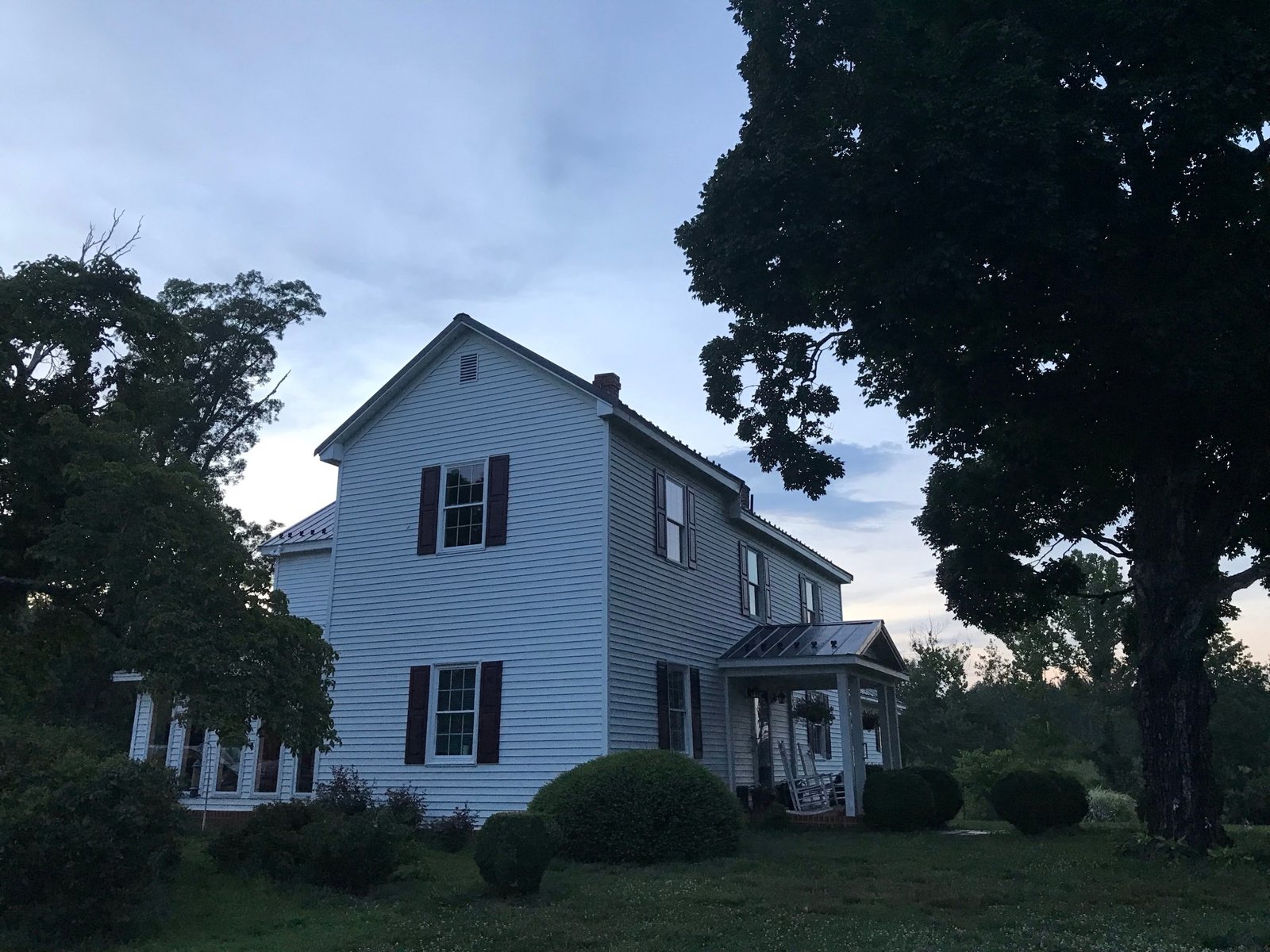
    2024 marks five years since Brendan and I returned to his family home in Amelia. Those years witnessed major changes, from getting to know the land, to setting up our new lives. In 2024, Brendan and I assumed responsibility for a second farm in Amelia. Moving the torch, we’re working to make new changes and settle in at Haw Branch, 20 minutes from Glendale. Managing two farms is a worthwhile challenge!

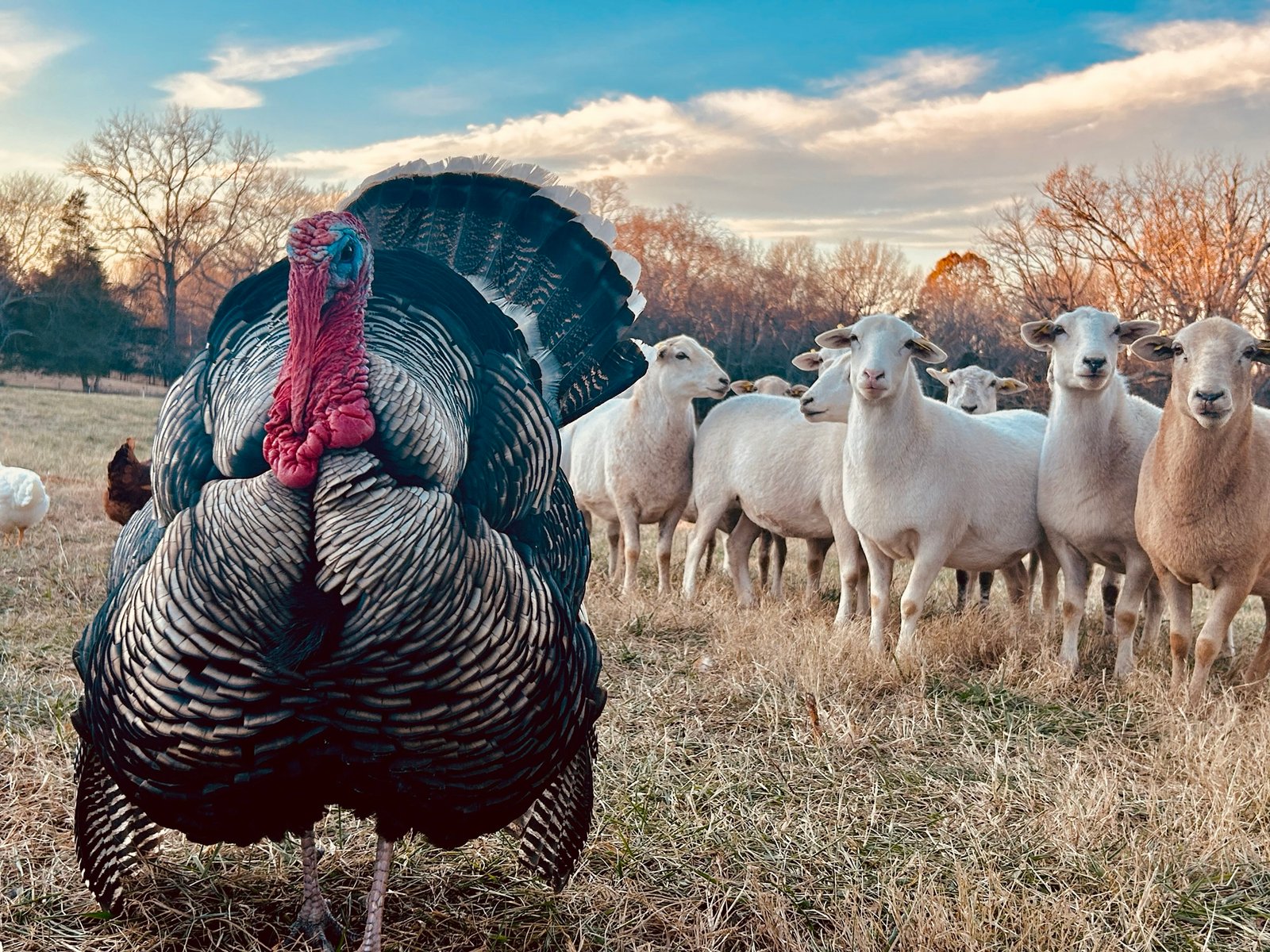
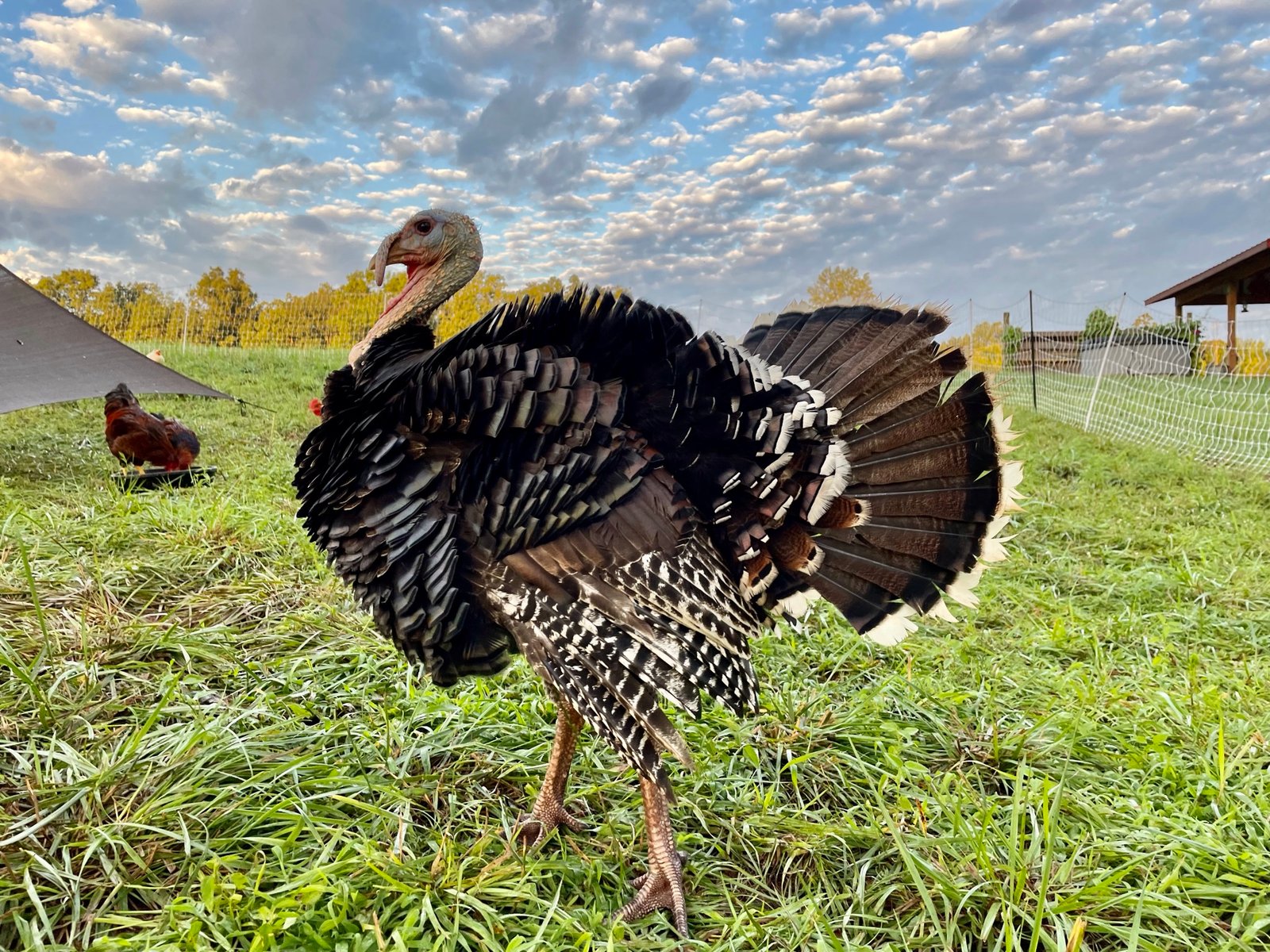
    We’ve moved our group of Narragansett and Naragansett/Spanish Black turkeys and 88 laying hens to Haw Branch. AND….On December 10, 2024, we introduced 12 Katahdin Ewes to the farm. The old pasture fencing is in-place, augmented with 1200′ of Premier1 electric fencing. We added a handling system from D&S and electrified the 100-year-old lambing barn in preparation for the arrival of lambs in late January. Each ewe was ultra sounded and we can expect up to 21 lambs!

    For the first time, we’re experiencing a strong draw down in egg production and our forecast for 2025 chick production is uncertain. It’s likely due to less sunshine and a slightly older flock (we have more 2–3-year-old birds than previous years). Yesterday the 88 ladies gave us a single egg! We’re not worried (yet). Everyone needs a break and we’re optimistic the egg numbers will pick up as soon as we pass the solstice. We’re still planning to have Welsummer, Wyandotte, Ameraucana, and Olive Eggers (straight run) available in March! We also became a Cackle Hatchery wholesaler in 2024 and will be bringing in a wide selection of pullets for the Spring!

    All this means that in addition to our full-time jobs, our farm schedule is getting busy!

    • January 25-February Lambing
    • February – September Cackle Hatchery chicks available
    • March-May Chick Season!
    • April – New Kitchen Garden laid out at Haw Branch
    • May – Chicken Processing (Cornish Cross)
    • June – Honey Harvest, Broad Breasted Turkey poults
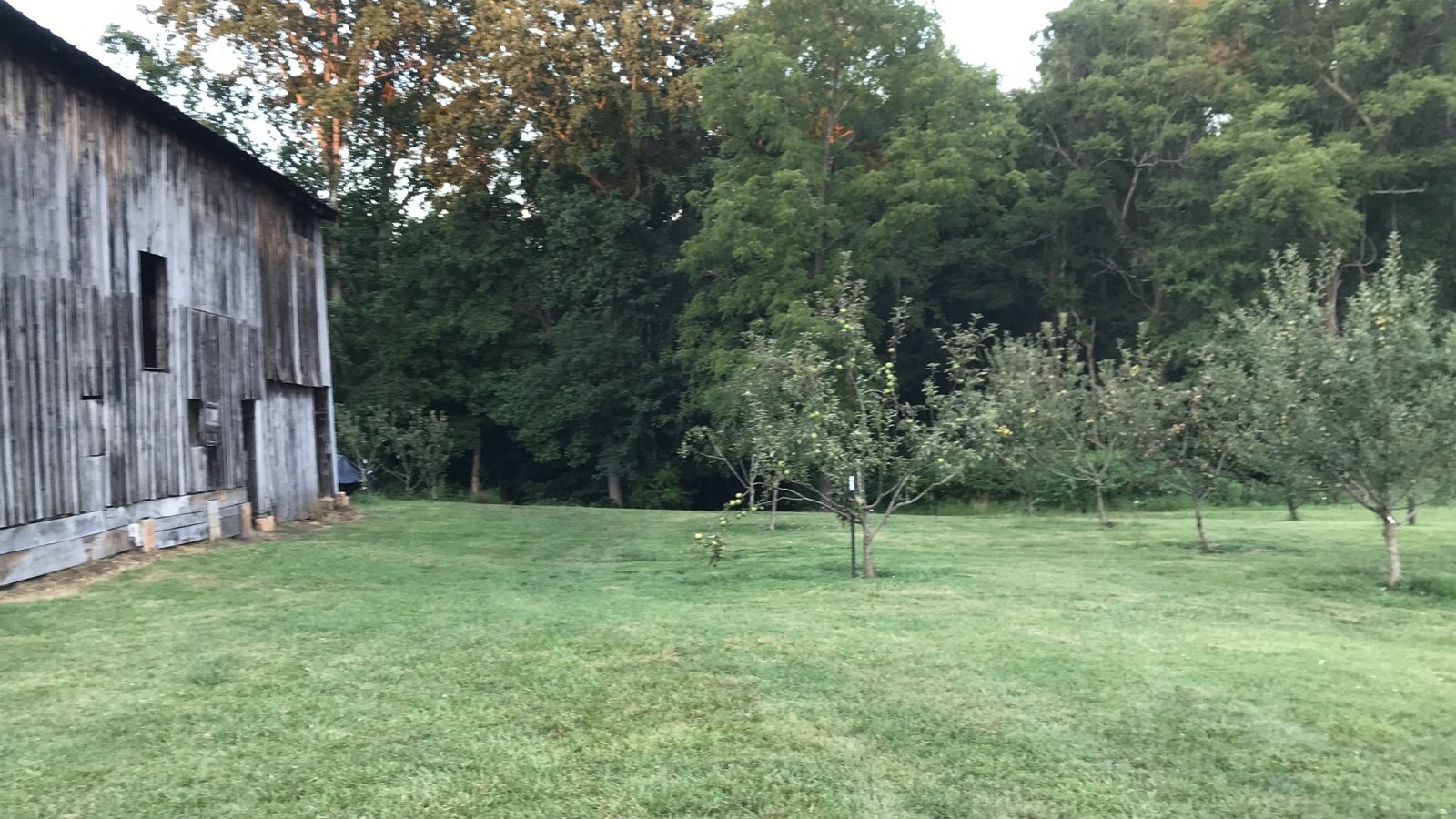
    • October – Chicken Processing; Apples??
    • November – Turkey Processing
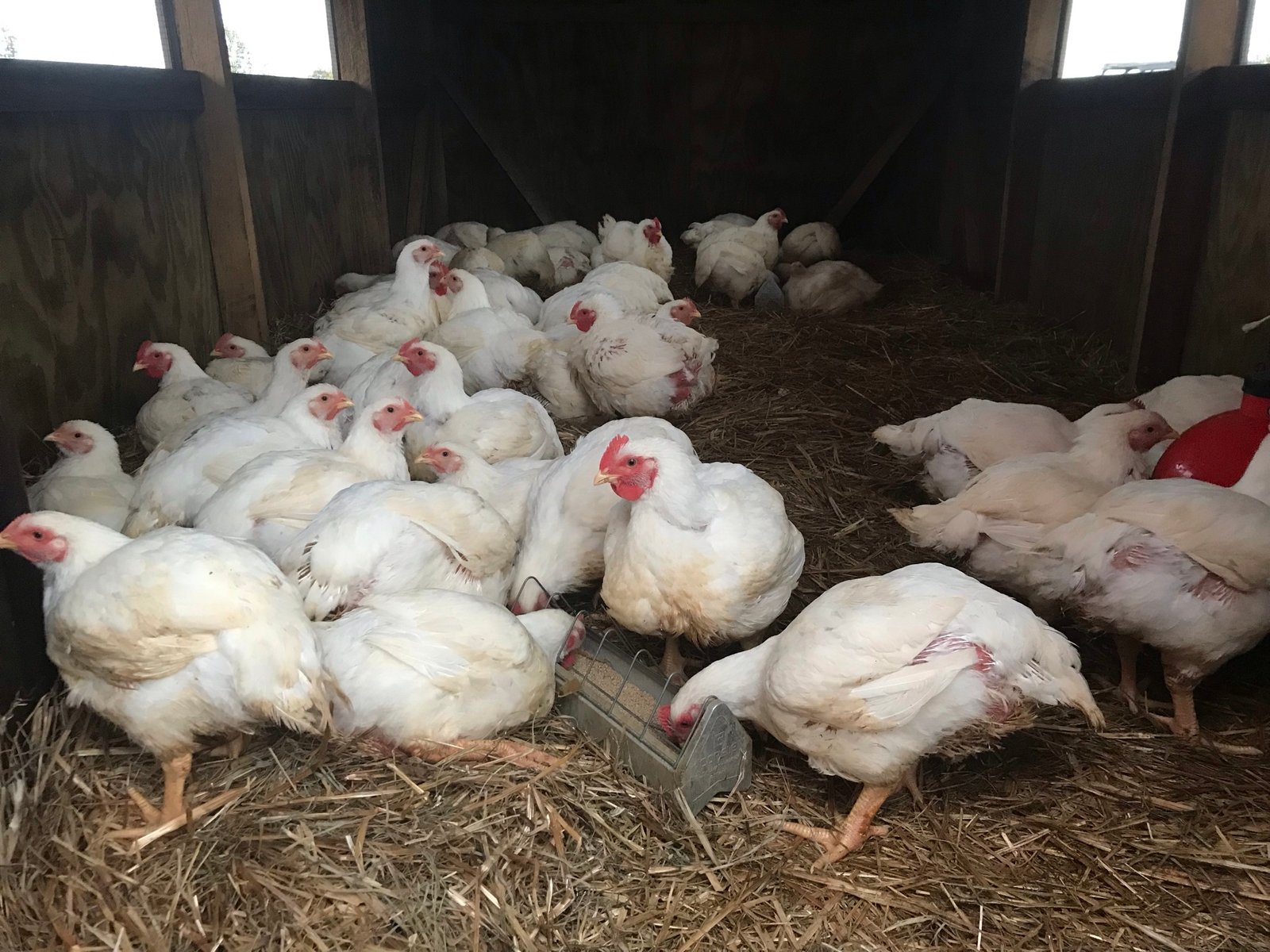
  • August and September 2022 – Birds galore.

    August and September 2022 – Birds galore.

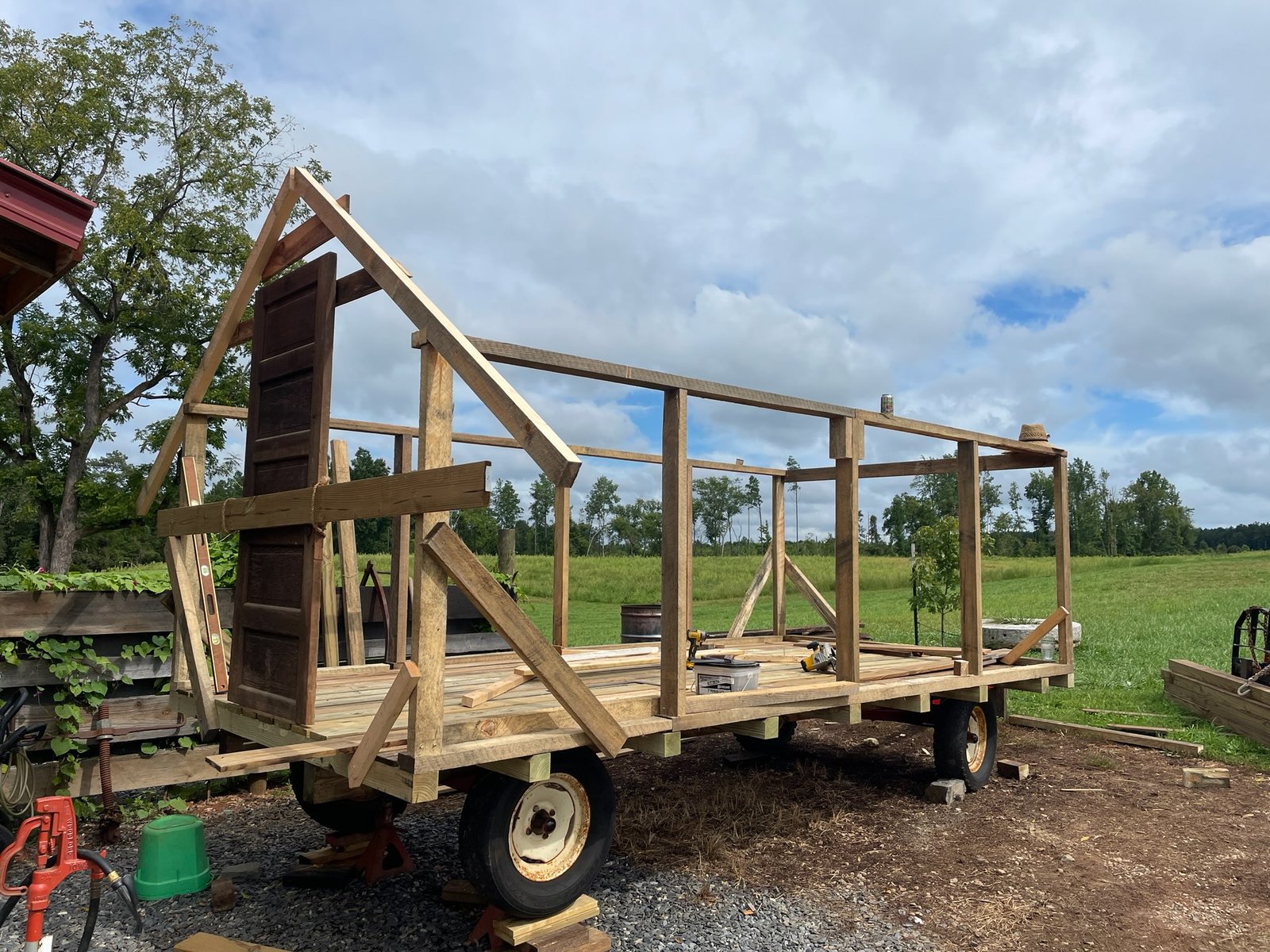
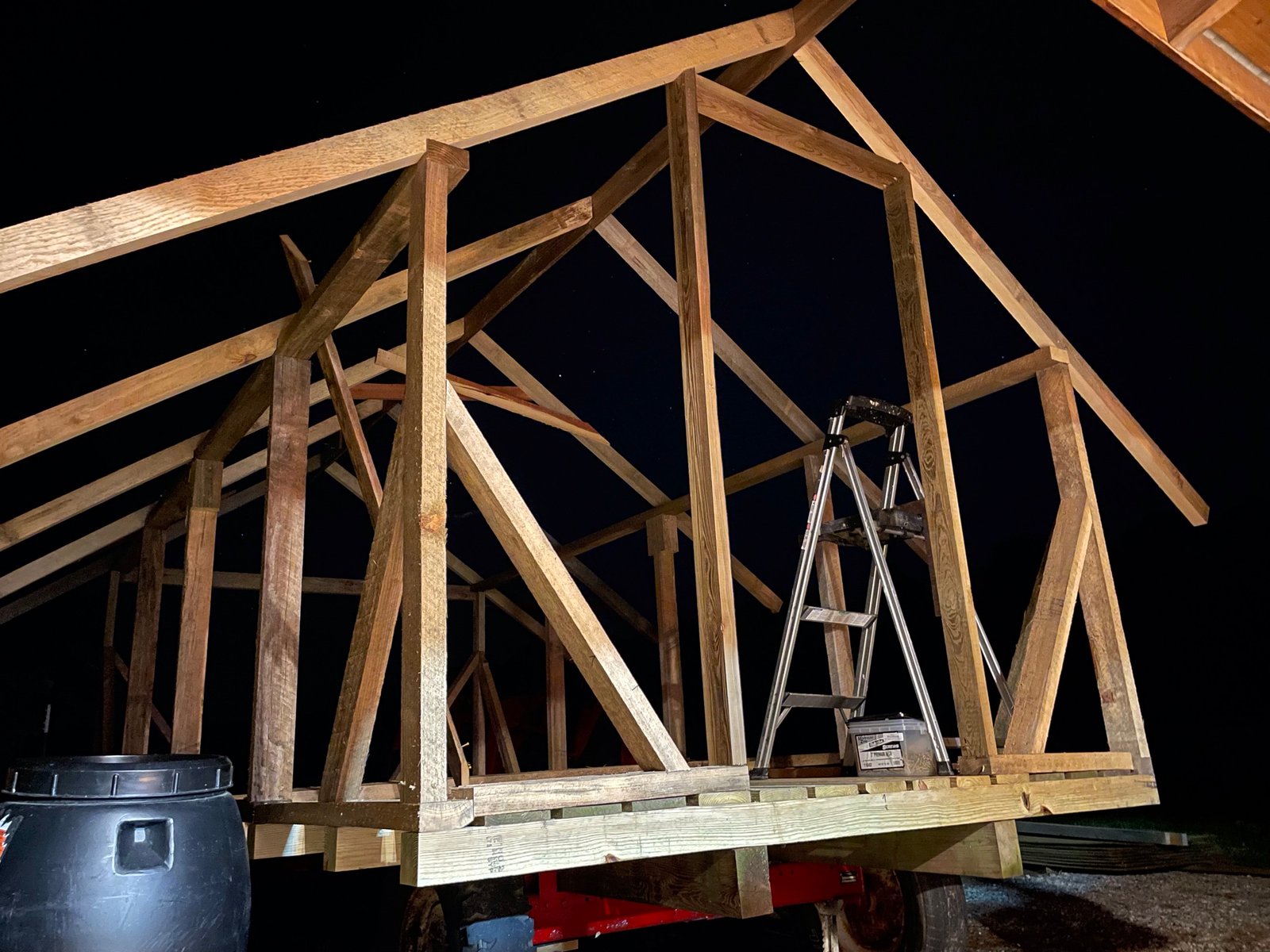
    Our Cornish cross meat bird experience, the dining room floor gets replaced, and we work on our next piece of chicken infrastructure – the egg-mobile.

    In the house, we replaced the joists and floor in the dining room – all the way down to the 1870s timbers. Brendan and the experts jacked up the house (!) and replaced the timbers, buttoned up the floor, and laid the new (old) floor- all in time for the great Chicken massacre of 2022.

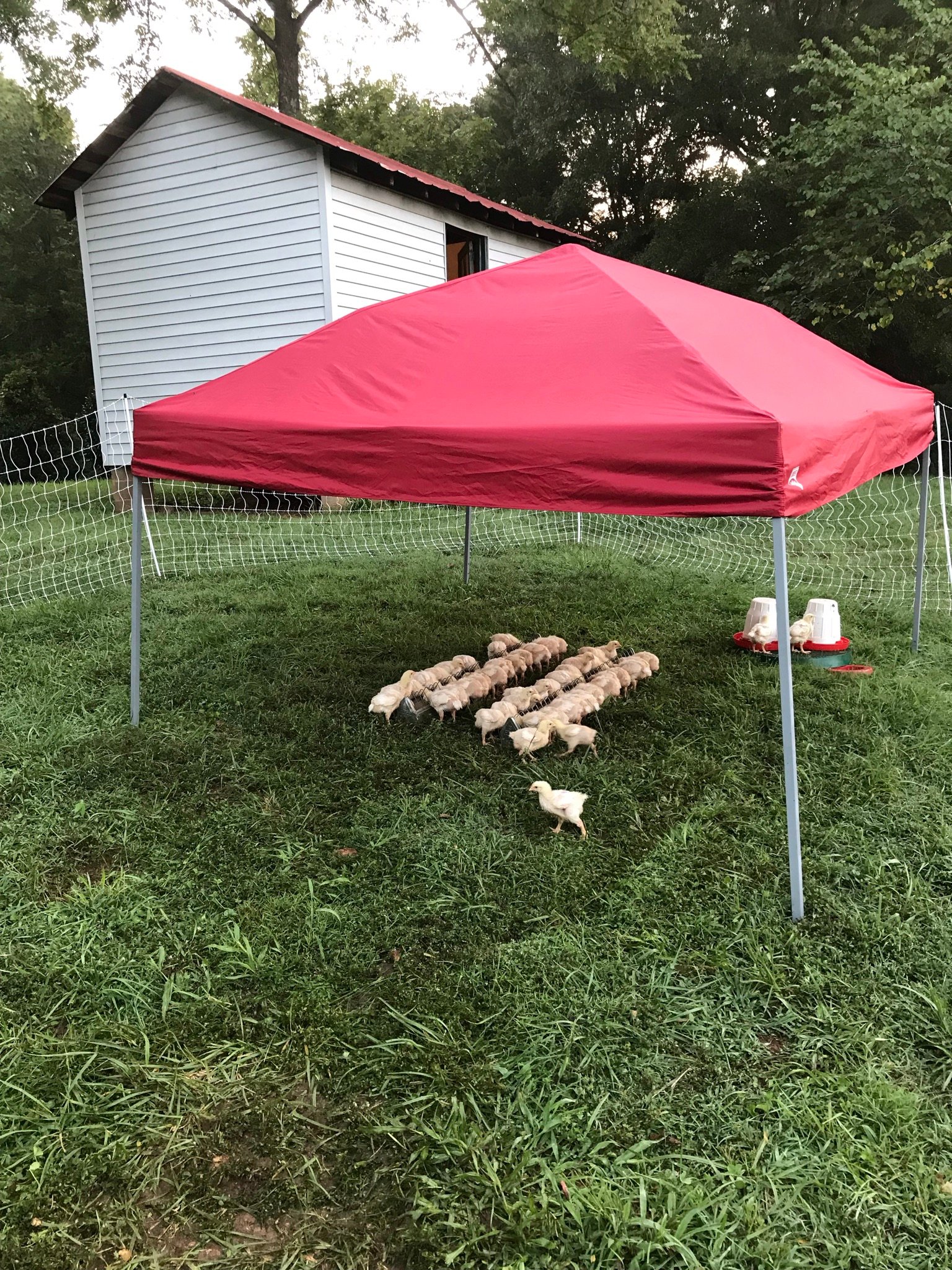
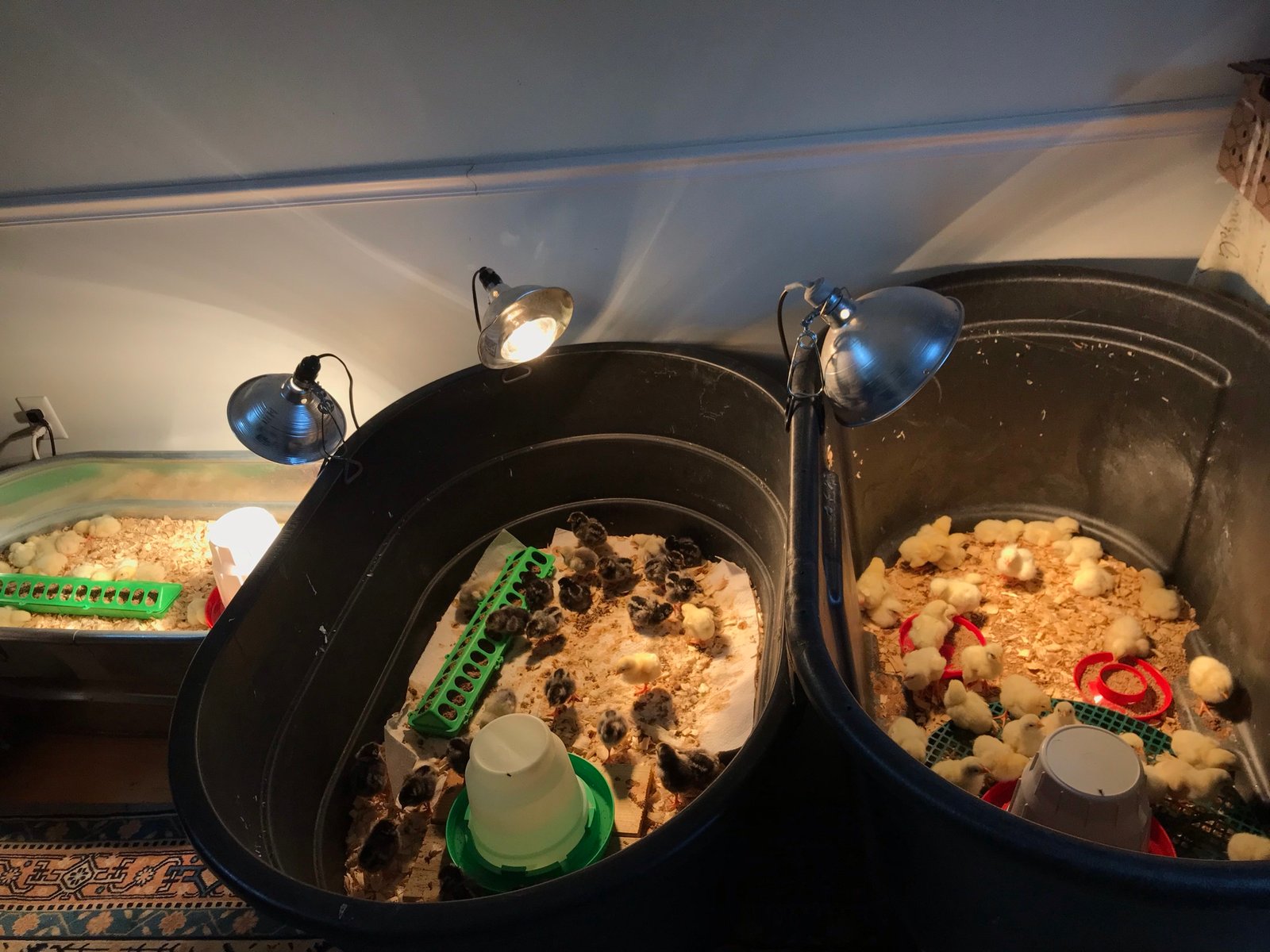
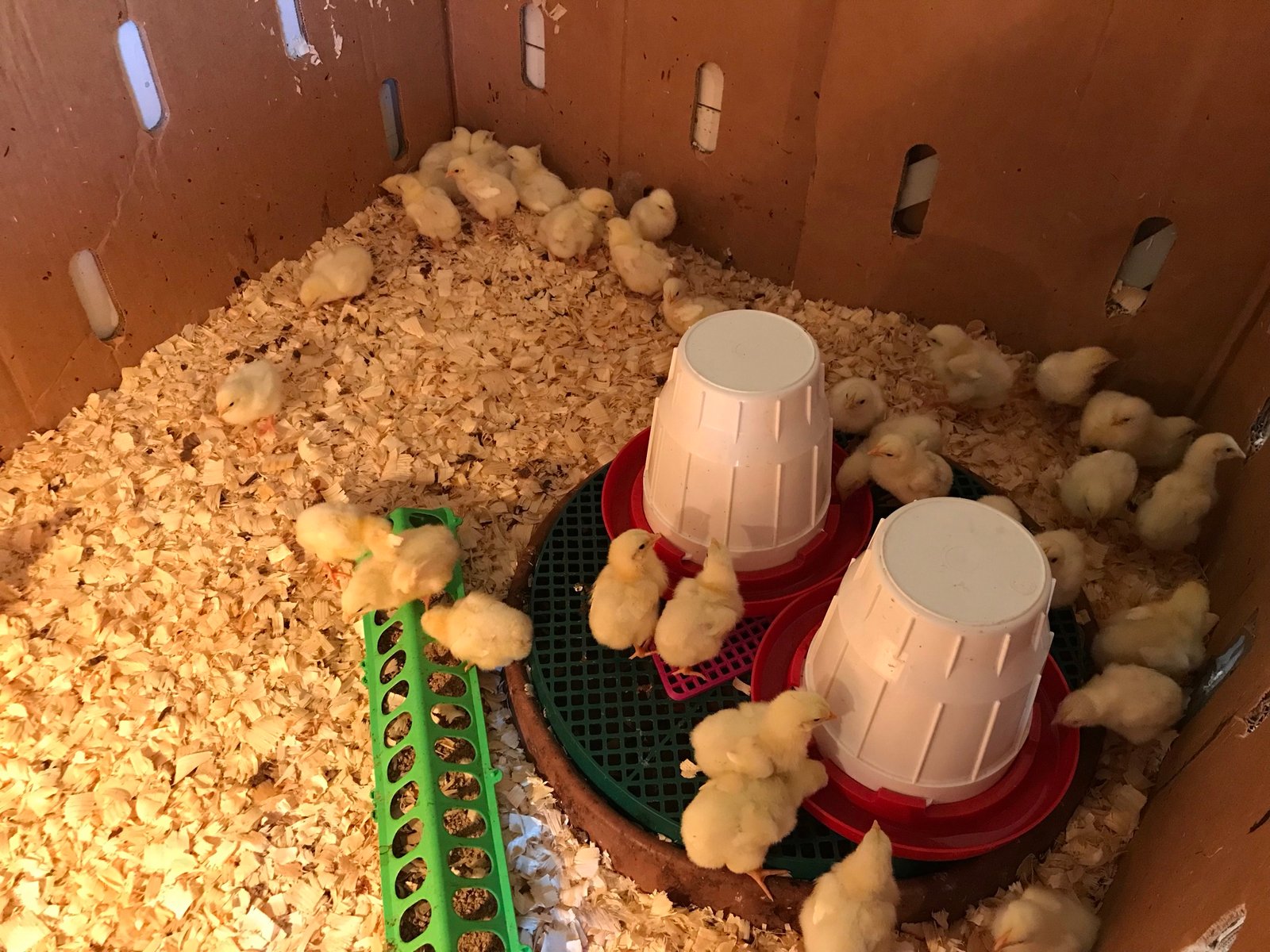
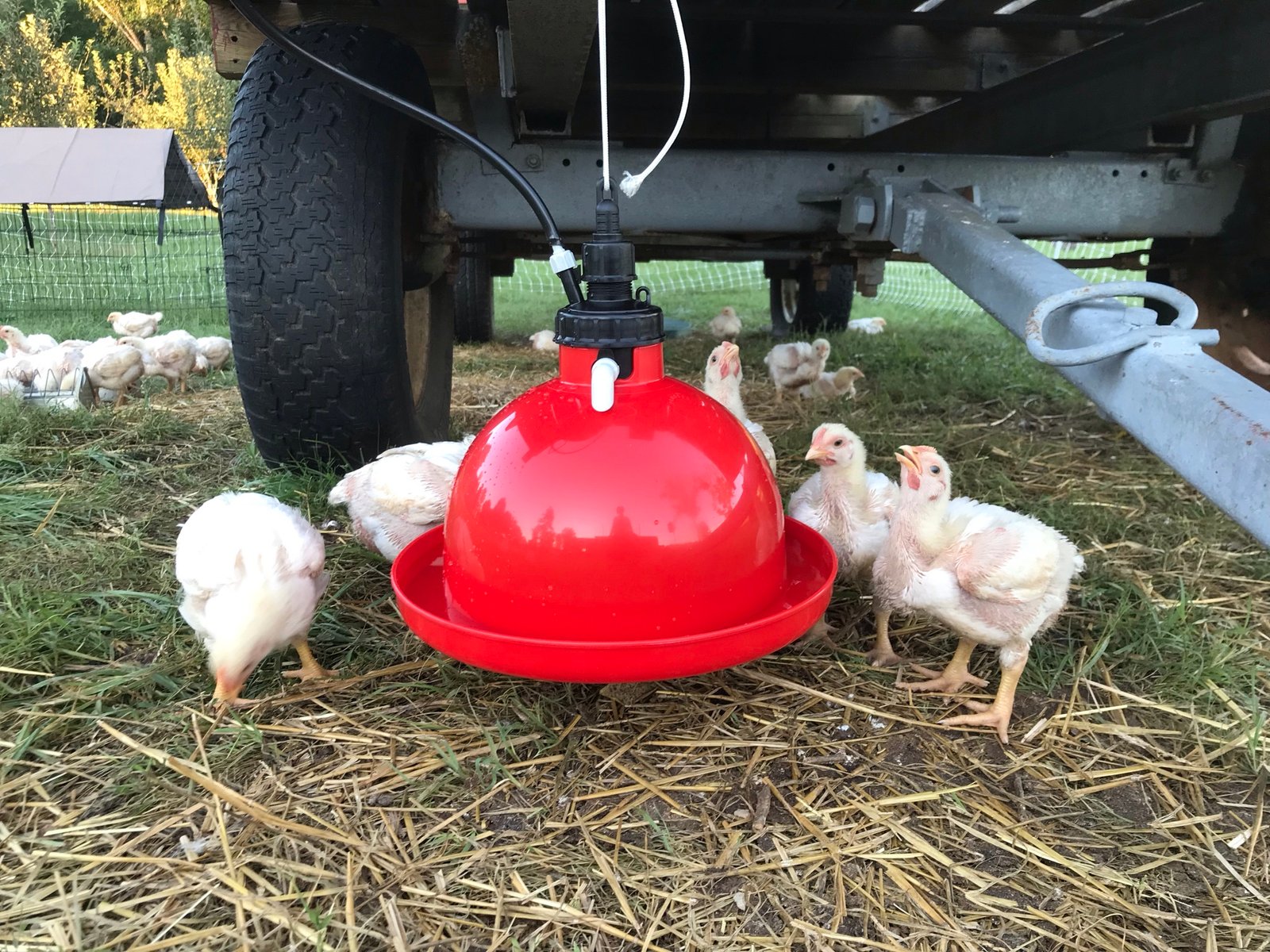
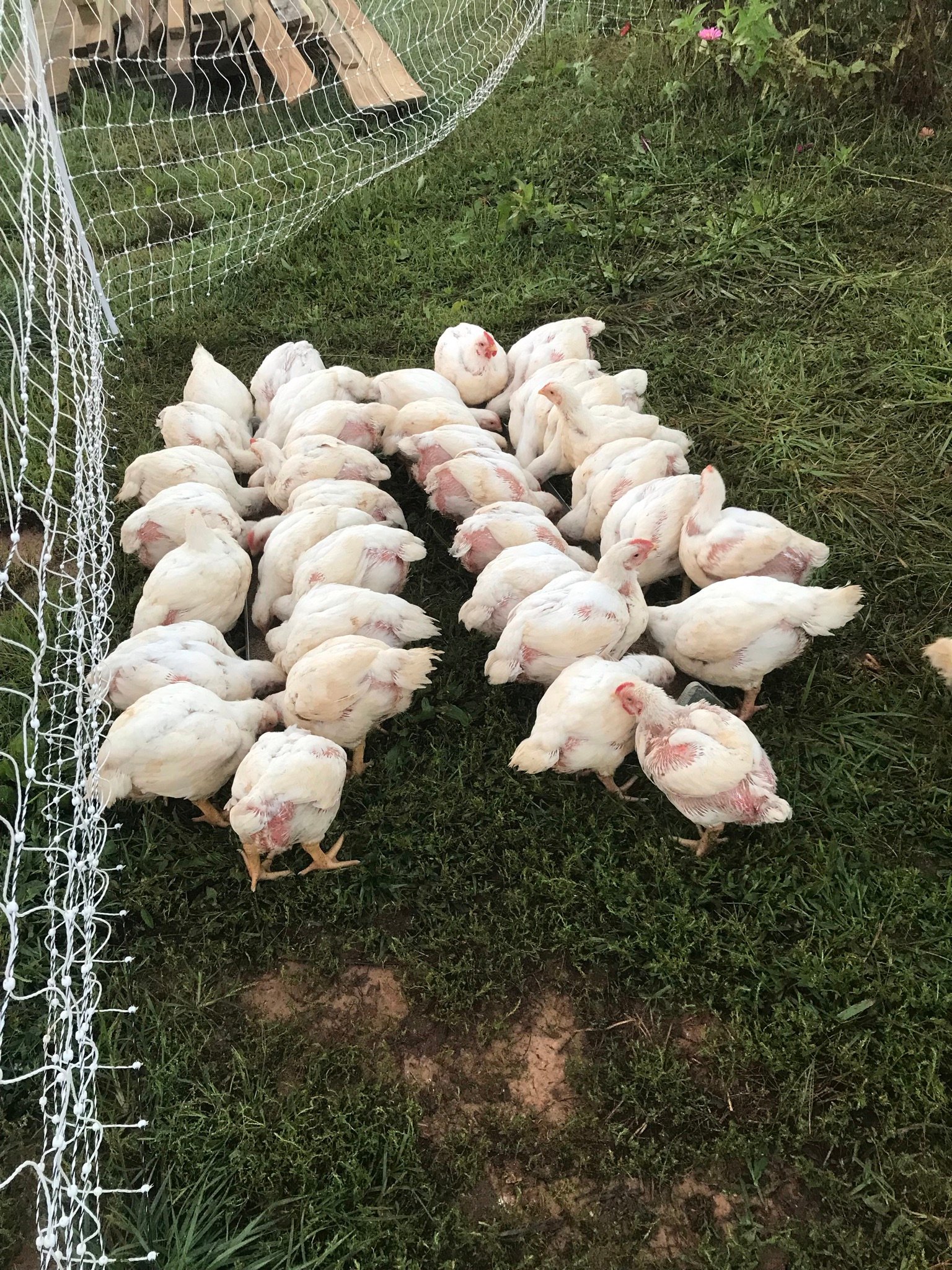
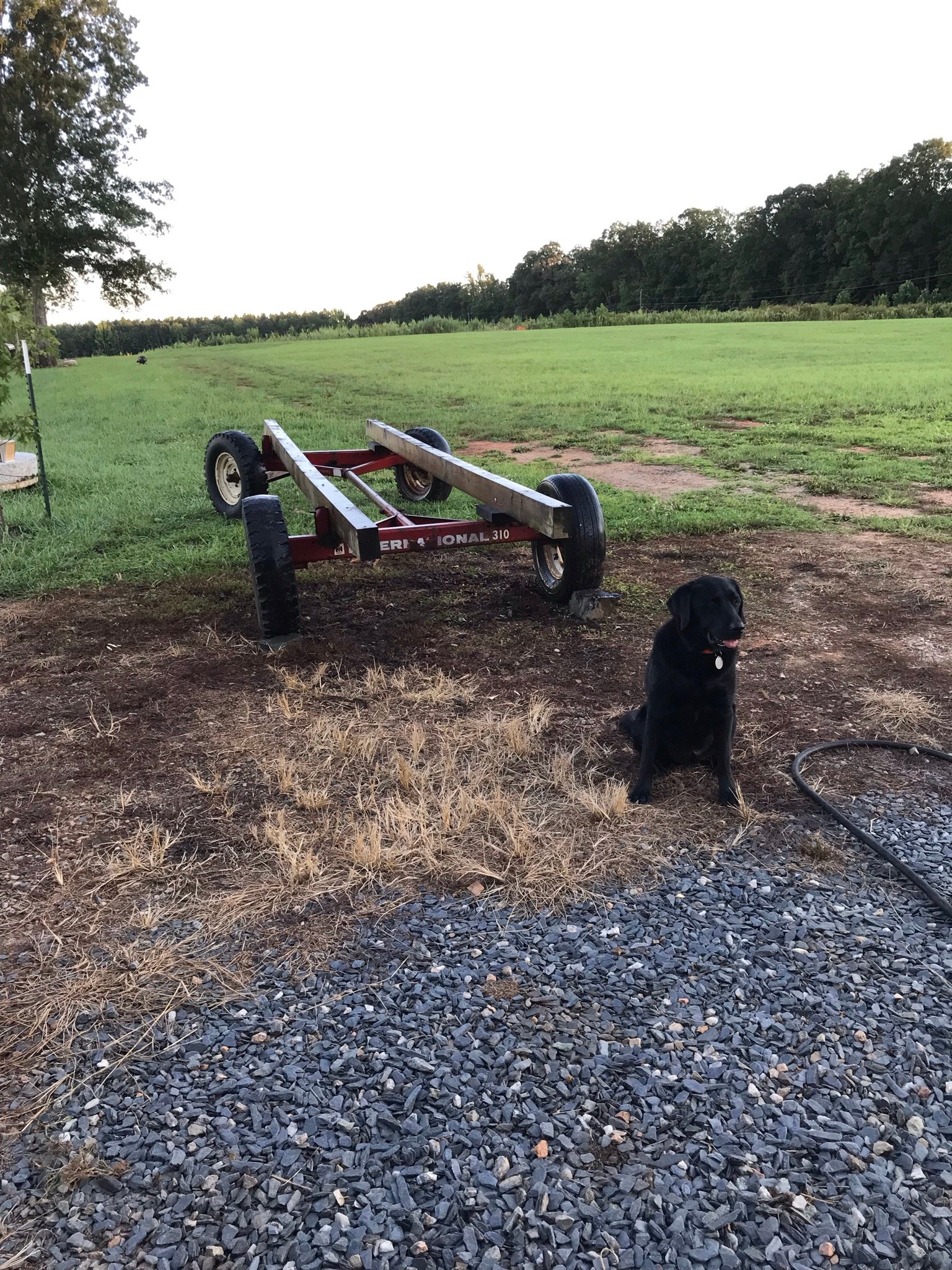
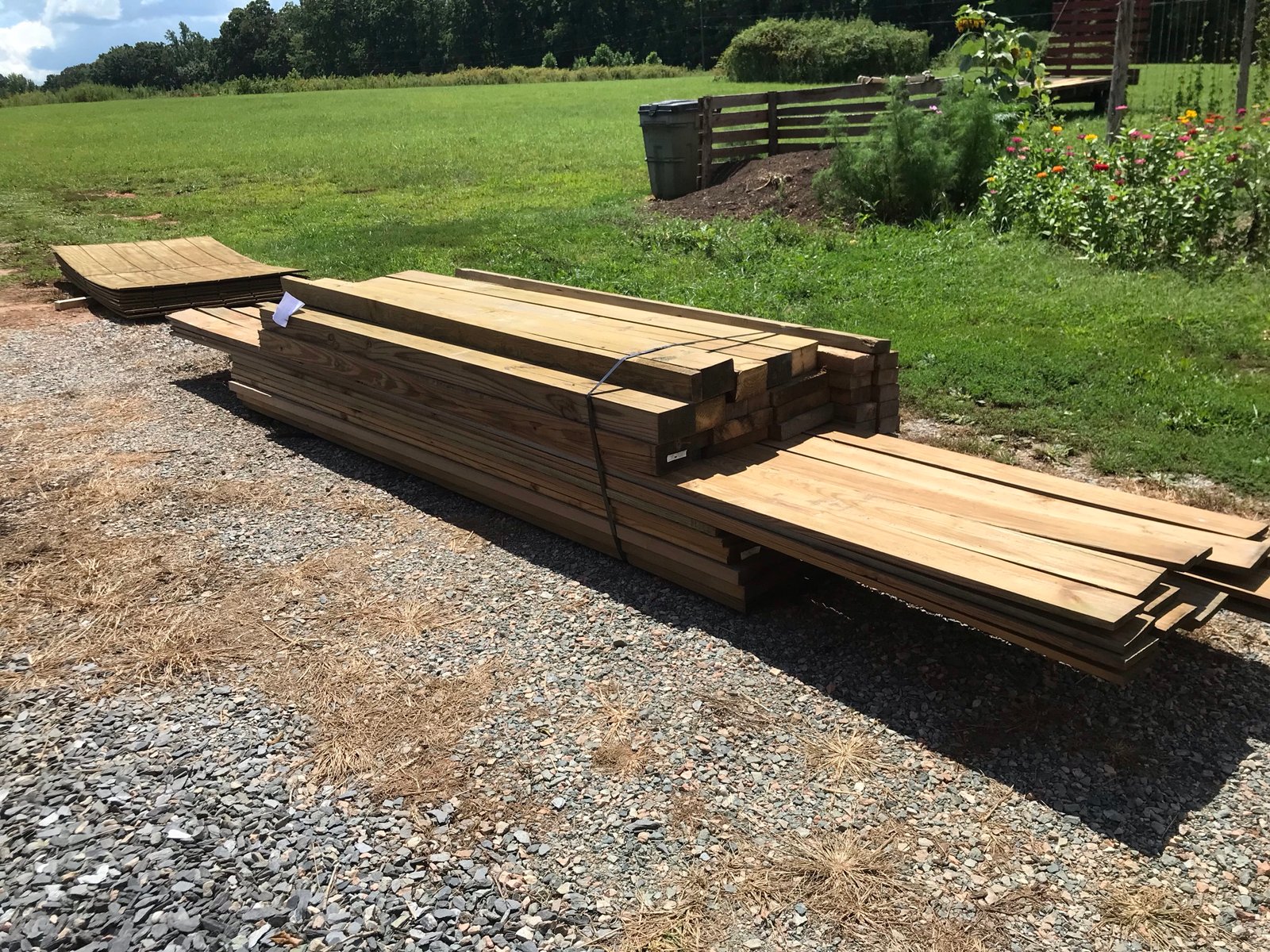
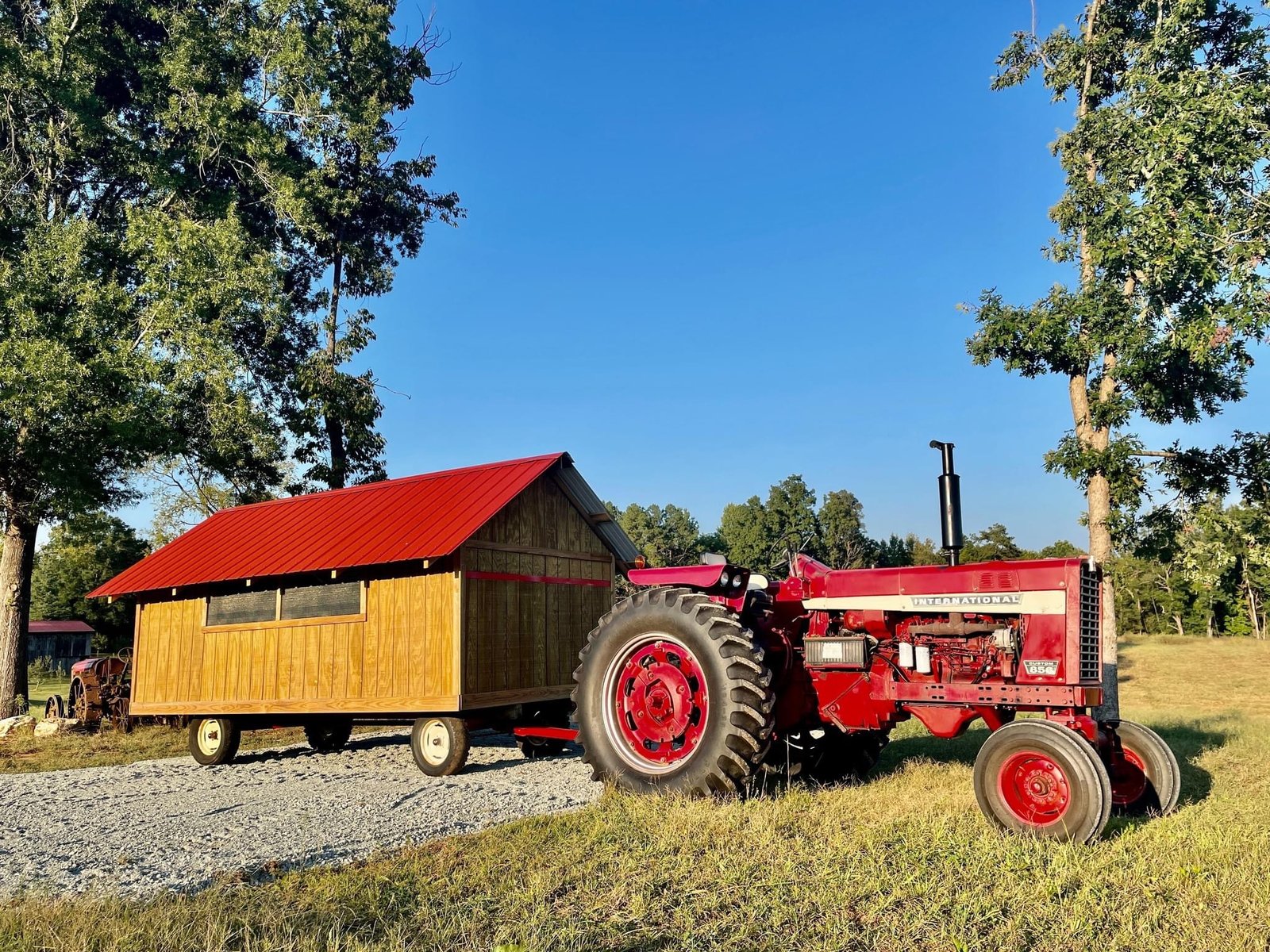
    In August and September, we raised 50 Jumbo Cornish Cross meat birds (purchased from Cackle Hatchery as part of their “Hungry Man Special”). We raised them in the brooder, transferred them outside at two weeks, and let them clean out our garden in September. We lost two adult birds – one of unknown causes and the second that was injured by a non-meat bird (we dispatched it a week early and grilled it on the BBQ). Getting into meat birds for the first time, we didn’t have a Salatin-style tractor. In lieu of the 12-x-12-foot movable box enclosure, we surrounded them with electric netting. When they were young, a pop-up tent worked for shelter during the day. As they grew older, we parked a hay wagon over them for shelter. We moved the fence as needed- every week or so. The last two days, we moved them to the new (almost finished) egg-mobile and bedded them in deep straw. They were comfy, dry, and safe while we received over 2 inches of rain. It also made catching them on the big day a whole lot easier!

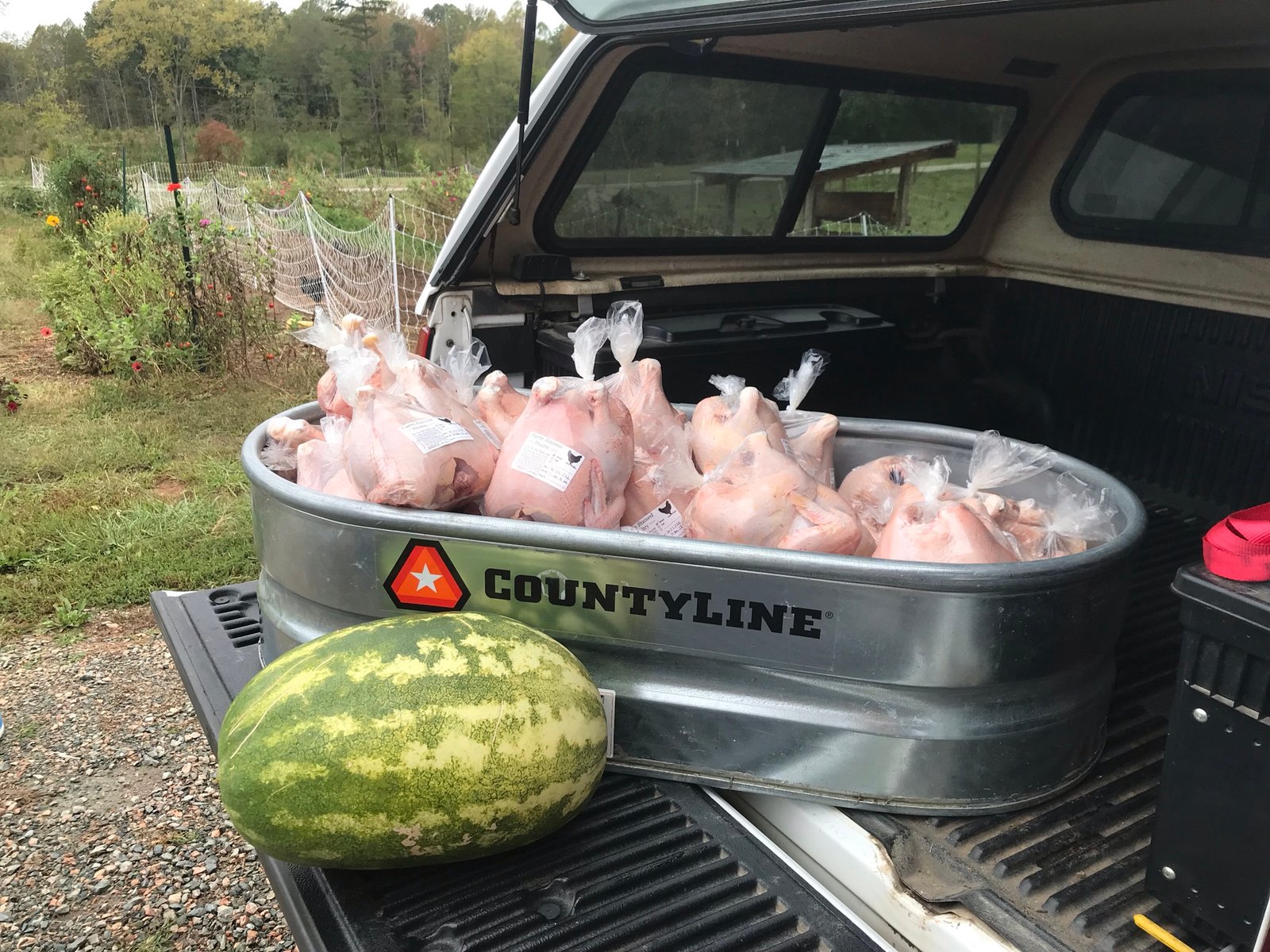
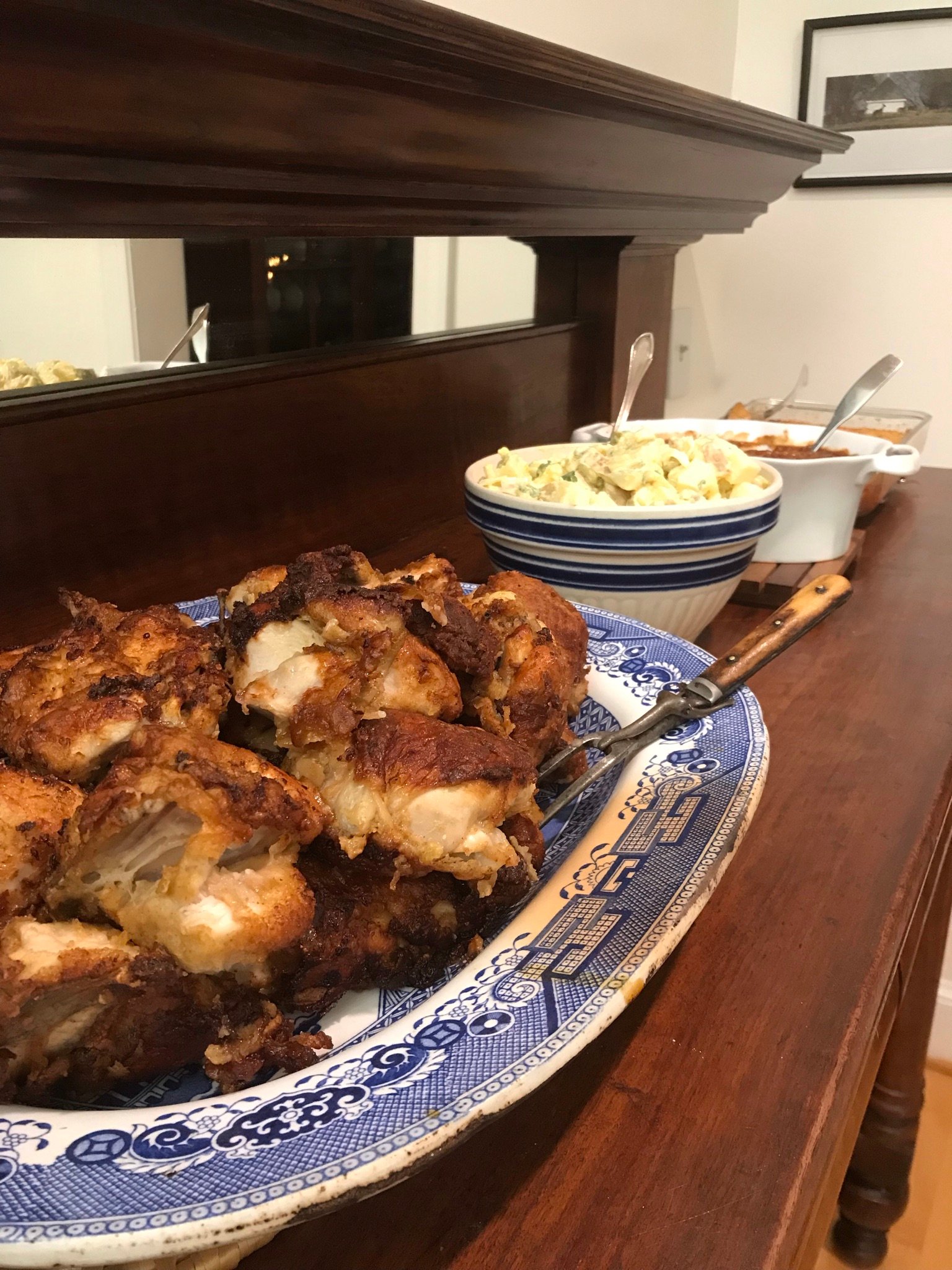
    All told, they ate a whopping 850# of feed and grew into beautiful birds over 53 days. With sincere and humble thanks we processed them with friends and family on October 1, 2022. The average live weight was just over 7 lbs and the carcass (freezer) weight was 5.3 lbs. I’m pretty impressed at the overall growth and stamina of these guys and girls (28 male and 22 female). At the end of an honest day’s work, we pulled out the harvest table in our recently refloored dining room and celebrated with fried chicken and homemade sides and pies.

    Our four broad breasted Turkeys have embraced life on the farm. They are now mature and will steadily put on mass before their dinner date for Thanksgiving and Christmas. They’re currently enjoying a mix of scratch and 21% feed.

    In early August, Brendan purchased a 1969 International Harvester and Big Red is now the largest tractor on the farm. Looks great next to the new Egg-mobile!

    With trial and error, I’ve learned that all bulk feed is not created equally. This summer, we experimented with buying feed by the barrel from a distributer near Petersburg. After about a month we noticed a marked slowdown in egg production and stalled growth in the pullets. Lesson learned!

    We’ve invested in an antique feed mill made by John Deer (belt-driven), a 1000# of corn, a barrel of wheat middlings, soybean meal, poultry vitamin premix, and diatomaceous earth to try our own recipe. No worries, our ladies will have plenty of free-choice commercial feed while we figure it out. Once we do, we’ll be ready to start selling our surplus eggs – $5 per dozen in Richmond (there’s a discount if you’re local!).

    At the beginning of October, we had the pleasure of watching the farm on TV. Last year, the Food Network filmed Season 3 of Outrageous Pumpkins at Glendale (just good ‘ol fun). It was pretty neat to see the farm gussied up and swarming with people.

  • Where was Outrageous Pumpkins Season 2 Filmed?

    Where was Outrageous Pumpkins Season 2 Filmed?

    Right here at Glendale!!

    Last year, as Halloween approached, we were asked to consider hosting the second series of Outrageous Pumpkins. Why not?? Who wouldn’t like Allyson Hannigan, 70+ strangers, and more than 10 tons of pumpkins taking over your home? Besides, it’s fun seeing your grandfather’s Model T on TV!

    Where’s Chet? Someone wants to be a star!

  • Egg-onimics

    Egg-onimics

    Farm fresh eggs. The description conjures images of happy free ranging birds, hone cooked breakfasts, and self-sufficiency.

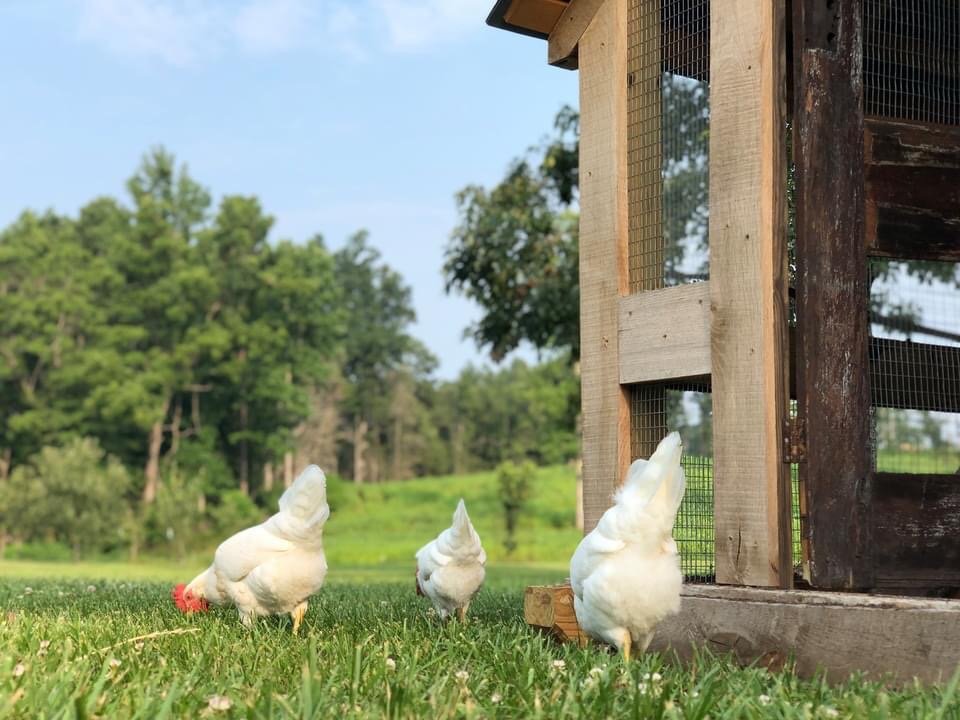
    The little White Leghorm cheeps are all grown up and laying nicely.
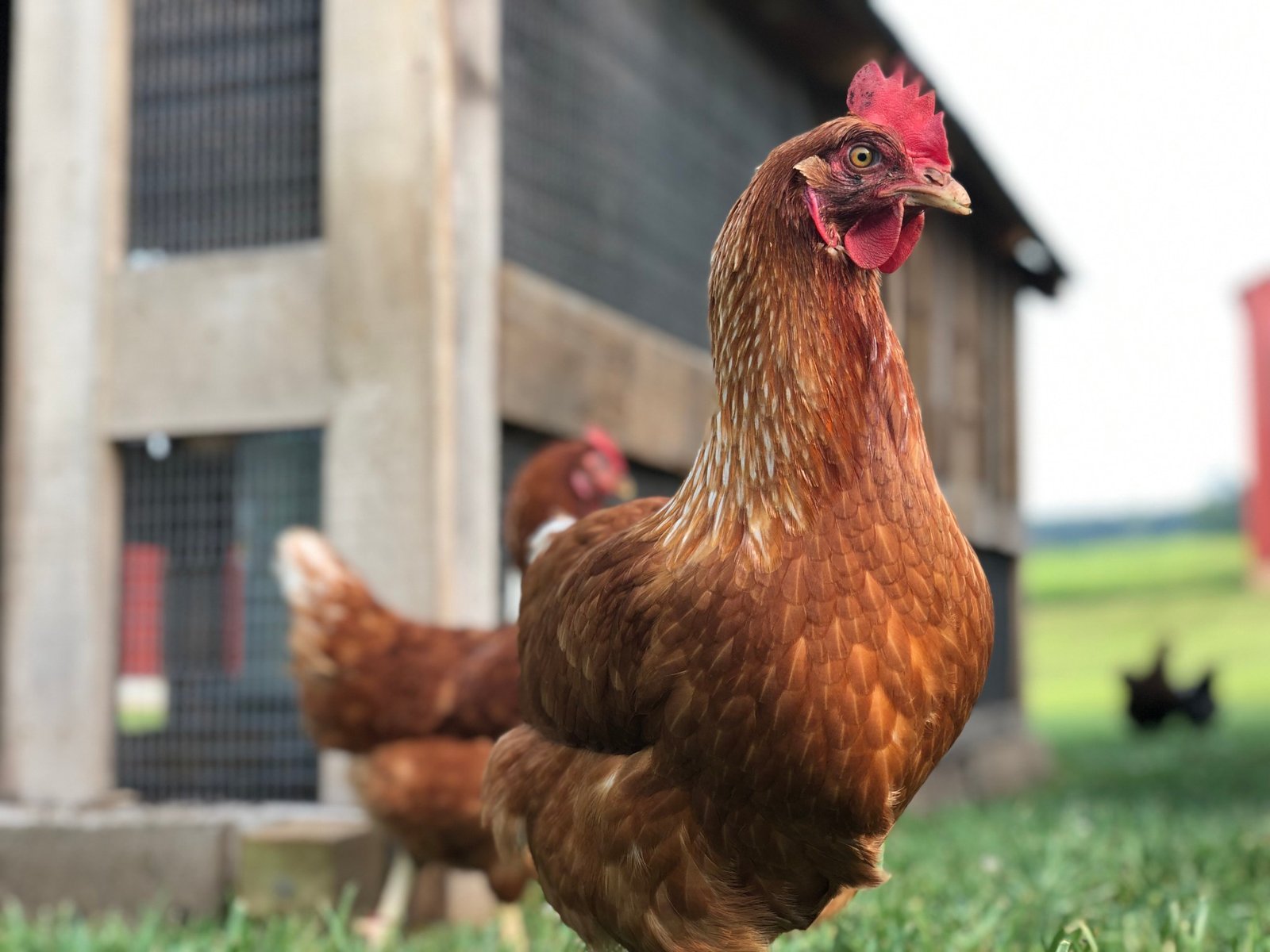
    The producers. Purchased from Herschlers in Powhatan, VA for $10.50 a piece, these ladies began laying at 22 weeks old. They produce a large brown egg.

    The gateway livestock for hobby farmers. They’re easy, delicious, and ridiculously fun to watch. 18 months into our egg-stravagent experiment, we’ve added five laced Wyandottes (three from our own eggs in Spring 2022). The 10 ladies are producing an average of just over 8 eggs a day, keeping us and our friends in plentiful supply. The cost of layer feed has grown (along with everything else) in the past year from $13 per 50lb bag to $17 per 50 lb bag. The ladies each eat about 1/4 lb of food a day- sometimes less if the foraging is good. So the cost to produce a dozen eggs, after feed, is just under $2. The quality is much better – lower in cholesterol and richer and creamier to eat.

    We often have a surplus and I may be getting into the egg market. Reach out if you’re in the neighborhood and interested in trying some. Warning! If you’re not careful, you’ll end up with some chickens of your own.

  • What is Glendale?

    What is Glendale?

    A family farm for six generations, it’s home for the Warriner-Burke-Azevedo family and many more through family connections and ties.

    It’s not a fancy estate and has worn many hats – tobacco, corn, and hay were grown, cows milked, sheep raised, and hogs slaughtered. In later years, stately pine forests stood tall over old hay fields and an eclectic mix of farm implements stood and lay where they were once used or abandoned in place.

    The next generation

    • Brendan Burke moved back to the farm with his new(ish) wife Lilli Azevedo in November 2019, the year the pines were cut and the land opened and laid bare.

    Glendale

    • Full of glens and dales, we hope to share our journey of new beginnings and old discoveries made by a couple of archaeologists through a telling of our monthly projects and progress “repurposing” the farm.