Author: Glendale

  • The Orchard

    The Orchard

    In 2016, Brendan and I had a dream. We were living in St. Augustine working as maritime archaeologists and dreaming of a rural future one day . On the long drive up and back from Florida, we schemed a plan for an experimental apple orchard with different varieties for eating and cider-making.

    The old cow barn and trees in 2016

    Year 1… 2016 Welcome home little trees

    Eager with our new project, we purchased twenty bare-root trees from Stark Bro’s Nursery. Having never ordered bare root trees, I was amazed at the slender box carrying our orchard to-be. Our original order included 20 trees and eight varieties: For eating: Granny Smith (3), Pink Lady (4), Arkansas Black (3), Winesap (2), and Golden Delicious (2). For cider: Orleans (2), Smokehouse (2), and Wagener (2). Each tree arrived as a 3-4 foot-tall whip ready for planting.

    Apple trees contain a rootstock (semi-dwarf in this case) that determines the size and vigor of the tree, and a scion that once grafted to the stock determines the species. The year before we bought our trees, they were professionally grafted. In hindsight, it would have been nice to know the type of rootstock that came with our trees. It is most likely M-111, a versatile rootstock that produces a tree 80% the size of a full tree and that is well suited to a range of soil types.

    Brendan purchased a 3-point auger for the Fergusen and excavated holes across a grid with vertices 16′ and 20′ apart. Each tree was planted with the graft several inches above ground surface. We used pieces of plastic irrigation pipe for tree guards and a stack of tobacco stakes and baling twine for support.

    We planted our trees in March and by spring, we had a new flush of leaves. In May we treated with fungicide and by November, all had shot up to between 53″ and 96″ in height. We lost a single tree (an Arkansas Black) the first winter. The tree grew well but never woke up in 2017.

    Year 2… 2017

    The second year we learned that apple trees are delicious. Every bug, beast, and fungus known to man loves apple trees. The main problems are:

    In addition, local rabbits and deer found them quite tasty and in late summer, hordes of Japanese beetle descended to feast on them. Understanding we would have losses, we made a day trip to Albemarle Ciderworks & Vintage Virginia Apples, to learn about some local varieties and fill in a couple of empty spots in the orchard. We brought back four new whips and two 2-year old trees.

    The new varieties were: Albermarle Pippin (2), Black Twig (2), and Hewes Crab (2).

    We replaced the tobacco stakes with T-posts and created cages from hogwire. Our newly expanded orchard grew and by late summer, many had trunks between 1/2 an inch and an inch in diameter. We lost one of the newly planted Black Twigs to fire blight but the other trees grew well.

    Year 3… 2018

    2018 was the last full year we lived in St. Augustine and watched our small orchard grow from afar. In February we came up for the weekend and pruned our little trees. The spring and summer were warm and wet, not ideal for apples. We saw our fair bit of rust and lost a Granny Smith from crown rot. Still too small to produce apples, our good neighbors, the Flippins, helped apply pesticides and keep the funk at bay. We couldn’t resist getting three Grimes Golden from Albermarle Ciderworks to ‘fill out’ the area and fill in a few holes. Two trees tried producing their first apples (way to go Pink Lady and Arkansas Black)! By Fall, eighteen of our trees were more than an inch in diameter and we cautiously awarded several a Grade “A” for excellent performance! Of the stars, Arkansas Black, Orleans, and Golden Delicious seemed well suited to their home in 6B, and all had trunks more than 1 1/2 inches in diameter. Of the less vigorous varieties, both Smokehouse got poor grades for slow development.

    In October 2018, Hurricane Michael brought nearly six inches of rain and gusty winds to the area. Four of our star trees (two Arkansas Black, one Pink Lady, and one Granny Smith) were knocked over by the weather. All had larger diameter trunks and more branches which contributed to their top-heaviness. Looking back, it would have been better to plant the trees in smaller holes and provide stronger, long-term support.

    When planting apple trees, it’s best to provide long-term support. Some full-sized trees do fine without stakes but most semi-dwarf and dwarf varieties benefit strongly from staking.

    Don’t eat the apple blossoms, they’re pretty but not edible.(CHET TO BRENDAN)

    Year 4… 2019

    By now, we believed several of trees were large enough to remove their ‘cages’ and strong enough to support themselves. We provided treatments in the spring of Dormant Oil (February), and Copper fungicide and Eight (an insecticide) in June. The deer grazed and nibbled while a buck used three trees for his rub.

    If you want to enjoy the fruit of your labor, some spraying is necessary. By June, all but one of the remaining original trees were over an inch in diameter. Last year’s early producers tried again and were joined by five new varieties. The trees trying for apples in 2019, in their fourth year since planting were:

    • Pink Lady (n=4) ,
    • Arkansas Black (n=27),
    • Winesap (n=15),
    • Smokehouse (n=4), and
    • Granny Smith (n=1). We were so excited that we counted the apples!

    Year 5… 2020

    During our first full year at Glendale, we tackled a huge stack of projects. Having once been center stage, the apple trees took a supporting role to the rest of farm happenings – from creating a new circle driveway, to stumping pines for future pasture and field, and creating new home workspaces from a former corn crib and tobacco barn.

    Excited after last year’s first showing, we sprinkled a splash of 10-10-10 general fertilizer on the apples (turns out we didn’t need to do this and apple trees generally do better without any fertilizer during their early growing years) and watched the spring blossoms arrive! An early warm spring greeted us with butterflies and blossoms, a real treat!

    The early bird gets the worm, but Mother Nature has the last laugh. On May 10th, the temperature plummeted and we had two nights with 28 degree lows. We jumped to cover our veggies and cloche the delicate spring shoots. While we were able to salvage most of them, the freeze toasted the tomatoes, our little pecan trees’ spring shoots, and most of the apple buds. The newly formed clusters of fruit blackened and dropped off. A warning not to count your apples before June! Despite the chill, our June count showed a few stubborn apples clinging fiercely to life. The year’s stubborn producers were (in number of apples):

    • Pink Lady (n=1),
    • Orleans (n=11),
    • Smokehouse (n=2),
    • Golden Delicious (1),
    • Granny Smith (n=1),
    • Winesap (n=7),
    • Hewes Crab (n=36). Hewes Crab is a biannual producer so we’ll see what happens next year.

    Unfortunately, of the apples above, none made it to harvest. Thanks, deer! Another year to wait… During the summer and fall we kept the same treatment plan as previous years but began to struggle with blight in early May. We kept trimming and cutting, and purchased some Fertilome to spray next year. Each chemical has a special window of application – with bloom, wind, and temperature all needing to fall within the correct window. Too soon or out of sync and you waste the chemical and/or damage sensitive pollinators.

    In 2020, we added the last new apple trees, a Red Delicious and Golden Delicious that were on sale at Tractor Supply and too good an offer to pass up. The orchard now stands at 30 trees and will likely stay that number until we learn which varieties produce and which withstand the rigors of time.

    This image has an empty alt attribute; its file name is april.5-1.jpg
    Our little apple orchard on April 5, 2020

    Year 6 … 2021

    This year, we purchased a 15 gallon sprayer and shared the pruning tasks in February. Several of the trees are pushing 10 feet and will need some more serious attention this summer. For Christmas, we adopted a 3.5 HP Hercules hit and miss engine (Merry Christmas Brendan) and in February found a apple cider mill for sale. Both require a little fine tuning but we’re hoping that the coming years will provide an opportunity to press both into service.

    The winter was casualty-free and the spring has brought an abundant bouquet. By the first week of May most of the apples have finished blooming and started the process of setting fruit.

    This image has an empty alt attribute; its file name is img_3240-1.jpg
    April 2021

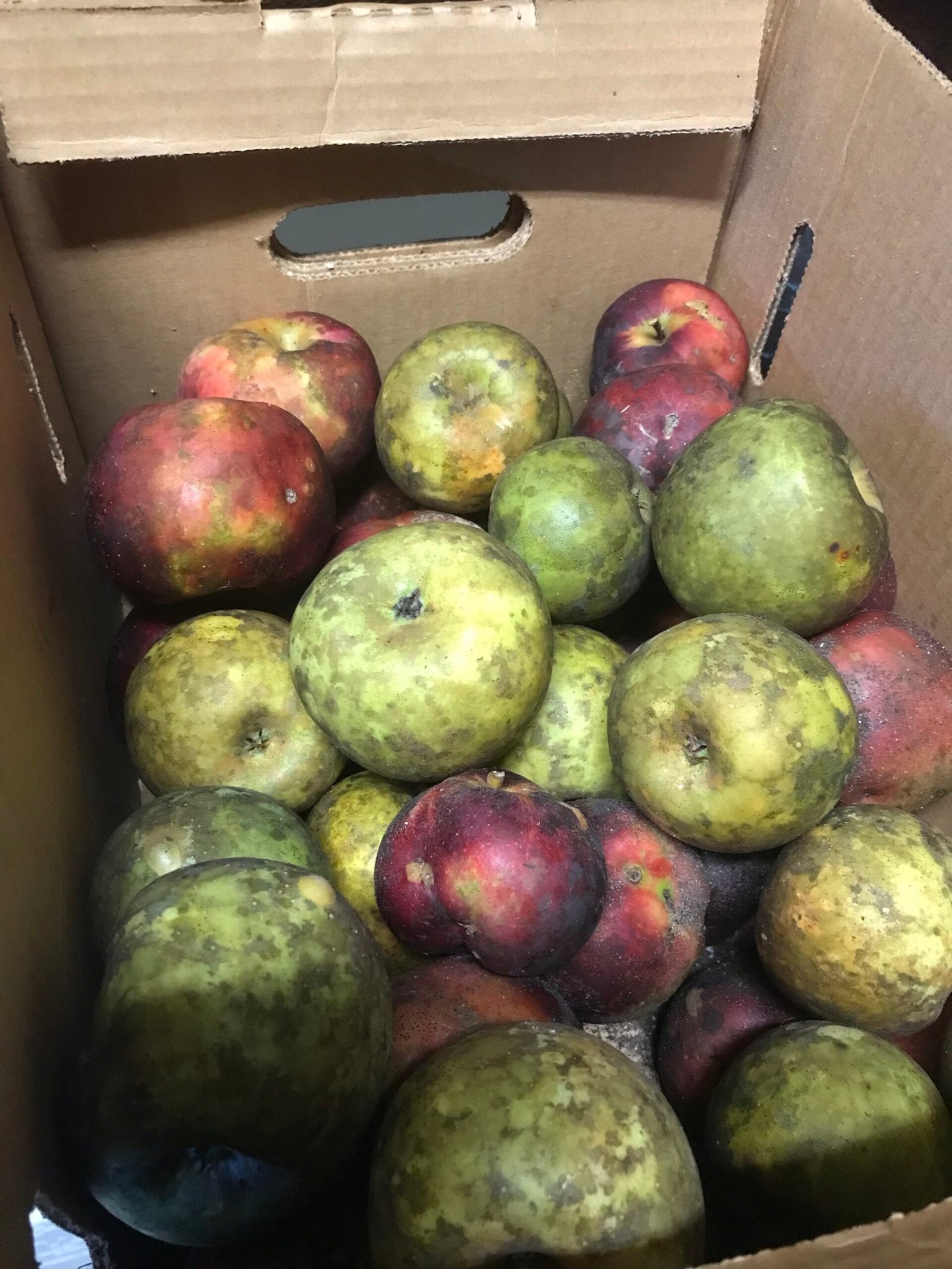
    The first harvest yielded ~3 lbs of Hewes Crab, 8 lbs of Gold Rush, and 9 lbs of Arkansas Black apples. The other trees produced a few apples a piece and we sampled them surreptitiously to see when and how they ripened. The sampling lasted from early September through the end of October and hints of harvests in years to come.

  • May 2021

    May 2021

    “It is wonderful how much may be done if we are always doing.”

    Thomas Jefferson

    May jobs including plantings, stumping, job applications, brewing, and other farm activities. A friend loaned us two bee hives, cousins visited, and we enjoyed relaxed restrictions as vaccinated members of society. Brendan purchased a plasma cutter and welder for the farm, and the old 1949 Chevy farm truck got some overdue TLC.

    The month started dry and cold and ended dry, hot, and humid. In a stroke of lucky genius, we brought the water line from the greenhouse 165 feet up to the Tobacco barn on April 29th. As a result we had water for the new garden and baby plants. Unfortunately, the newly sowed grass and hardwoods struggled as we teetered on the edge of drought conditions.

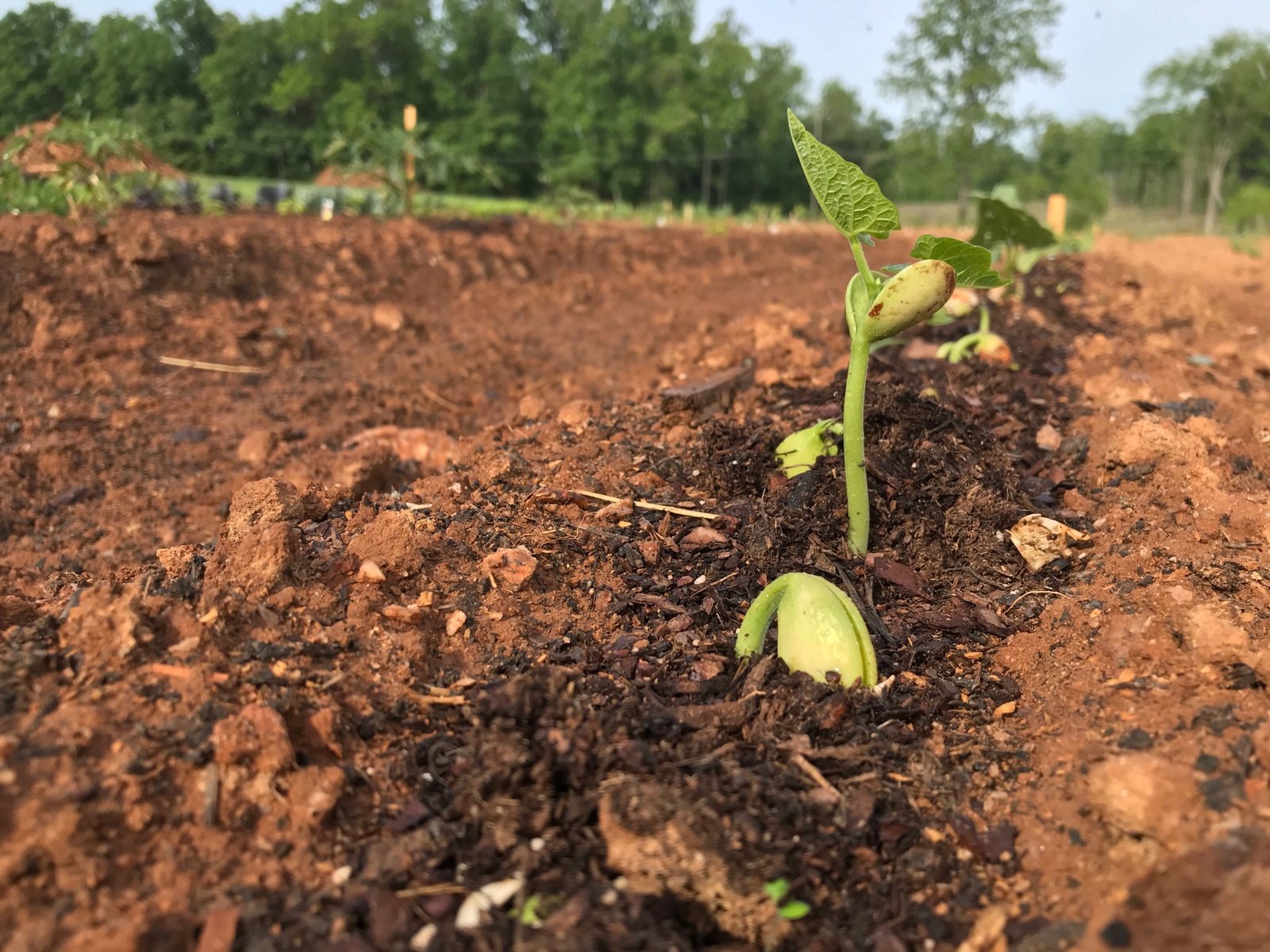
    New lima beans stretching for the sun on May 22

    We brewed a couple of 10 gallon batches – a Session IPA in the style of Founder’s All-Day IPA and a summer Witbeer ‘Gaarden Hoe.’ Having brewed 30 gal at the farm, we’re entering the next generation of All-Grain brewing: Broad Axe Brewing 2.0. We expanded Broad Axe brewing to include a new fermenter, 15 gal kettle, brew sculpture, and kegerator.

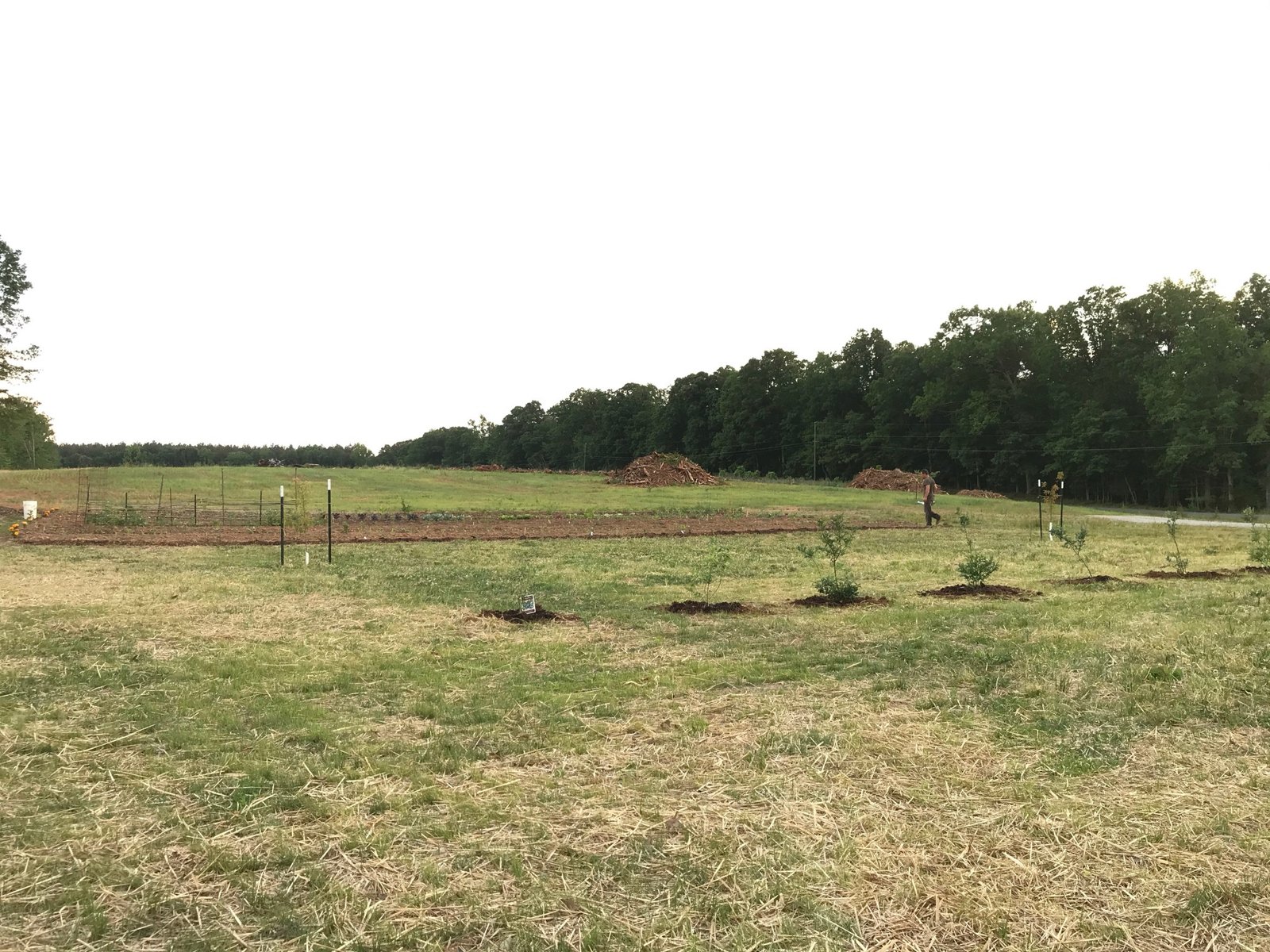
    In the garden, we laid out a permaculture area by the vegetable garden around the peach trees that were planted in March. We moved last year’s bare root blueberries from Willis Orchards to their new spot and tentatively laid out space for blackberries and grapes. We have hopeful plans to add hops and blackberries later this year.

    New transplanted blueberries north of the garden.

    We planted 10 little hop bines at the beginning of the month in two buckets and by the middle of the month they sprouted and were ready to climb. Using the auger, we dug 3 post holes and will be moving them to a new home south of the garden.

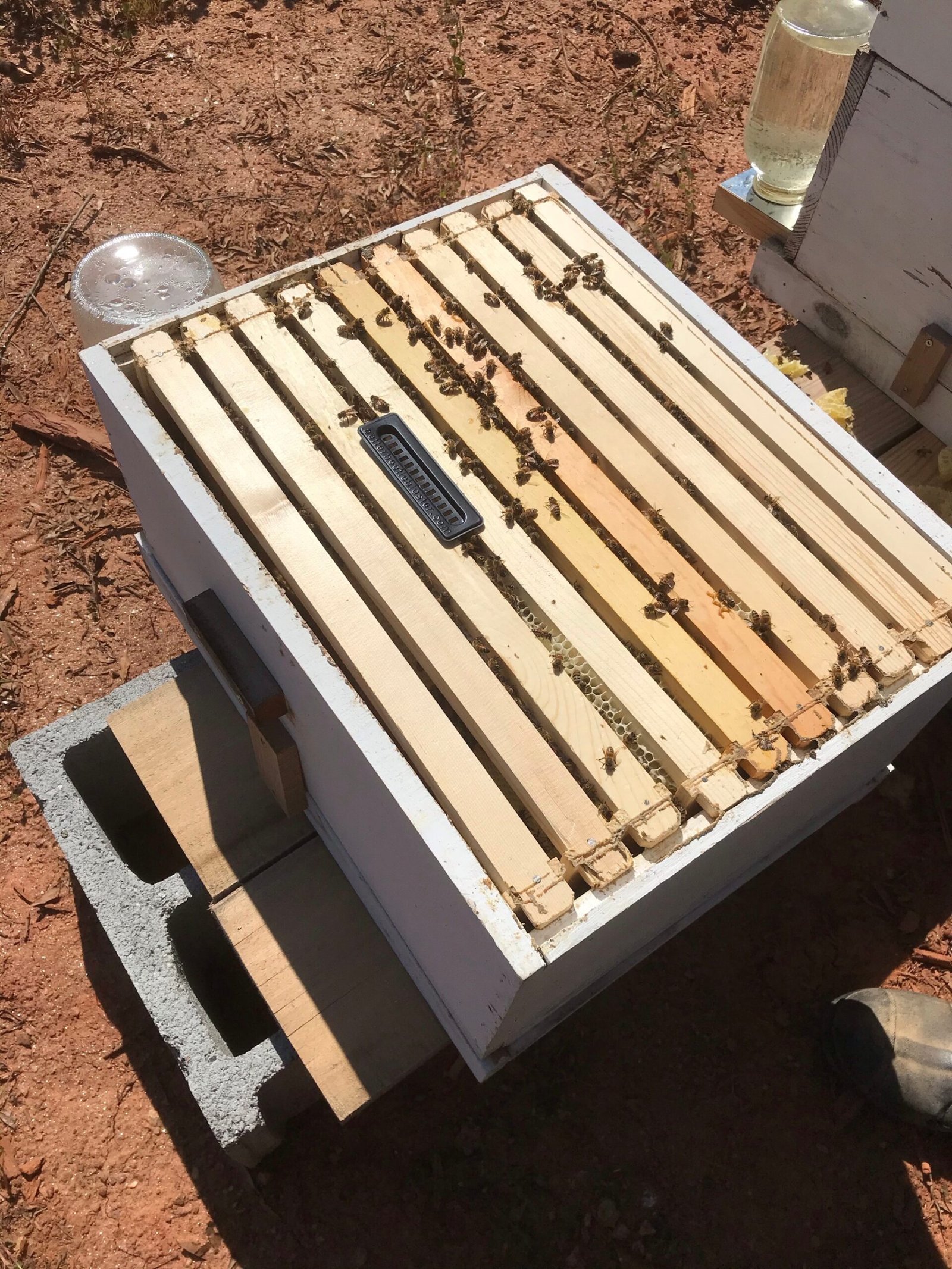
    We stumped an additional 2 1/2 acres for the future paddock. The stumps will wait until we have access to a track loader later this summer. The areas cleared last year are planted in Crimson Clover and oats. The Crimson Clover bloomed in early May and a friend brought over two bee hives to enjoy the feast.

    Honey bees settling into their new home away from home.

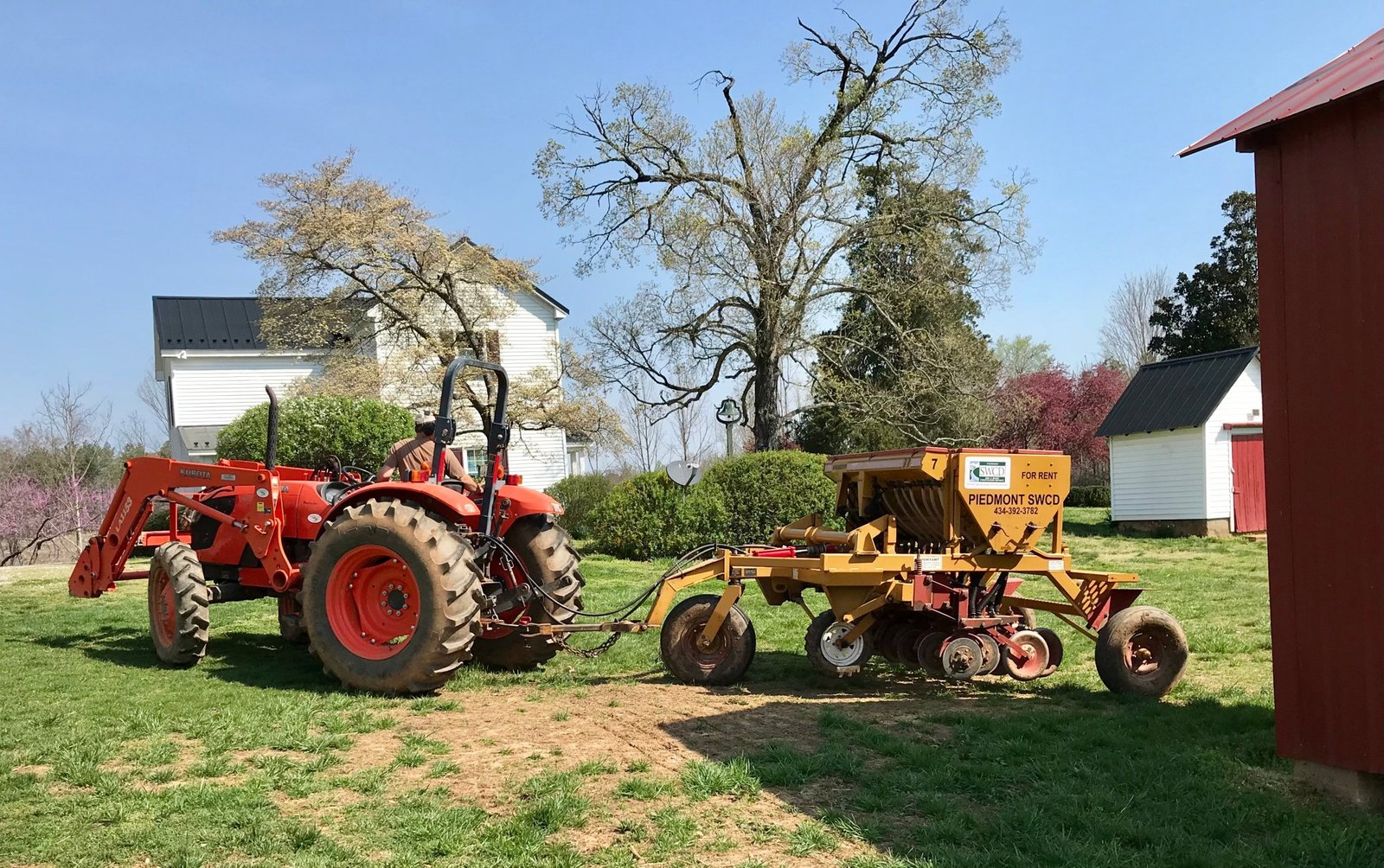
    The bloom finished by mid-May and we sprayed the clover for green manure. The following day we rented the Piedmont Soil and Water District’s grain drill and drilled this area and the oats with sunflowers. If successful, it will loosen the soil for the fall’s pasture mix and make an excellent feast for wildlife.

    Stumpin’ aint easy but it helps to have good tools to do it.

    Three Golden Comets joined the Glendale flock, pushing the number of young chickens to nine. We deposited a heaping wheelbarrow of leaves into the coop and are starting the use the deep litter method. As the chickens scratch and poop, we’ll add additional leaves and ‘brown’ to balance their green manure. By the time it accumulates to 10-12 inches deep, we’ll have a lovely compost for next year’s garden. As of the end of the month, the comets had started to lay. Hurrah for fresh eggs!

    The dry weather has been good for the apples which have not suffered as badly from blight as last year. Farm happening to be continued…

  • Homebrewing at Glendale…                        Broad Axe Brewing 1.0

    Homebrewing at Glendale… Broad Axe Brewing 1.0

    We settled on Broad Axe Brewing as an appropriate title for this company. Named for the family axe that helped build the barn we’re brewing in, it’s a small but significant link to the past.

    April is a fine time for brewing with friends… At Glendale, we set a goal to create an Estate Ale. As amateur brewers, we are relying on our friends, our research skills, and the internet for inspiration. Starting with a clone of Founder’s All-Day IPA, we started a grand experiment and each brew session teaches us something new- about brewing and friendship. Yes, it’s cheaper to buy a case of beer, but there’s something special about being able to finally get together with friends, mask-free, and create a delicious batch of home-brew.

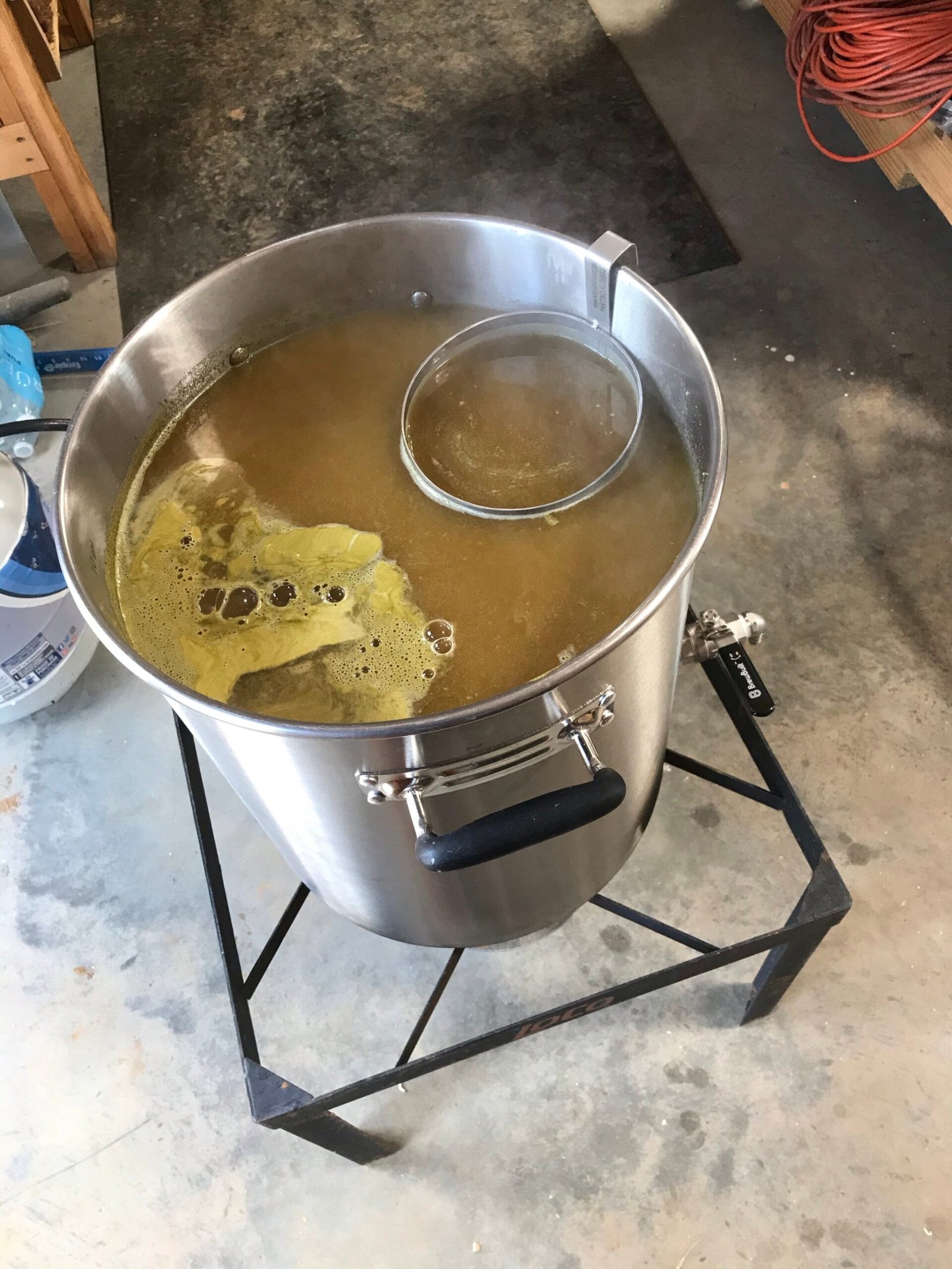
    Above, Zach doughs in while Chet and Brendan supervise. Lesson from this batch – Pre-heat your mash tun… and a walk through the garden will help you find solutions. Nothing’s more important than friendship. During this batch (after an exciting loss of heat due to the ridiculously small valve), we poured off some of the water and reheated it to raise the temperature to the recommended 150-170 degrees. After an hour we sparged the mash and transferred the wort to the kettle for boiling.

    The spider keeps the hop pellets in place during the boil and makes it easy to add the recommended amounts at 60-, 30-, and 10- minute intervals. For our next batch, we’ve ordered a 15-galon kettle, a stainless steel fermenter, and Brendan is welding a beer sculpture. Stand back for Broad-Axe Brewing 2.0!

  • April 2021

    April 2021

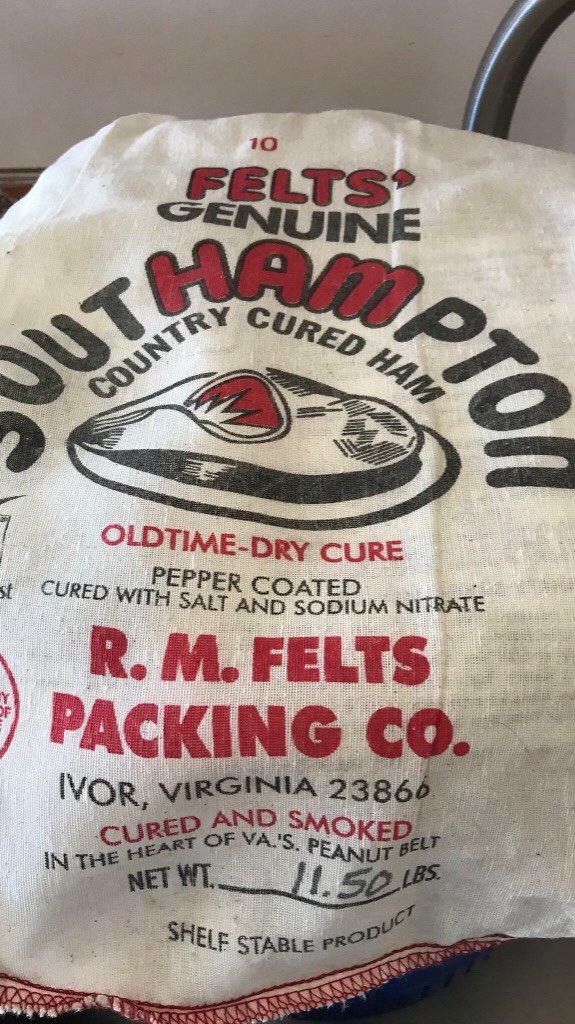
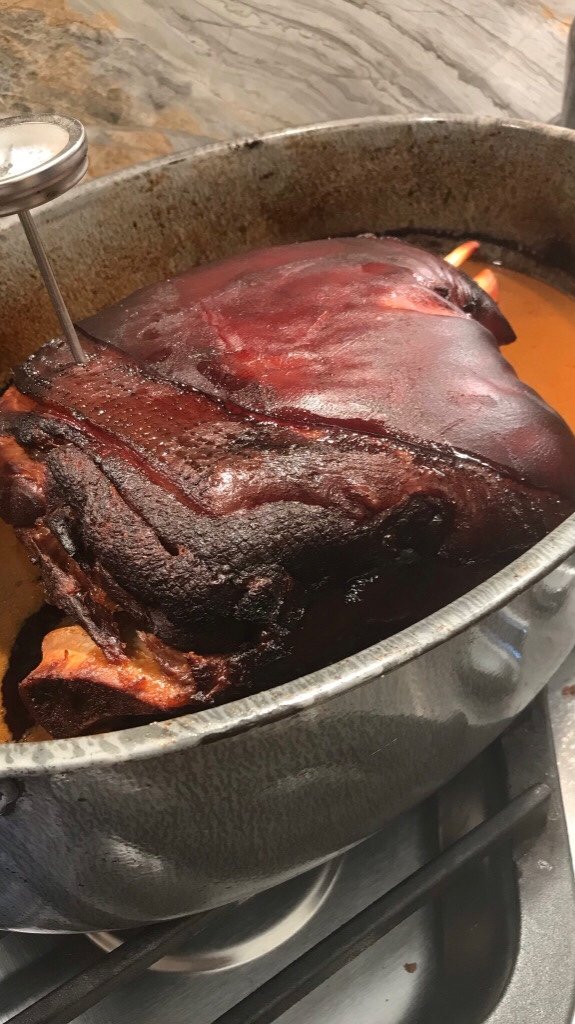
    Easter came early in 2021. Brendan exchanged some cedar posts and labor at a friend’s 18th century home in Richmond for a country ham. It’s the first time I’ve cooked the delicacy. We soaked the ham for 2 days and cooked it in a bath of Dr. Pepper. The taste was delicious and extremely salty. We’re not giving up and next year we’re going to try boiling!

    As Easter passed, the weather stayed cool. The garden stayed in semi-stasis while the chicks grew by leaps and bounds. Turns out chicks love chick weed. Who knew?

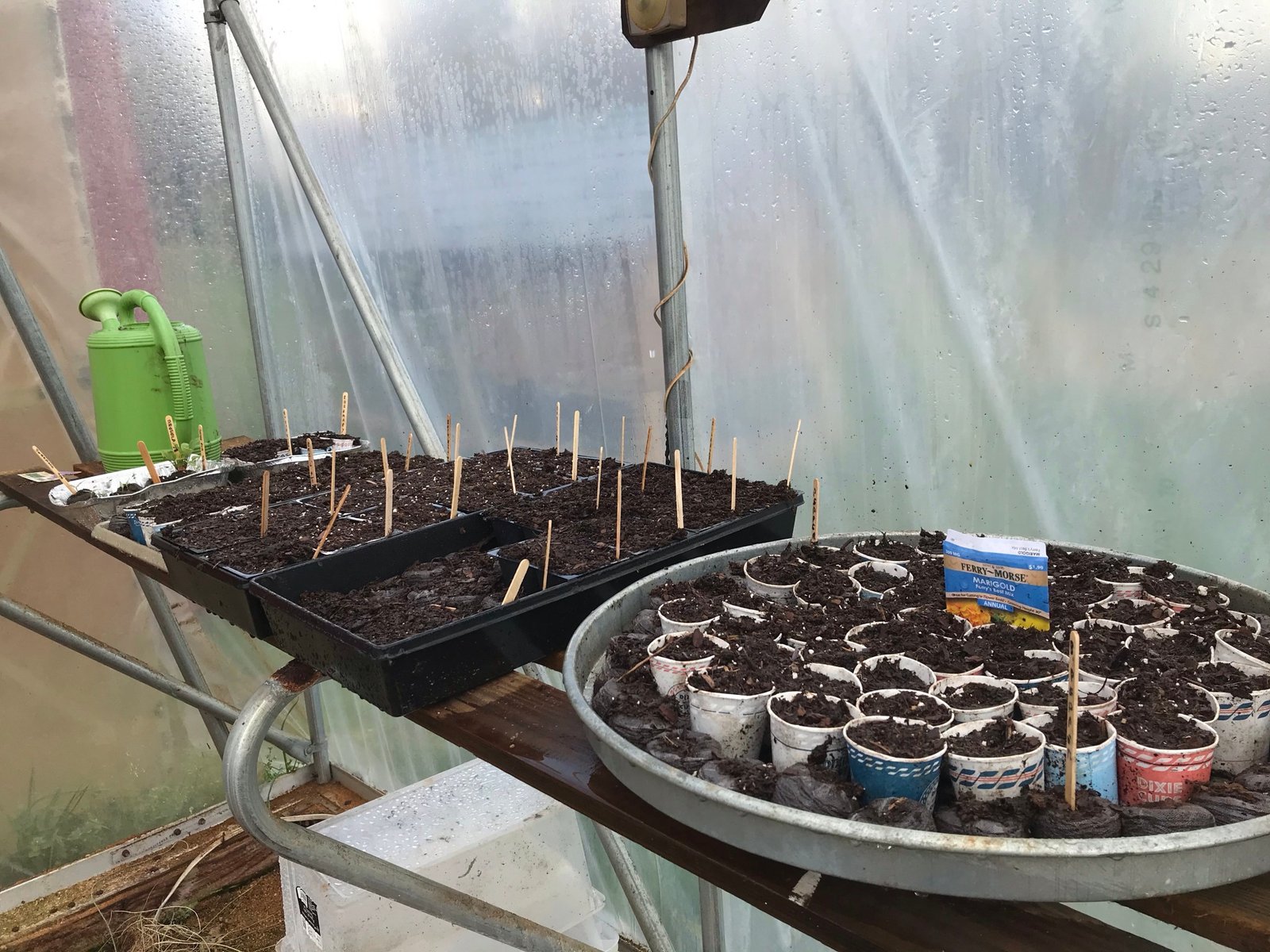
    The onions and lettuce enjoyed the frosty nights while I started a few seedlings under cover in the greenhouse. The whole greenhouse is in need of renovation and we’ve added it to our list of future to-dos.

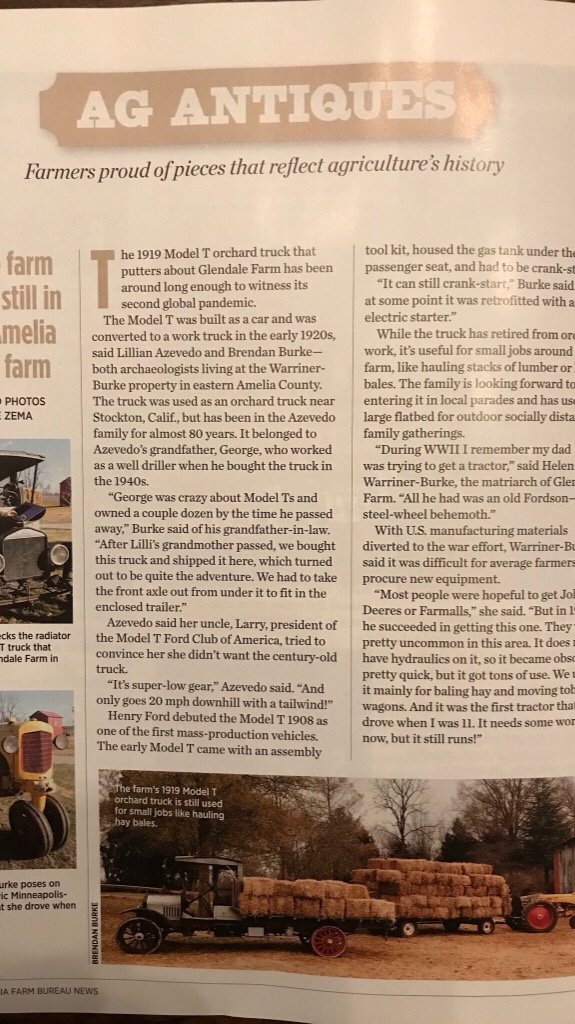
    Farm Bureau decided to feature the old family truck and tractor in a quick blurb in their magazine and came out to film a short interview. The T is my grandfather’s and an old orchard truck that is a recent addition to the farm, like me. The Ferguson, on the other hand is the real article and has been on the farm longer than Brendan and me, combined.

    Other projects in April included drilling fescue and oats to reclaim the stumped land and running a water line up to the workshop. It was a shame to tear up the yard, but better now than later!

  • Piedmont Soil and Water Conservation District: Seed drill rental

    Piedmont Soil and Water Conservation District: Seed drill rental

    April is drill season. Since last fall, Brendan has delivered drills across the Piedmont Soil and Water Conservation District. If you own a tractor of suitable horsepower, you can (for a nominal fee of $150 at time of writing) rent a 7 – or 10 – foot seed drill from the district to plant your legumes, grasses, or grains. The rental includes up to 10 acres and this year we slid in without about 8 acres that were cleared and ready for seed.

    Preparation – On April 8-9, 2021 we finished stick picking the area to be seeded. The days before we purchased 200 pounds of oats and 150 pounds of Kentucky fescue. We calibrated the drill and then Brendan settled into the work.

    We seeded the Kentucky 31 at a rate of 25 lbs per acre and the oats at 100 lbs per acre. We learned from trial and error that the drill wastes some of the larger grains and had to purchase an additional 150 pounds of oats from Southern States on the 9th to finish the work.

    Brendan Burke feeding the hopper.

    After a long two day’s work we crossed our fingers for rain and settled in to wait. With a little luck the seeds will grow, our soil will build, and the land will be ready for the big pasture planting next year. Stay tuned for a summer update on germination rates and establishment!

  • Stand back! Cedar Trees Coming Through!

    Stand back! Cedar Trees Coming Through!

    Early spring is a great time to move trees. The ground is soft and the trees ready to grow! At Glendale, we scouted the back field (planted in 2015 with pine) for Eastern Redcedar (Juniperus virginiana), between 4 and 7 feet tall, with the aim to create a natural, native border between Cheatham’s Road and the farm.

    Juniperus virginiana (Eastern Redcedar) is a versatile, native tree grown in gardens and across landscapes for centuries, by George Washington (1732-1799) at Mount Vernon, Thomas Jefferson (1743-1826) at Monticello and Andrew Jackson (1767-1845) at the Hermitage. It’s fast growing, disease resistant, provides natural habitat, and smells great!

    Loaded with the afternoon’s forest finds!

    We planted our trees about 6 meters apart (that’s about 20 feet for you non-archaeologists). Each tree has a tap root and root mass about 2 feet across and about a foot deep (not an extensive root system!). We gave each tree a couple of gallons of water, a T-post and a friendly, encouraging word.

    Grow little cedars!

    Settled in, we also found a lovely redbud and a holly in the woods across the road that Brendan’s aunt owns. It feels good to bring shaded trees out from the woods and into the foreground. Hurrah for the natives!

  • March 2021

    March 2021

    “In the spring, at the end of the day, you should smell like dirt”

    Margaret Atwood, Bluebeard’s Egg

    The daffodils are pushing up across the front yard and down the back hill. Small delicate blooms and large yellow heads herald new growth and new beginnings. Pat used to show daffodils and the naturized varieties are truly a treat for the eyes.

    The forsythia and camellias have also arrived, combined, and even entwined, a splash of color!

    Camellias blooming March 28, 2021

    On a dirtier note, we decided 2021 is the year for a garden. Lilli hired Watkins Nursery to deliver 15 cubic yards of compost to kick off the endeavor. With a little effort and a Kubota, $500 disappeared into the ground. The result is a new garden 50 feet north-south by 75 feet east-west (notice the lack of metric, archaeology friends).

    In the spirit of Jefferson, we’ve planted a little of everything with the hope that some of it will grow. We have purple, red, yellow, white and sweet onion, kennebec and yukon gold potatoes, two varieties of garden peas, horseradish, kale, collards, spinach, chard, and cool weather lettuce. Newly vaccinated friends Emily Jane Murray and Emma Dietrich arrived just in time to help with the planting!

    At the beginning of the month we also welcomed six 3-day old leghorn chicks to a new brooder. They’re the first chicks on the farm for about 20 years. Just down the road not five miles, Tyson has a large hatchery. Too bad these chicks don’t know how lucky they are!

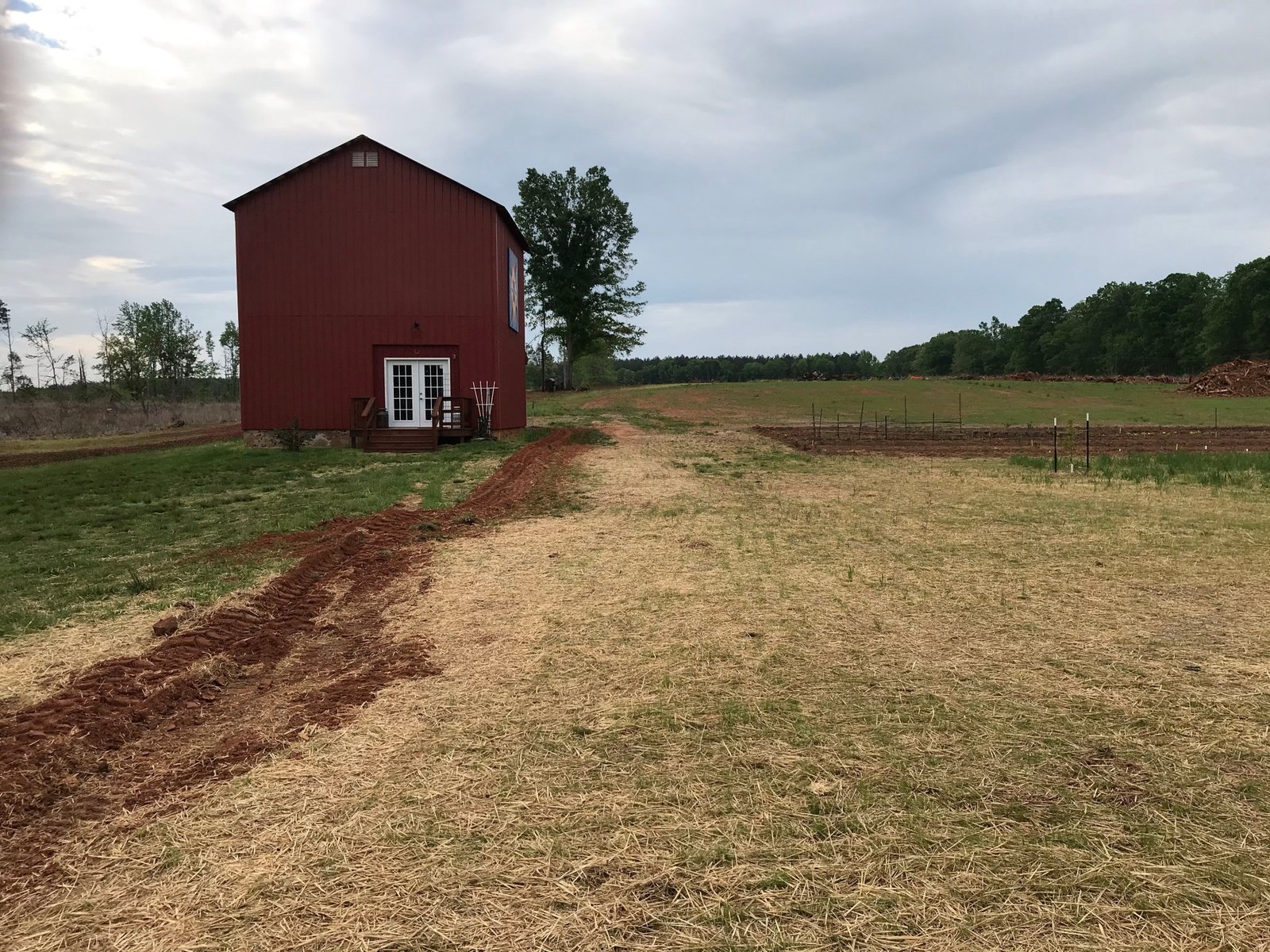
    To round out the month, Brendan moved the last pile of sticks and pine stumps between the house and road and used the land plane to level the area for drilling next month. We are definitely looking forward to a time when the dominant color is green and not brown, bare earth!

  • New Home for the Cheeps!

    New Home for the Cheeps!

    Cheep… Cheep

    Six leghorn chicks from Tractor Supply arrived on March 2, 2021. They’re now five weeks old and have transformed from yellow balls of fluff to miniature chickens. As a newbie chicken mom, I was excited to introduce the little ladies to their new digs in the chicken sled. There’s plenty of fresh grass and bugs to find and a nice heat lamp to keep them warm as the nights are cool and they’re still growing out their secondary feathers. Time flies when you’re young!

    The chicken sled is a portable chicken house constructed from reclaimed parts of old farmyard and a few strategic timbers from Lowes. The new materials cost around $300 thanks to the increased lumber cost ($8 for a 2 x 4!)

    We borrowed the design from our good neighbors, the Flippens, who excel in everything home grown and delicious. Brendan morticed the frames into two 6 x 6 runners (sleds), used scrap lumber for the frames, and some leftover faux slate ties for the roof. The wire came from our local Poultry Services (welded hardwire with 1/2 x 1 inch holes) and the siding from some trees cut on the farm back in the 1930s (give or take a decade). We found pieces of an old house door in the loft which Brendan repurposed with an extra knob and lock.

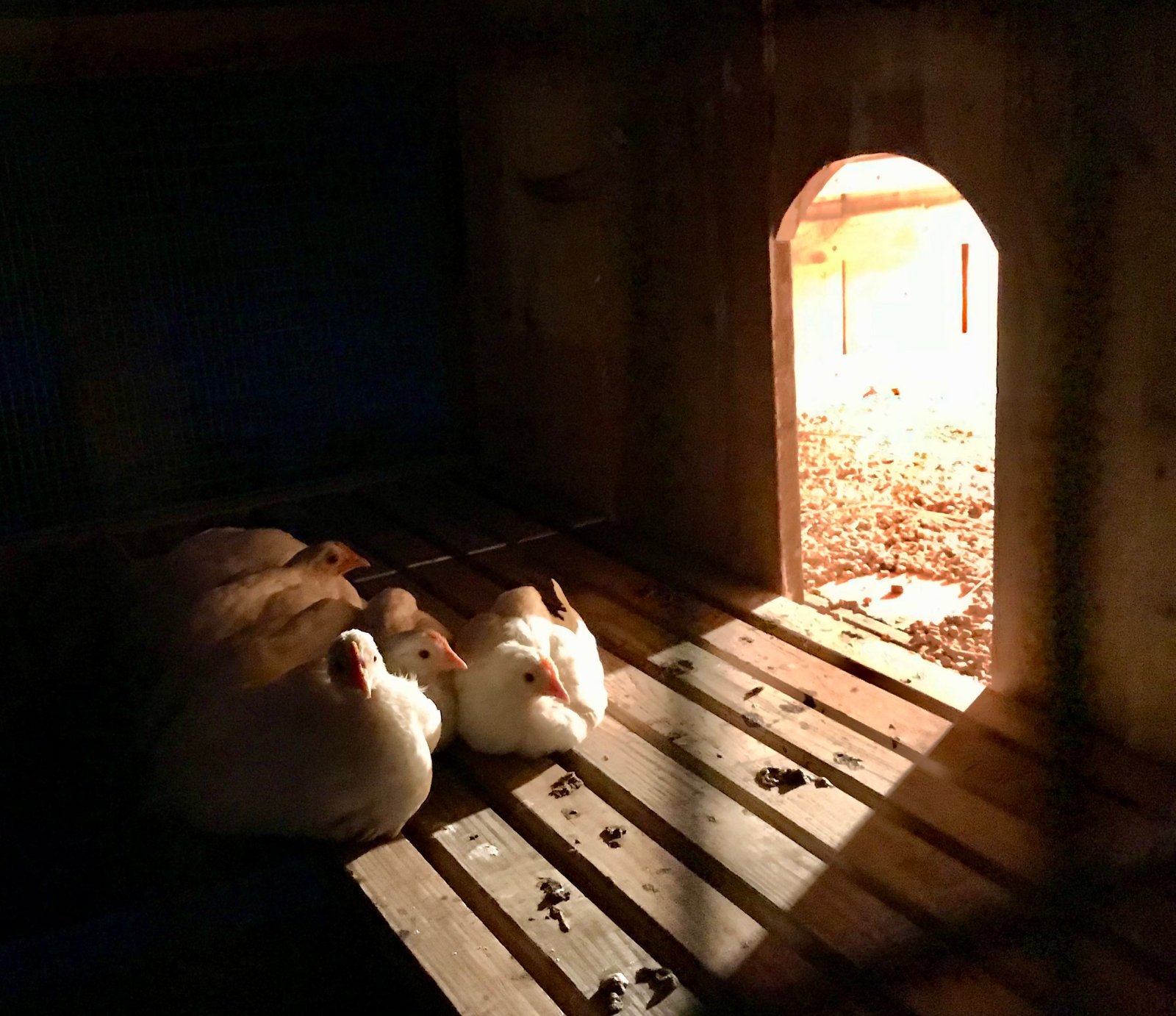
    In total, the sled is just over 12 feet, with nesting boxes taking up 5 feet and the roost 7 feet. The entire bottom is open to the ground for happy scratching. When the scratching gets down to bare earth, we’ll attach the cart with a rope to the two tow points and pull them to greener pasture. The ladies moved in April 3rd!

    5 week-old miniature dinosaurs!

  • What is Glendale?

    What is Glendale?

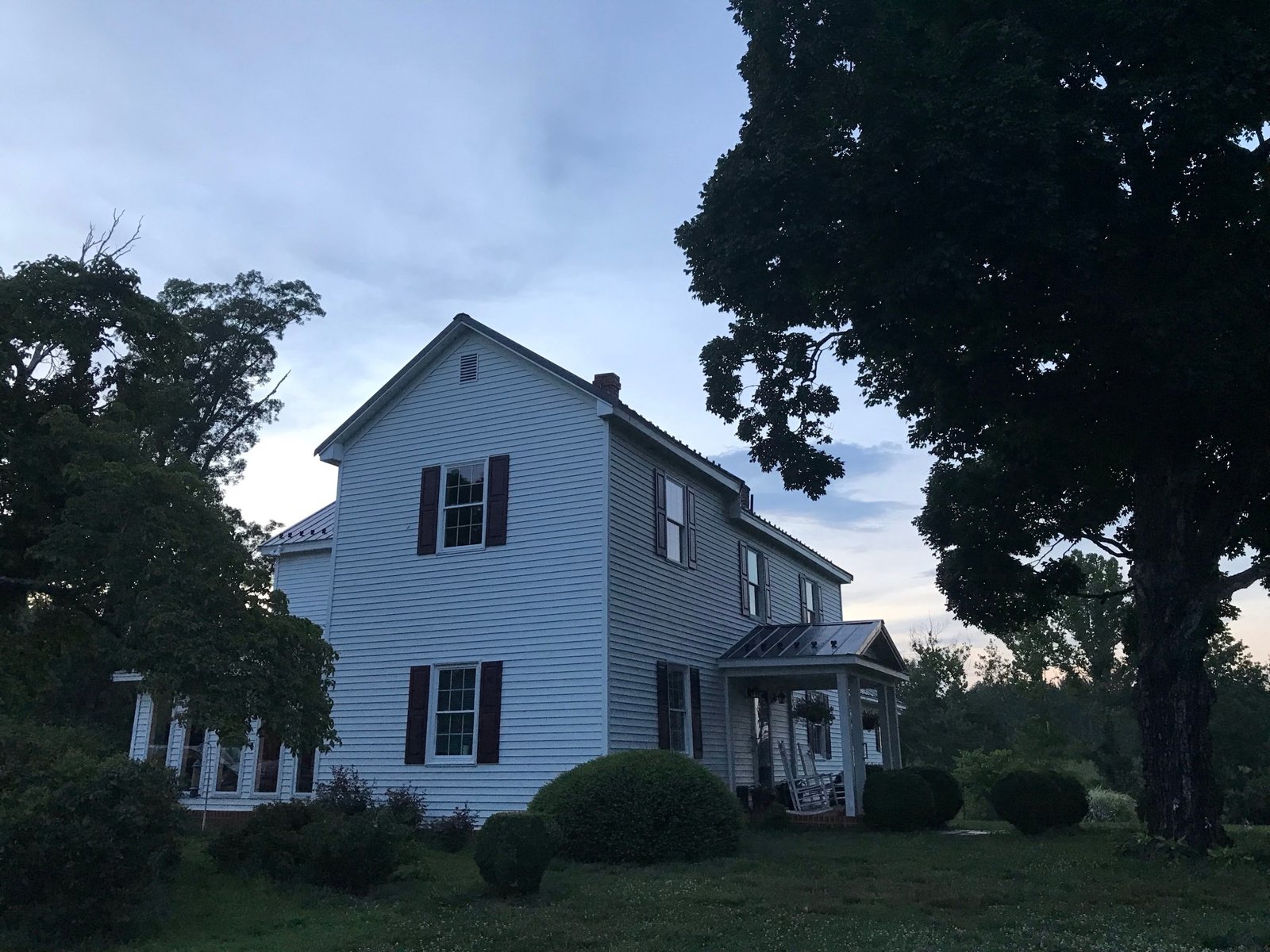
    A family farm for six generations, it’s home for the Warriner-Burke-Azevedo family and many more through family connections and ties.

    It’s not a fancy estate and has worn many hats – tobacco, corn, and hay were grown, cows milked, sheep raised, and hogs slaughtered. In later years, stately pine forests stood tall over old hay fields and an eclectic mix of farm implements stood and lay where they were once used or abandoned in place.

    The next generation

    • Brendan Burke moved back to the farm with his new(ish) wife Lilli Azevedo in November 2019, the year the pines were cut and the land opened and laid bare.

    Glendale

    • Full of glens and dales, we hope to share our journey of new beginnings and old discoveries made by a couple of archaeologists through a telling of our monthly projects and progress “repurposing” the farm.